Japandi Interiors: Calm, Minimalist Homes Made Easy
Imagine stepping into a home that immediately wraps you in a warm hug, a space that feels calm yet stylish, minimal yet cozy. That’s the magic of Japandi interiors—a harmonious blend of Japanese simplicity and Scandinavian warmth. If you’ve ever dreamed of a home that’s uncluttered but not cold, serene but still inviting, you’re in the right place. In this blog, I’m going to show you exactly how to create a Japandi-inspired home that feels like your personal sanctuary.
We’ll cover everything—from colors and furniture to textures, lighting, and clever storage hacks. By the end, you’ll have the inspiration and tools to transform your home into a minimalist paradise with a touch of natural elegance.
What is Japandi Style?
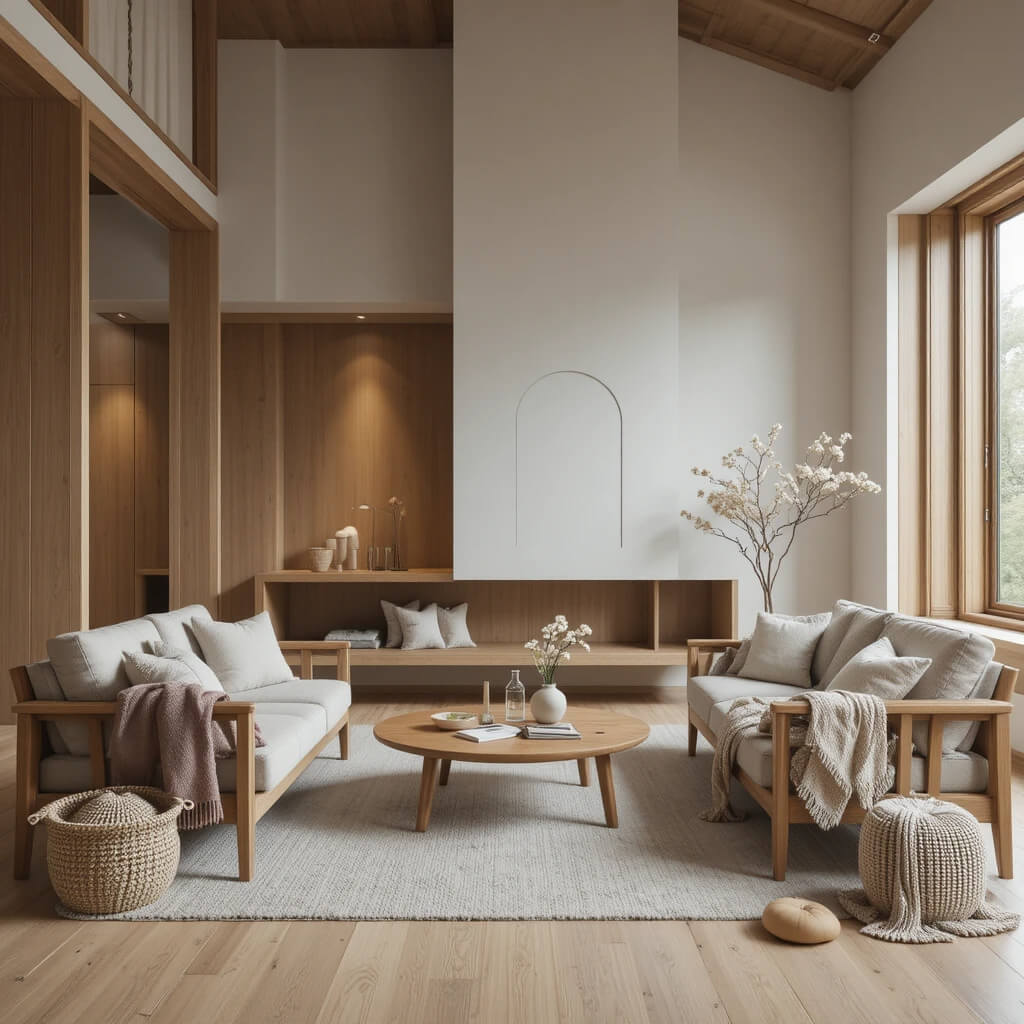
Let’s start with the basics: what exactly is Japandi style?
Japandi is a hybrid of two design philosophies:
- Japanese minimalism: Think serene, uncluttered spaces with clean lines and natural materials.
- Scandinavian coziness (Hygge): Comfort, warmth, and soft textures, making the space feel welcoming.
The result? A design style that celebrates simplicity, functionality, and beauty without the fuss. Unlike some minimalist interiors that can feel cold or sterile, Japandi homes are calm, grounded, and incredibly cozy.
Keywords to Remember:
- Japandi interiors
- Minimalist home décor
- Scandinavian minimalism
- Japanese simplicity
- Hygge home
Why Japandi is Perfect for Modern Homes
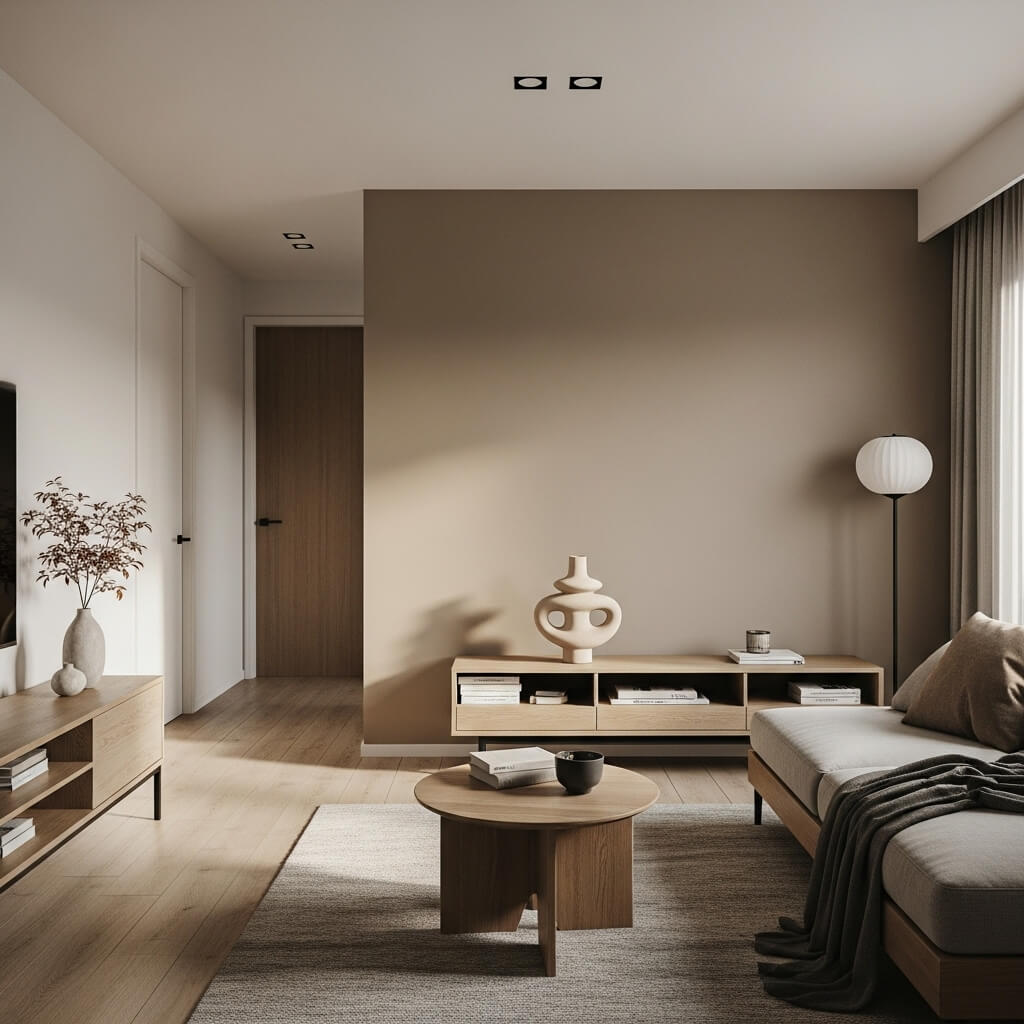
Here’s why everyone from Pinterest enthusiasts to busy professionals loves Japandi:
- Clutter-free living: Less really is more.
- Timeless aesthetic: Japandi doesn’t chase trends—it’s built to last.
- Stress-free vibes: A calm, minimal space literally reduces mental clutter.
- Flexibility: Works with small apartments or spacious homes alike.
It’s minimalism but with a heart. And who doesn’t need a home that feels like a little retreat from the chaos outside?
The Japandi Color Palette: Natural, Neutral, and Serene
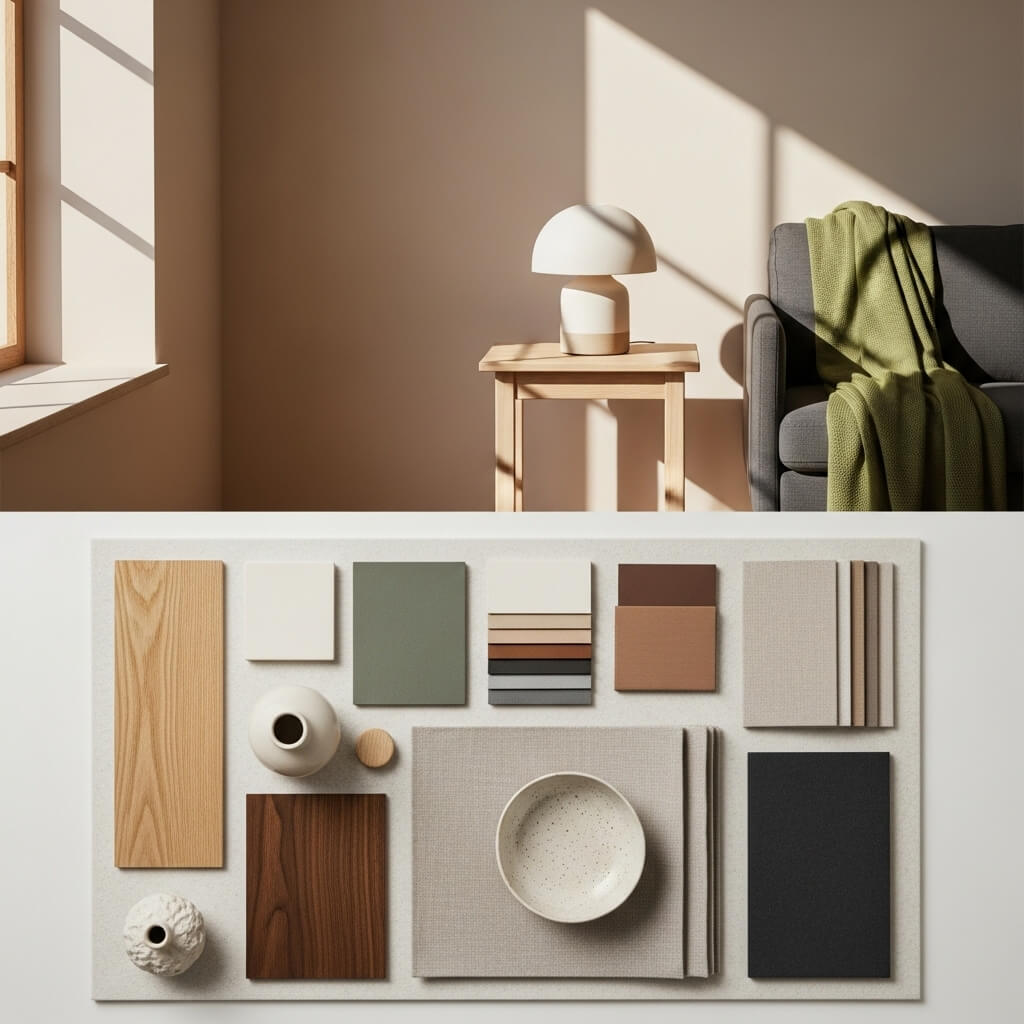
Colors are everything in Japandi interiors. The palette is understated yet warm, grounded in nature:
- Neutral tones: Cream, beige, taupe
- Earthy hues: Soft browns, clay, muted greens
- Dark accents: Charcoal, deep navy, black for contrast
- Wood tones: Light oak (Scandinavian vibe) + dark walnut (Japanese vibe)
Tip: Think of your color palette like a calm river—layers of neutrals with a few subtle, natural accents. Avoid bright, neon colors—they disrupt the serene flow.
Furniture: Functional, Low, and Beautiful
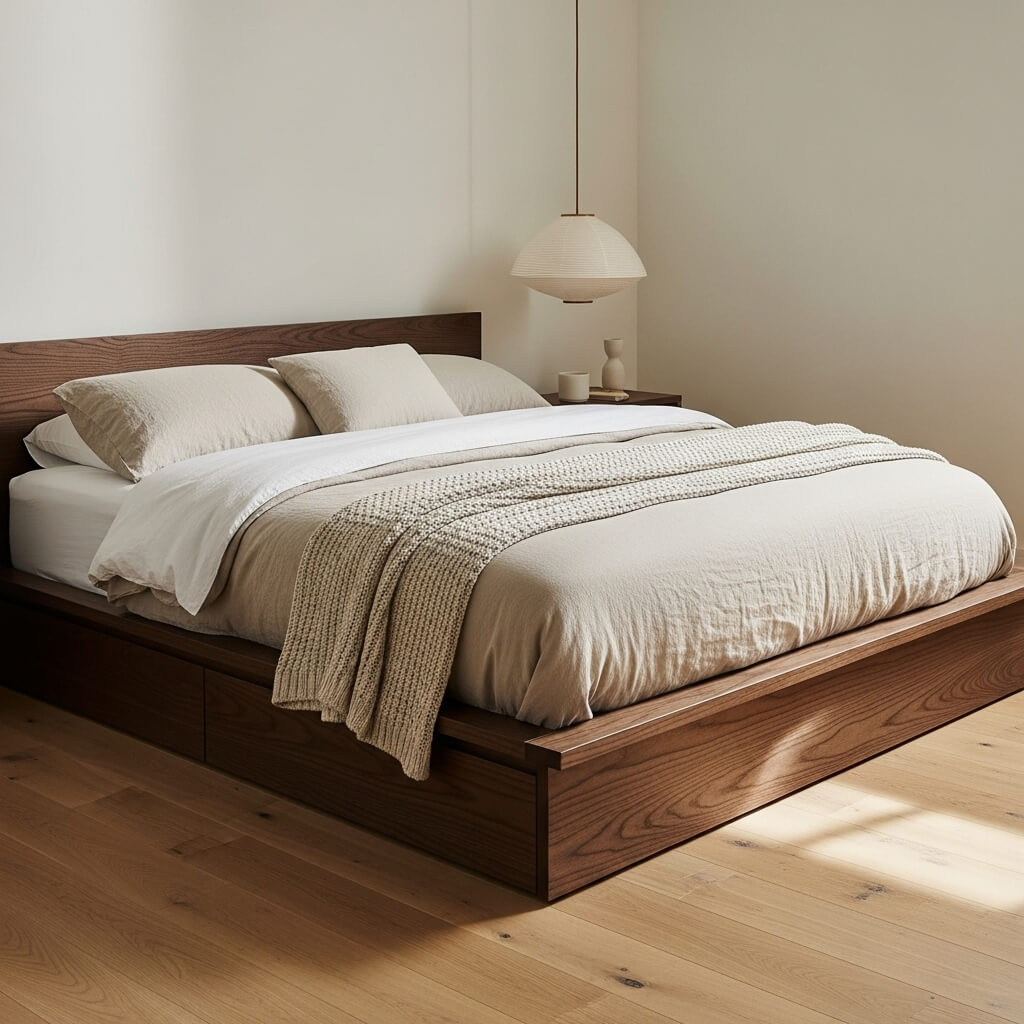
Japandi furniture is where Scandinavian comfort meets Japanese simplicity:
- Low-profile sofas and beds: Grounded furniture promotes calm energy.
- Natural wood finishes: Maple, oak, teak, and walnut are staples.
- Clean lines: Avoid ornate designs; simple shapes are king.
- Multi-functional pieces: Think storage benches or foldable tables.
Styling Tip: Mix Scandinavian light wood with Japanese dark wood for a balanced aesthetic.
Minimalist Layouts: Space That Breathes
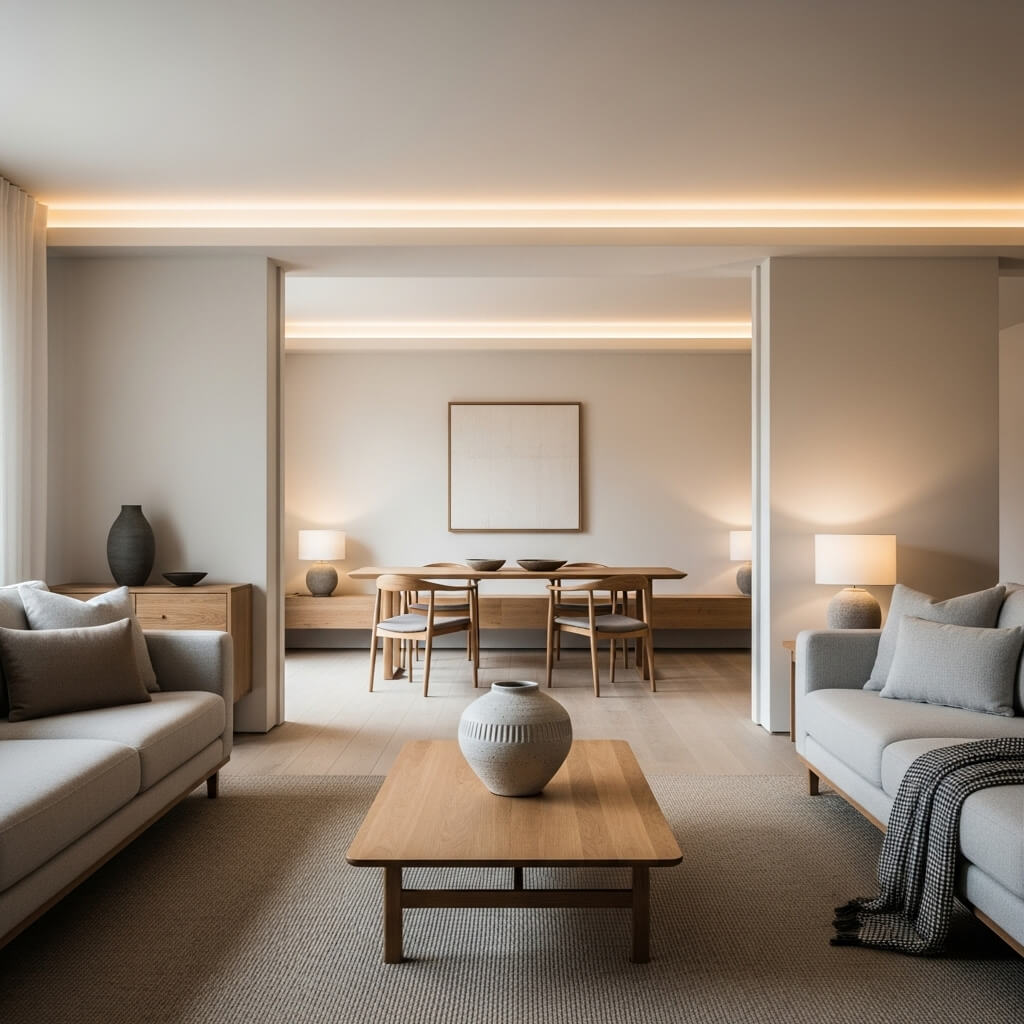
One of the most important Japandi rules is space and flow:
- Keep furniture low and uncluttered
- Allow natural walking paths
- Avoid overcrowding walls with art
- Let each item “breathe”
Pinterest hack: Use a single statement piece per room, like a sculptural vase or a unique lamp. Everything else fades into the background, creating effortless harmony.
Textures and Materials: A Sensory Experience
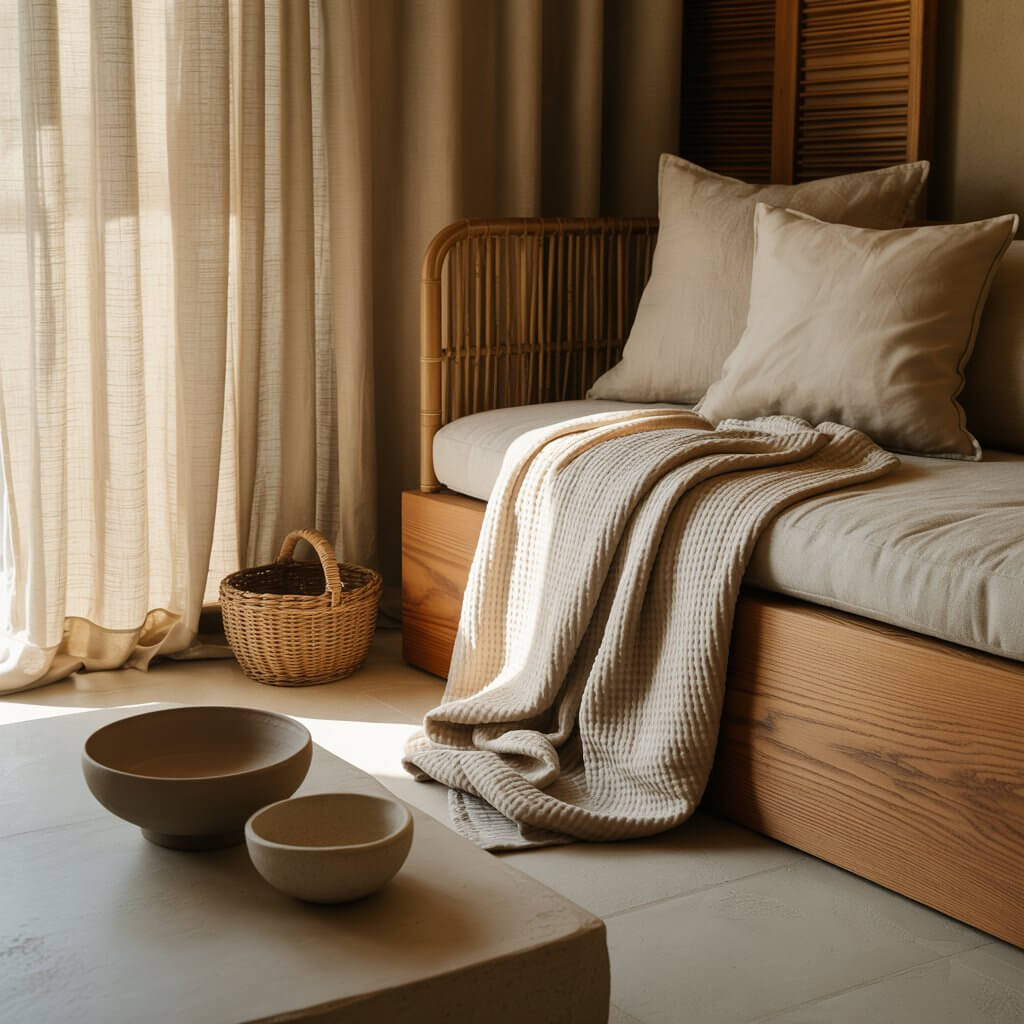
Japandi is minimal—but not boring. Texture is where the magic happens:
- Woven fabrics: Linen, cotton, wool
- Natural fibers: Bamboo, rattan, jute
- Wood grains: Visible texture adds warmth
- Ceramics and stone: Bowls, planters, countertops
Pro tip: Mix textures in small doses. For example, a soft wool throw over a smooth wooden bench adds a tactile layer that feels luxe but natural.
Lighting: Soft, Warm, and Natural
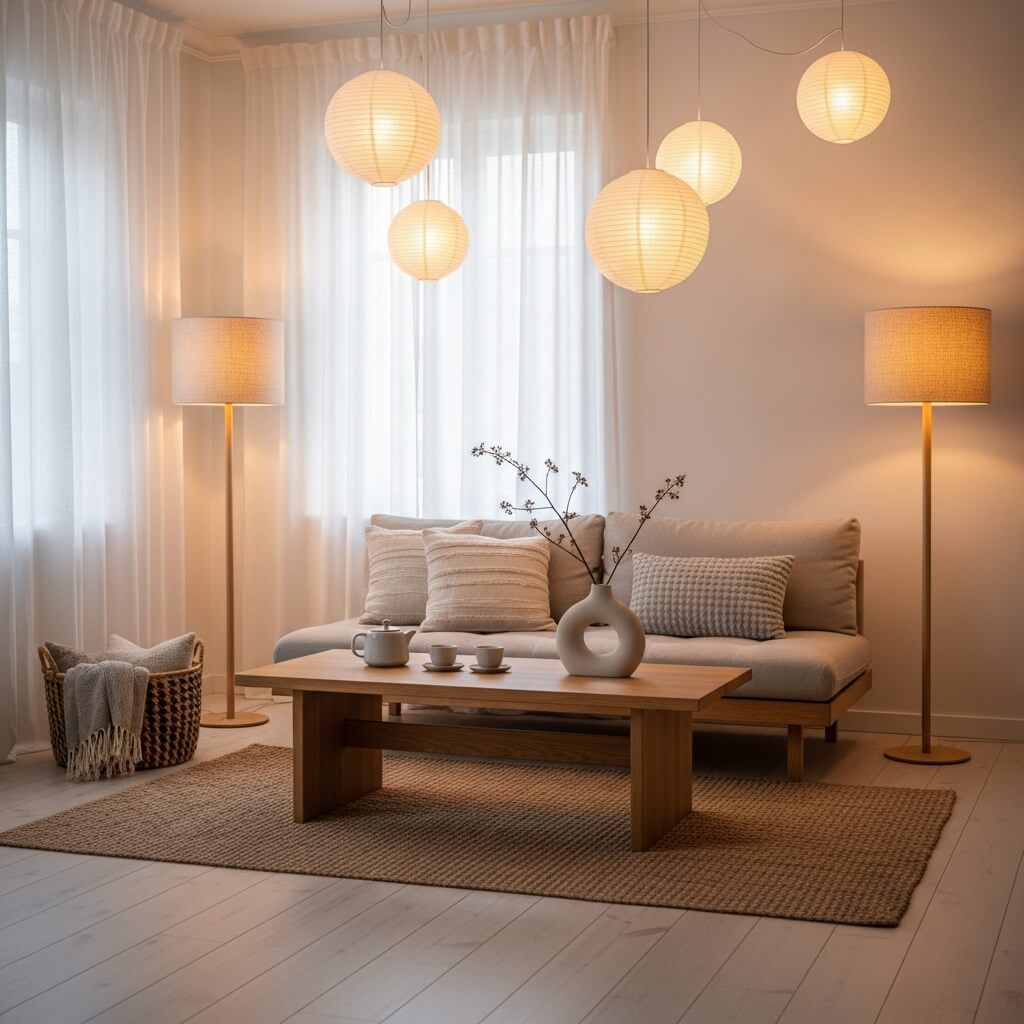
Japandi interiors thrive on natural and soft lighting:
- Maximize natural light with sheer curtains
- Choose warm LED lights over harsh white
- Use paper lanterns or wooden lamps for subtle Japanese vibes
- Consider floor or table lamps for cozy corners
Fun tip: Lighting isn’t just functional—it’s mood-setting. A softly lit room in Japandi style feels like a hug in the evening.
Greenery: Simple Plants for Calm Energy
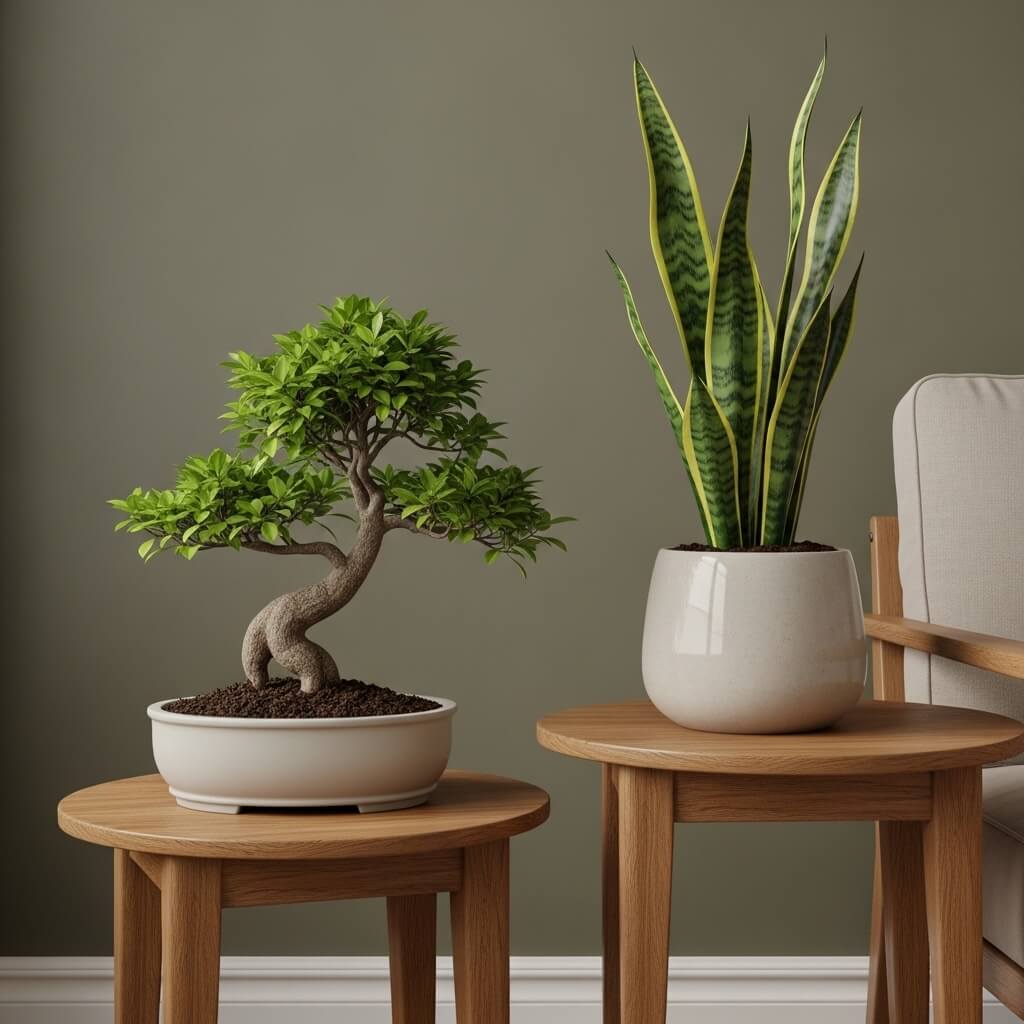
Plants are your best friend in Japandi décor:
- Bonsai or small potted plants for a Japanese touch
- Snake plants or fiddle leaf figs for Scandinavian minimalism
- Keep it simple: one or two plants per space, not a jungle
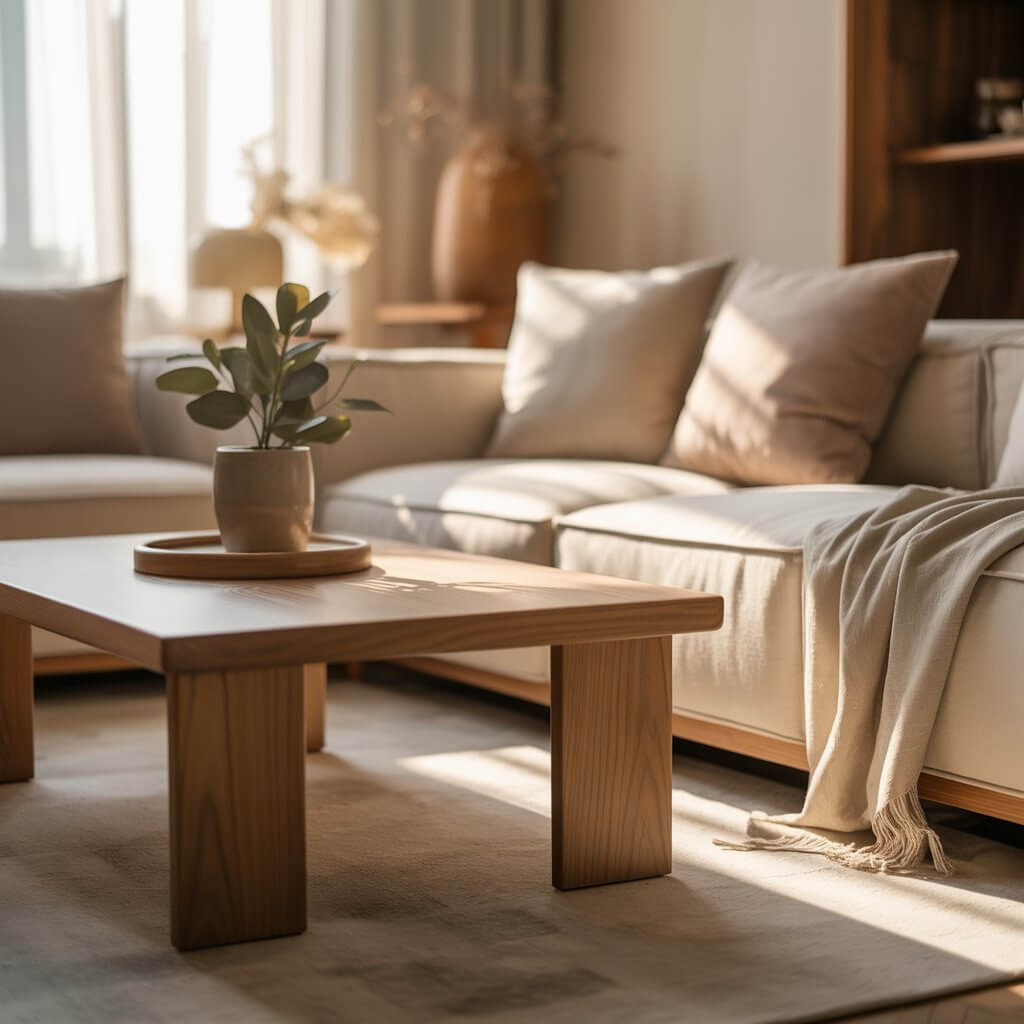
Quick styling tip: Place a small plant on a wooden side table or a floating shelf for instant life and texture.
Storage Solutions: Clutter-Free and Aesthetic
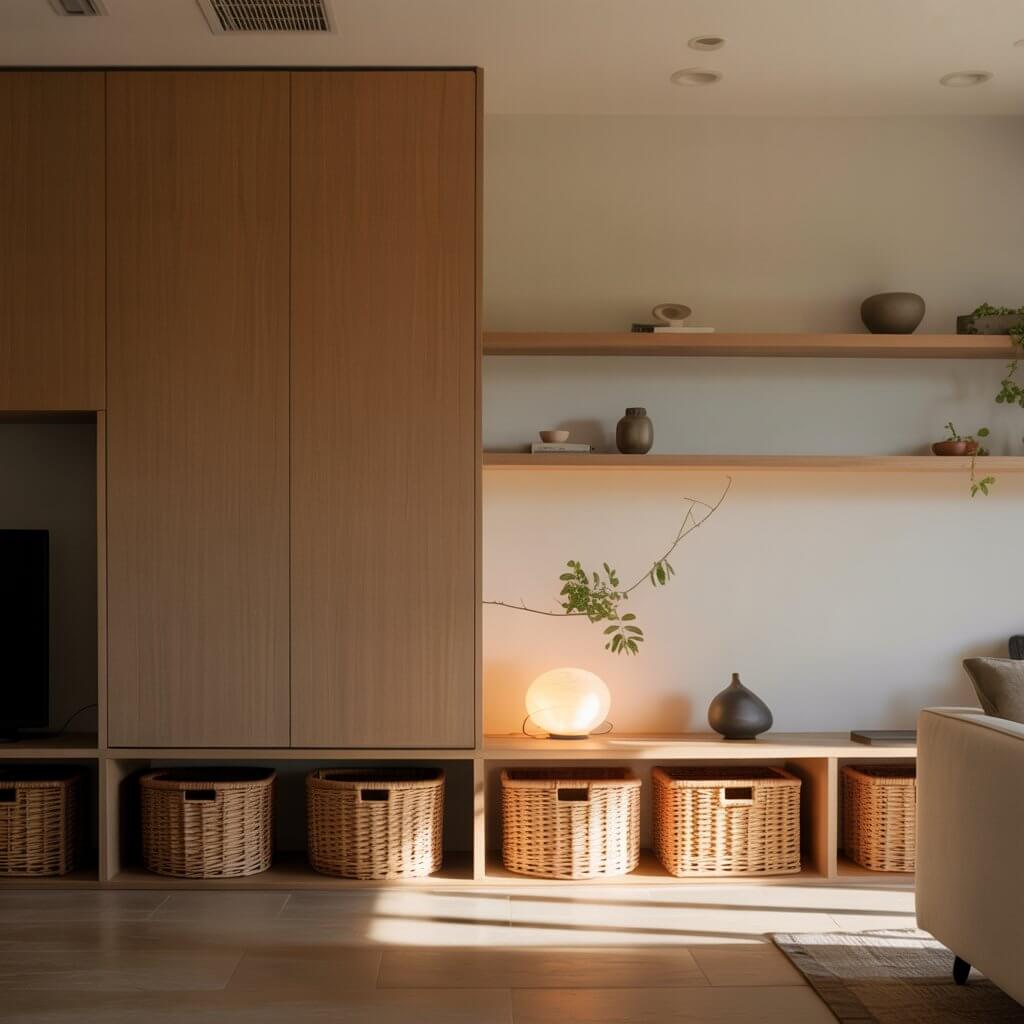
Minimalism fails without clever storage. Japandi interiors excel here:
- Built-in cupboards with sliding doors
- Open shelving with selective display items
- Hidden storage in benches or under beds
- Use baskets and boxes made from natural fibers
Pro tip: Less visual clutter = more serenity. Keep everyday items neatly tucked away.
Japandi Bedroom Ideas: Your Minimalist Retreat
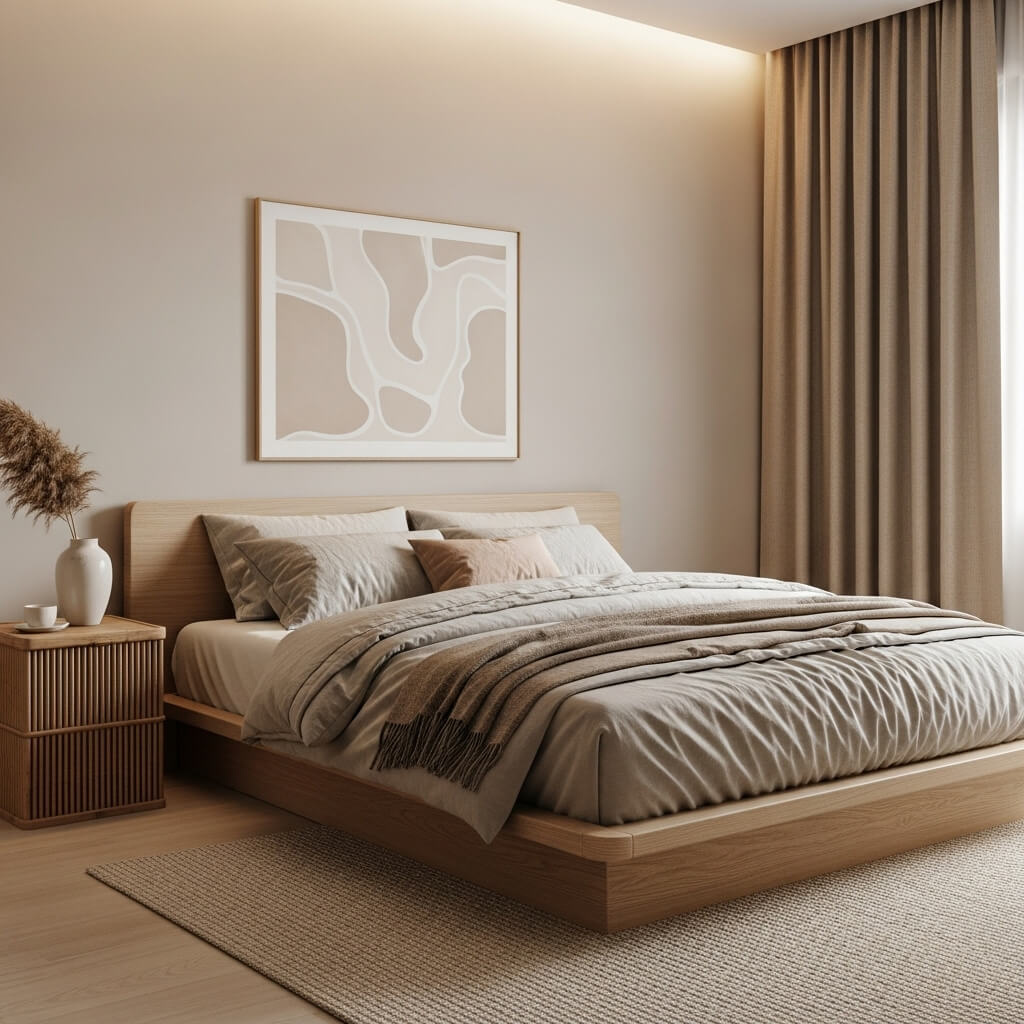
Your bedroom should feel like a serene retreat:
- Neutral bedding with layered textures
- Low platform bed for that grounded vibe
- Minimal décor: one artwork, a small lamp
- Natural wood or bamboo furniture
Tip: Avoid too many pillows or bold patterns. Japandi bedrooms breathe simplicity and peace.
Japandi Living Room Ideas
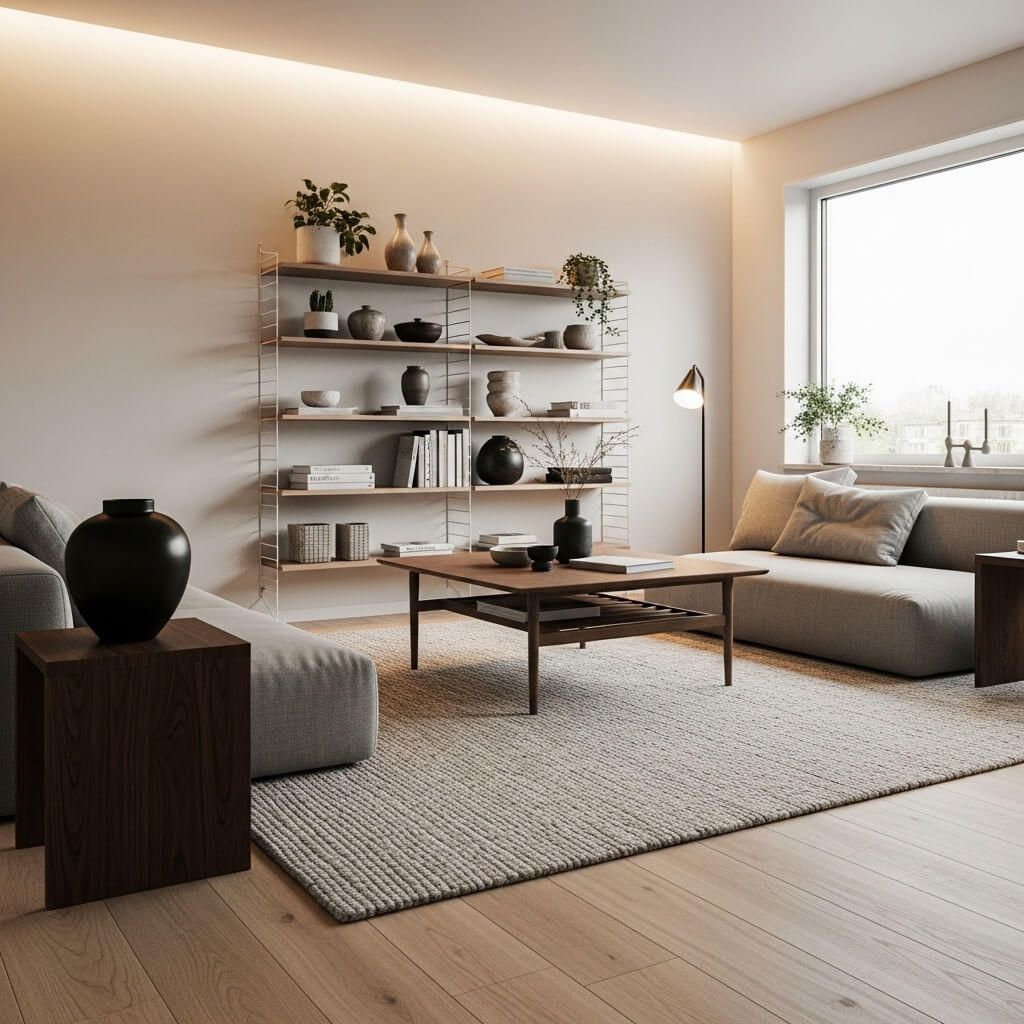
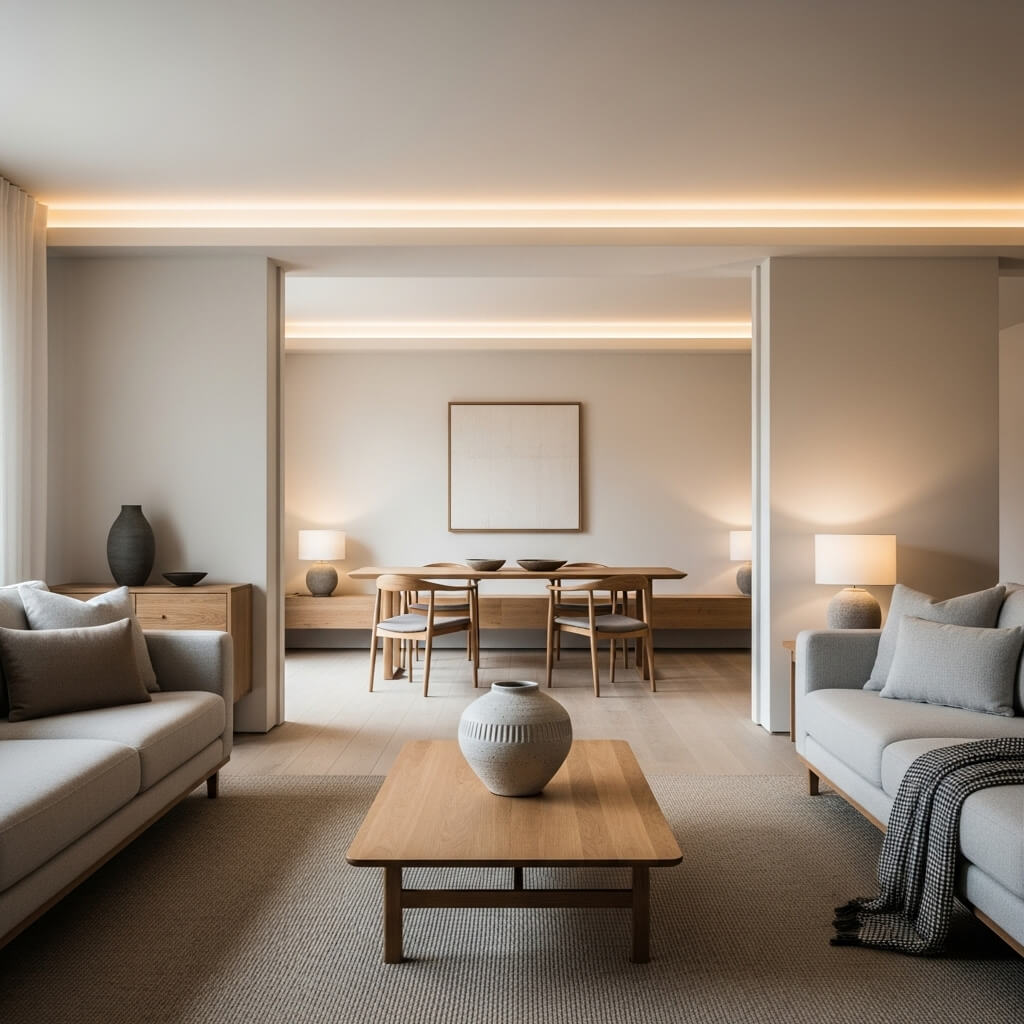
The living room is all about balance:
- Mix Scandinavian light woods with Japanese dark accents
- Add a cozy wool rug or knitted throw
- Low coffee table with simple lines
- Minimalist shelves with curated décor
Pinterest hack: Arrange furniture around a focal point, like a large window or a cozy corner, rather than cluttering the room with too many pieces.
Japandi Kitchen and Dining
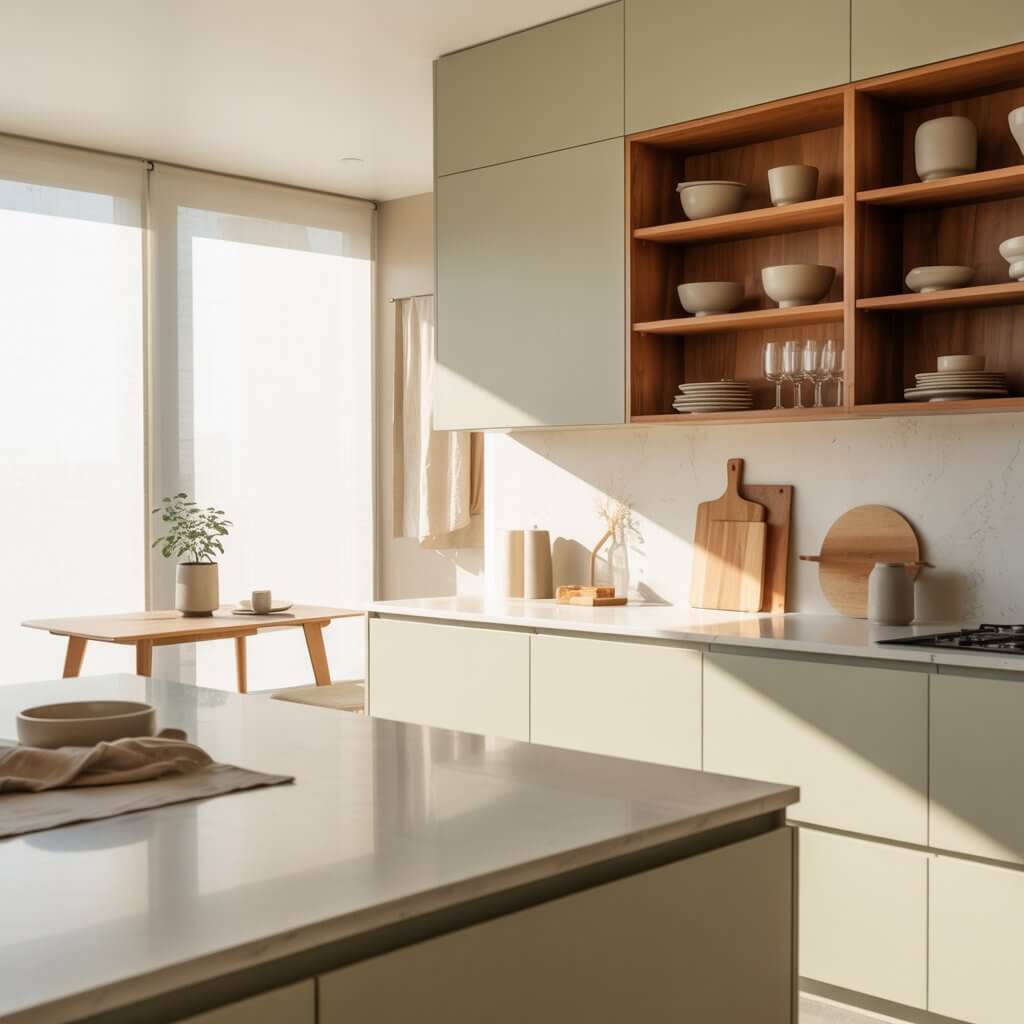
- Clean counters and open shelving
- Neutral dishware and wooden cutting boards
- Natural light emphasized
- Simple, functional dining tables
Pro tip: Use minimal décor items like a single vase or a small plant to keep surfaces clutter-free.
Japandi Bathroom Ideas
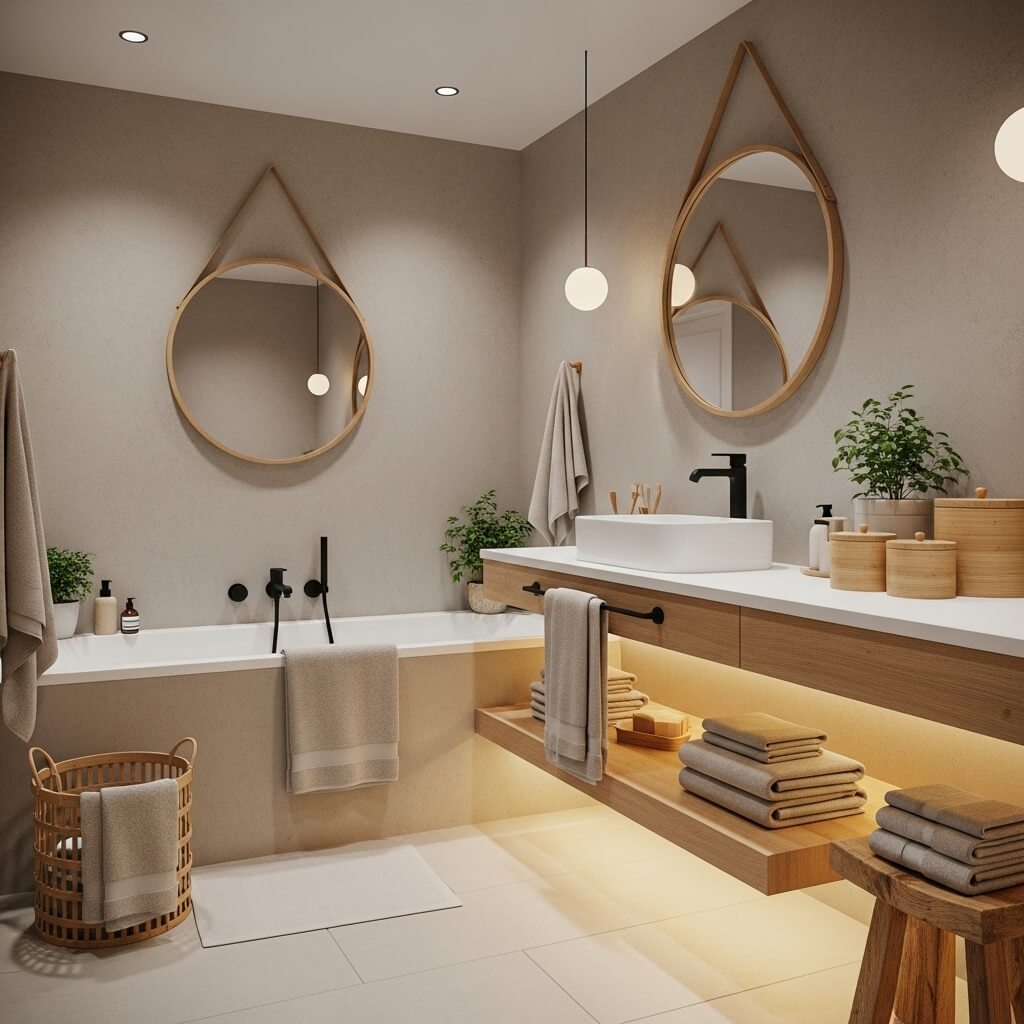
- Neutral-toned towels and bath mats
- Wooden or bamboo storage accents
- Simple, elegant mirrors
- Minimal accessories
Pro tip: Keep countertops clear and use natural scents like candles or essential oils for a spa-like feel.
How to Mix Japandi With Your Existing Style
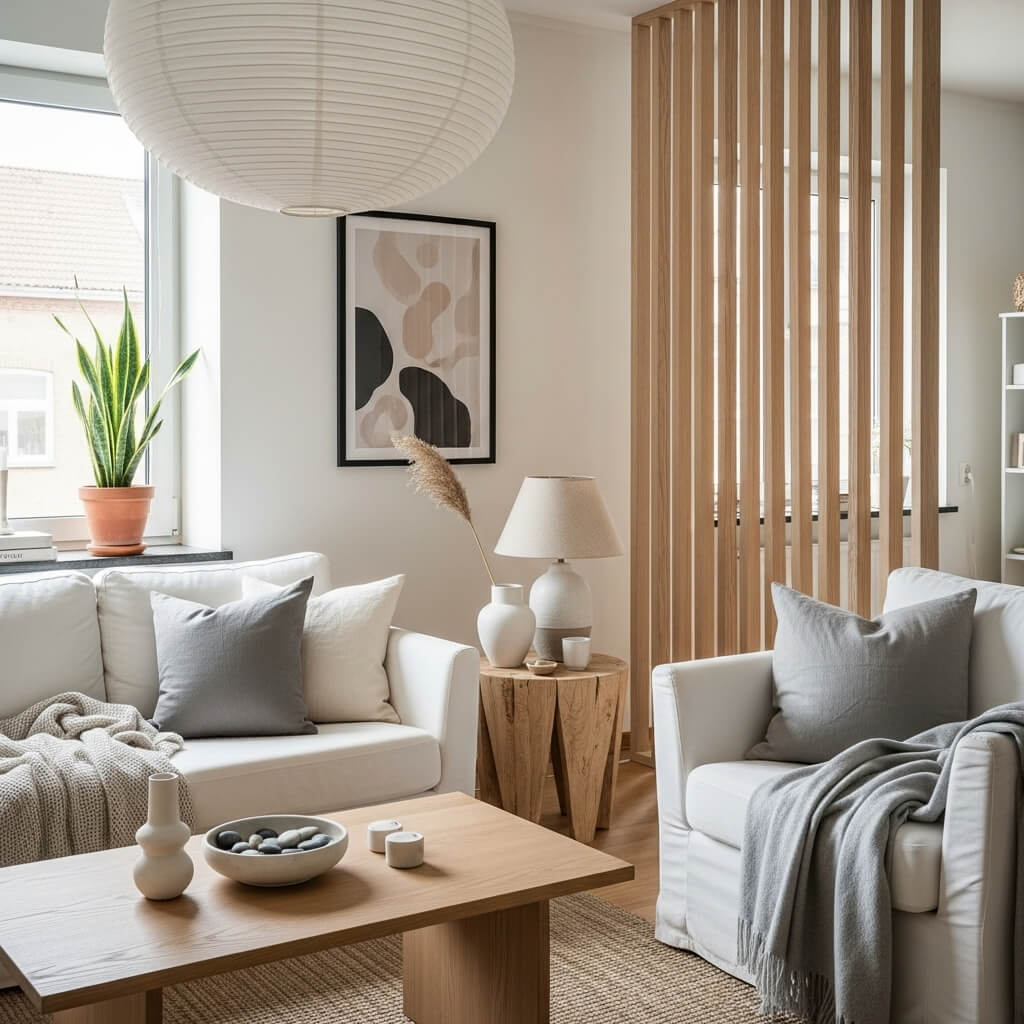
Already have a home with existing décor? No problem:
- Gradually introduce natural textures
- Replace bulky furniture with low-profile alternatives
- Swap bright colors for calming neutrals
- Start with one room and expand
Remember, Japandi is about harmony, not a complete overhaul overnight.
Common Mistakes to Avoid
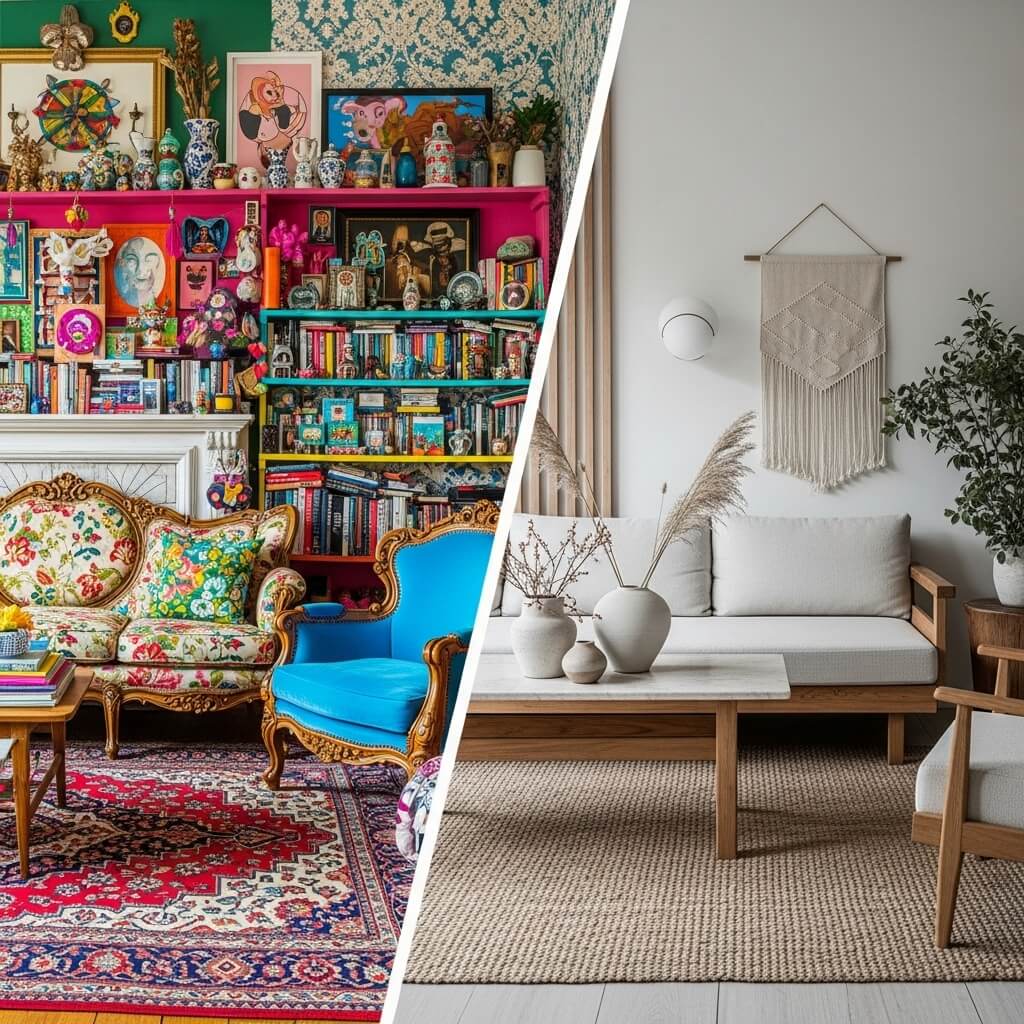
- Too much clutter
- Harsh or neon colors
- Overly ornate furniture
- Ignoring natural textures and wood tones
Keep it simple, calm, and natural.
Japandi Accessories: Less Is More
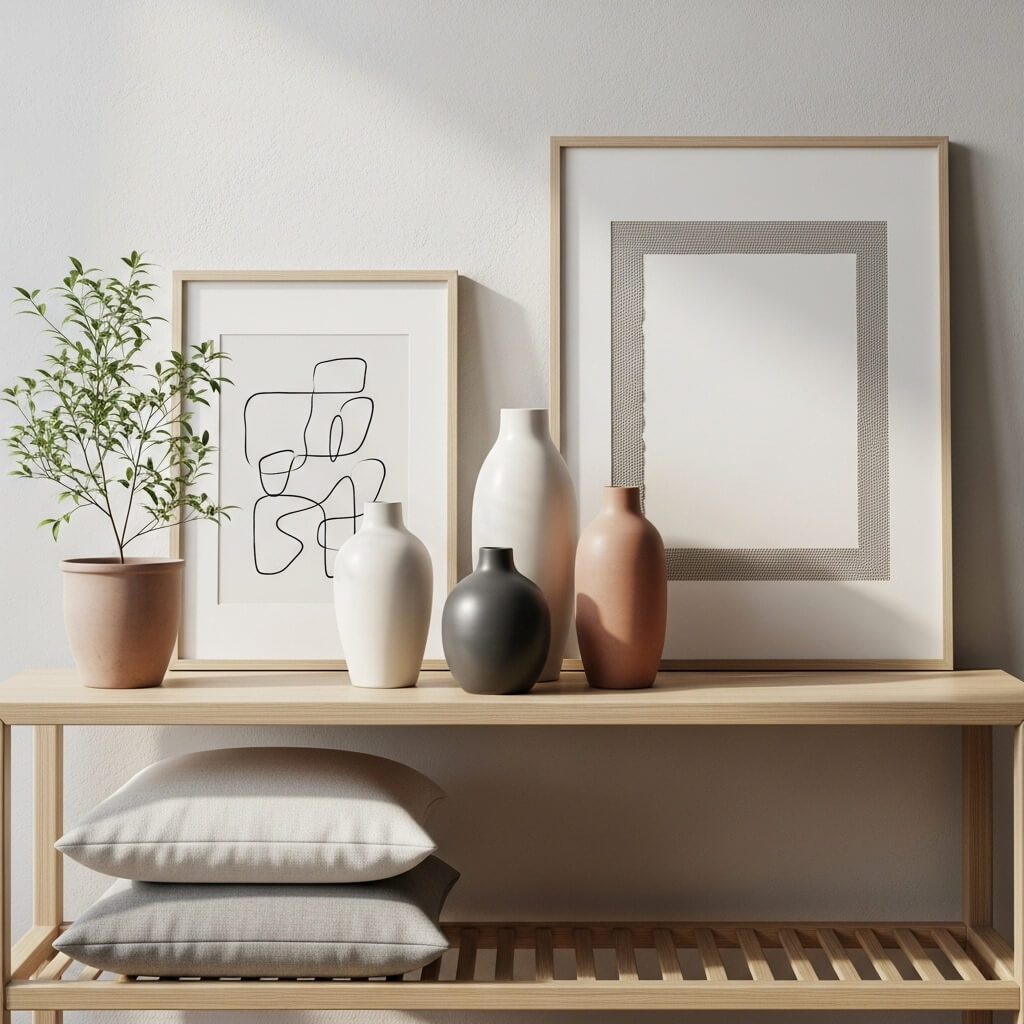
- Minimalist ceramics and vases
- Simple framed art or Japanese prints
- Cozy throws and cushions
- Small plants in neutral pots
Tip: Accessories should accentuate the space, not dominate it.
Creating a Japandi Entryway
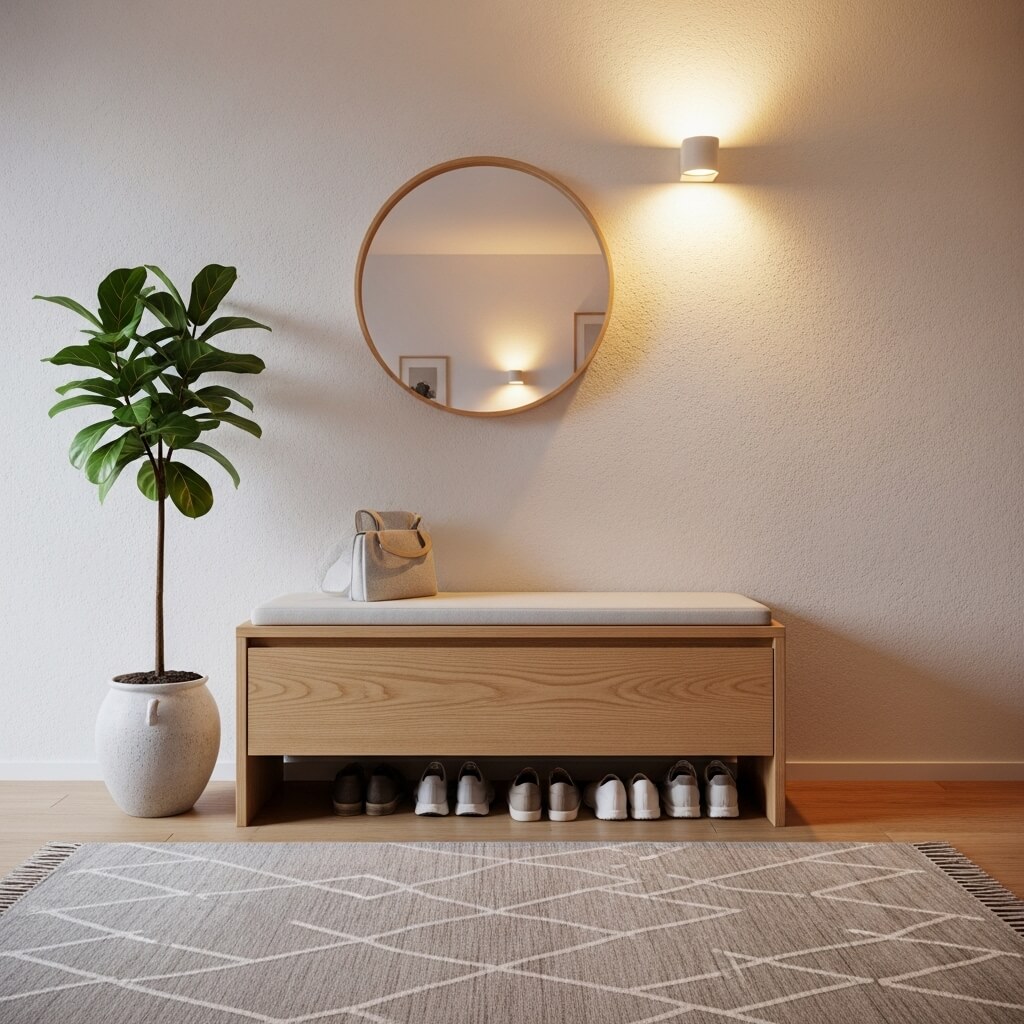
- Low console table or wooden bench
- Neutral rug
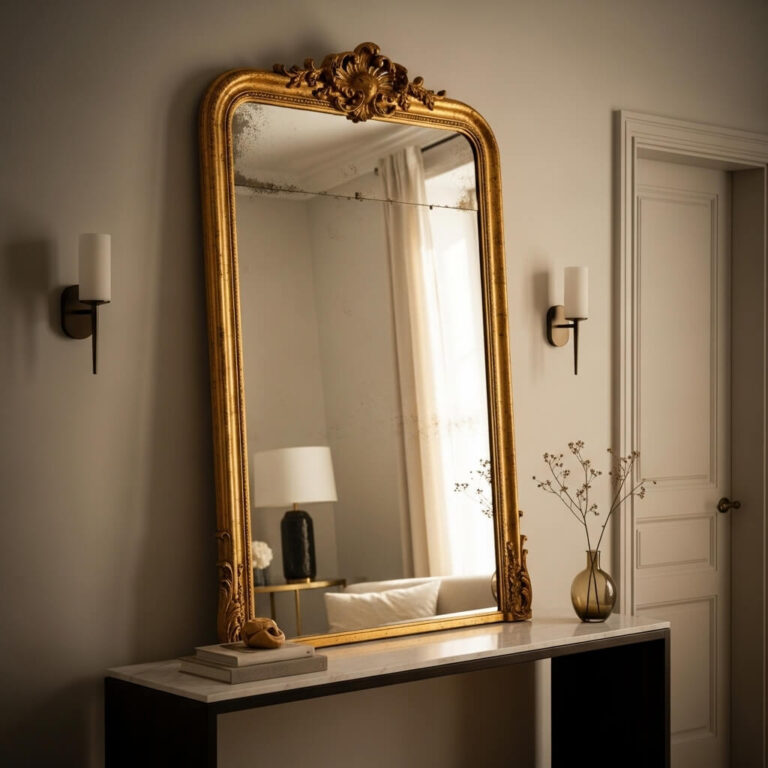
- One statement piece like a mirror or plant
- Keep shoes and clutter out of sight
First impressions matter—make it calm and welcoming.
The Role of Negative Space
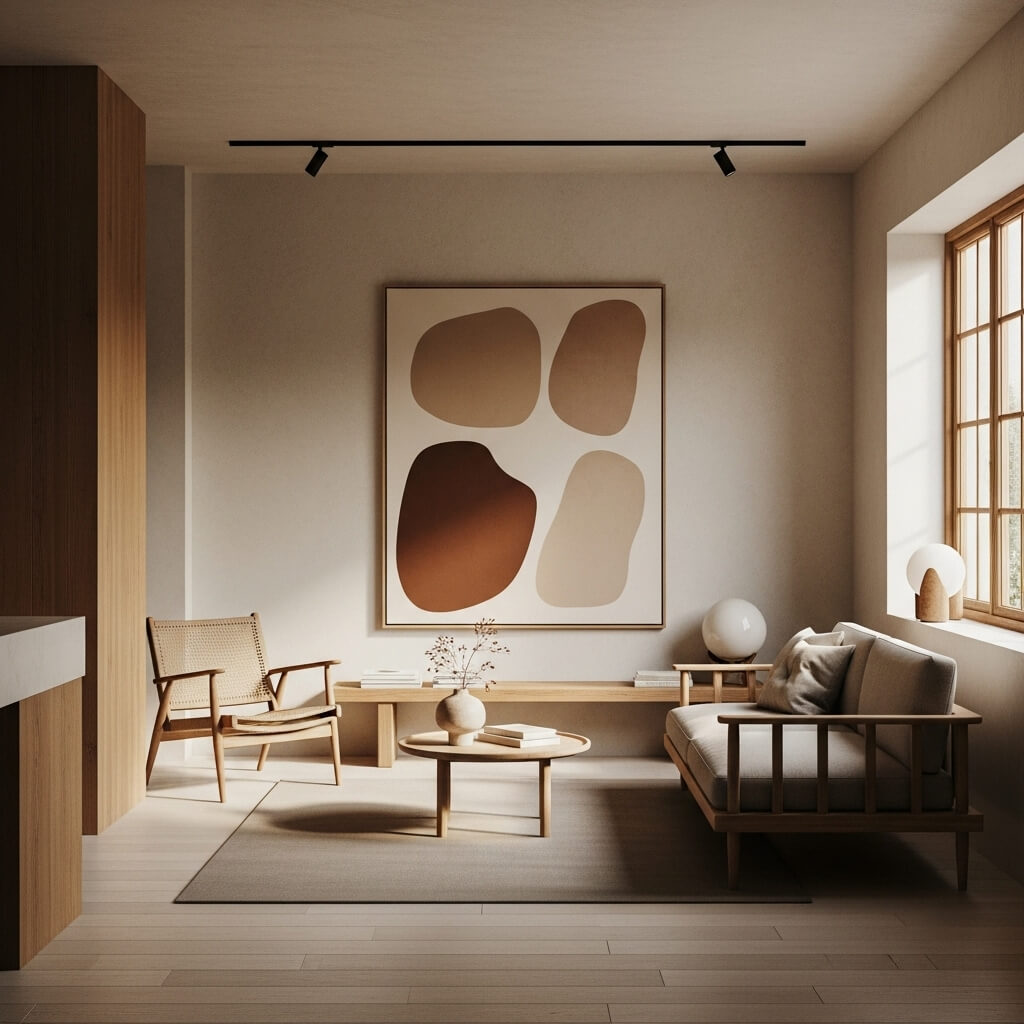
Negative space is just as important as the furniture or décor:
- Leaves room for relaxation and mindfulness
- Highlights key pieces in your home
- Prevents visual clutter
Pinterest-worthy trick: Empty corners or walls with a single plant or art piece look incredibly intentional.
Japandi Outdoor Spaces
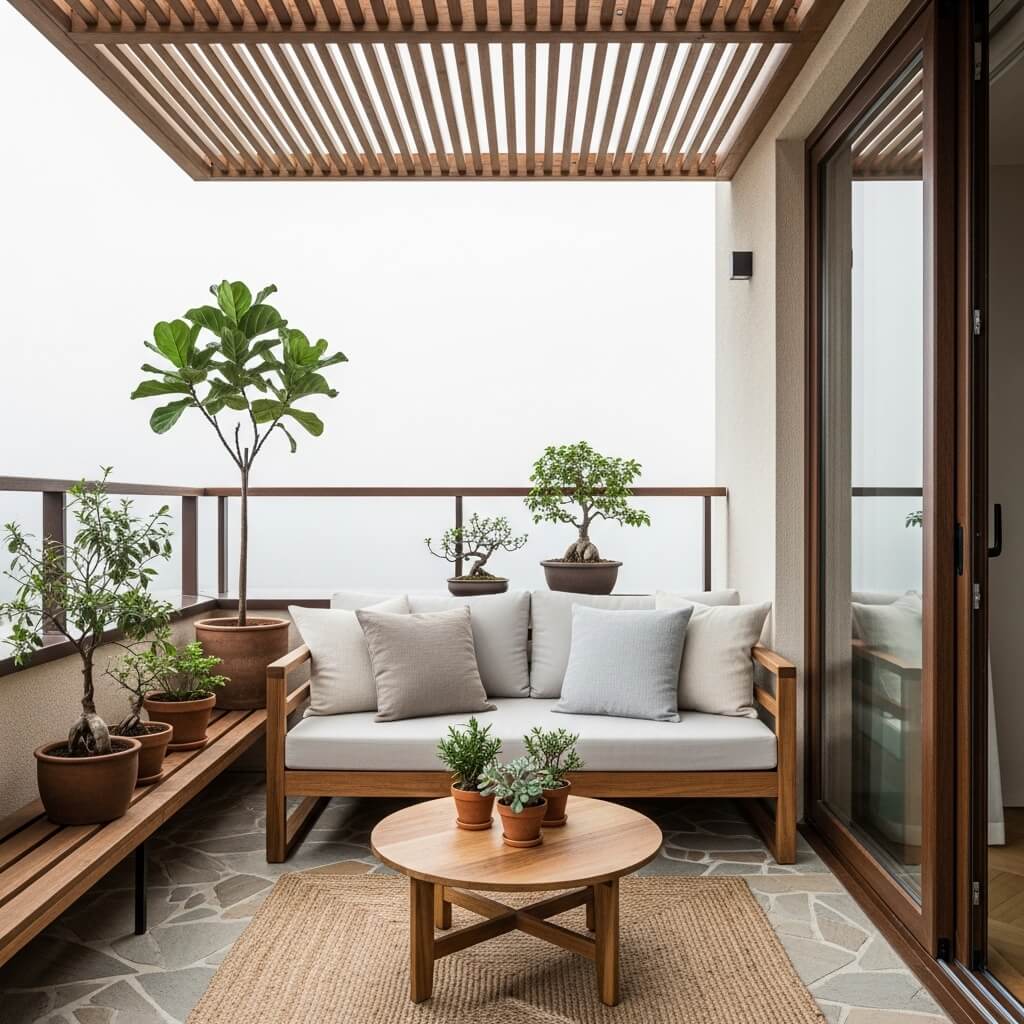
- Minimal patio furniture in natural wood
- Simple planters with greenery
- Neutral cushions
- Keep it open and airy
Even your balcony can radiate calm with simple, natural choices.
DIY Japandi Decor Ideas
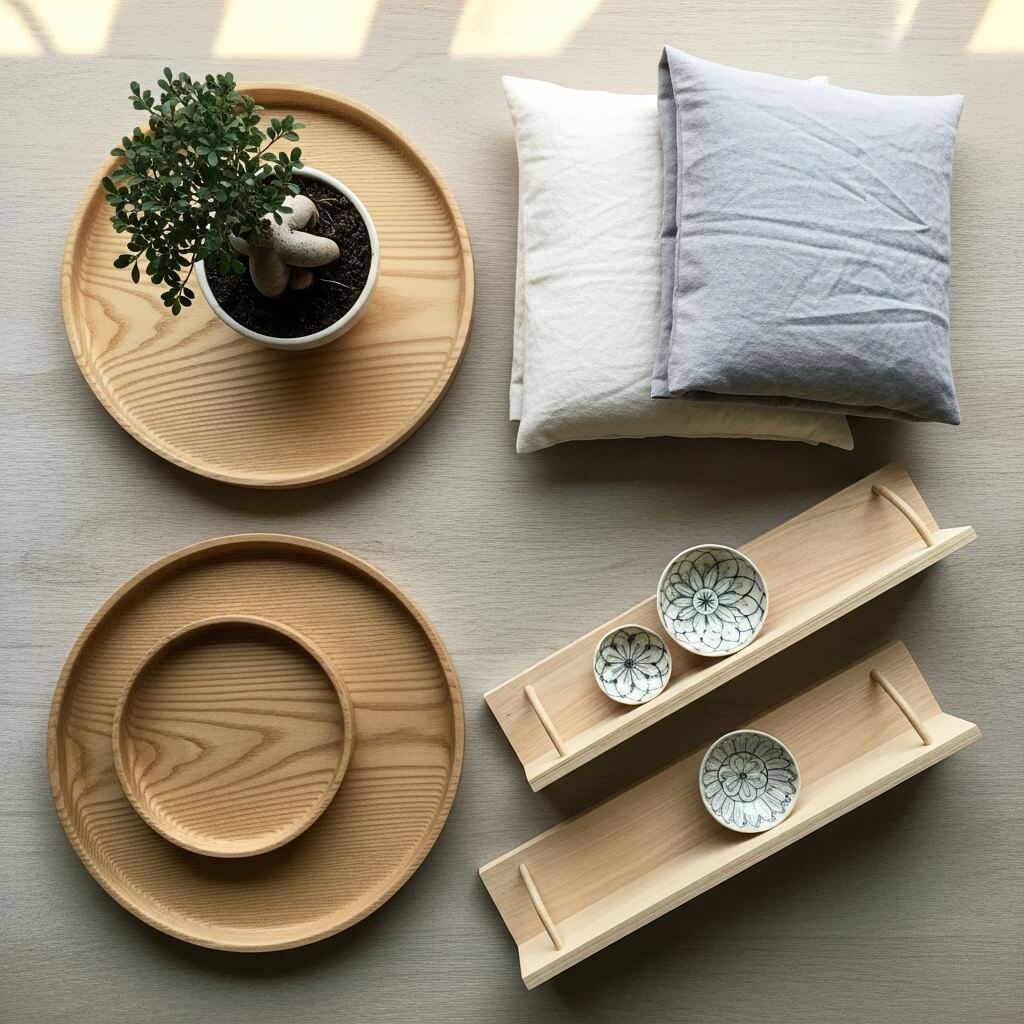
- Handmade wooden trays or bowls
- Simple linen pillowcases
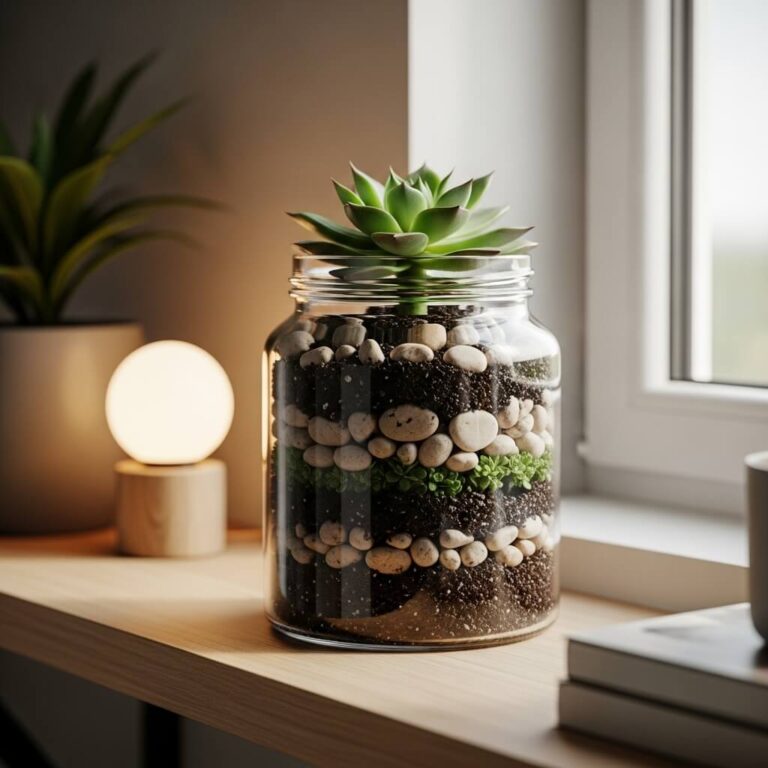
- Small bonsai or moss terrariums
- Minimalist wall shelves
DIY adds a personal touch and reinforces the natural, handmade vibe.
Bringing Mindfulness Into Your Home
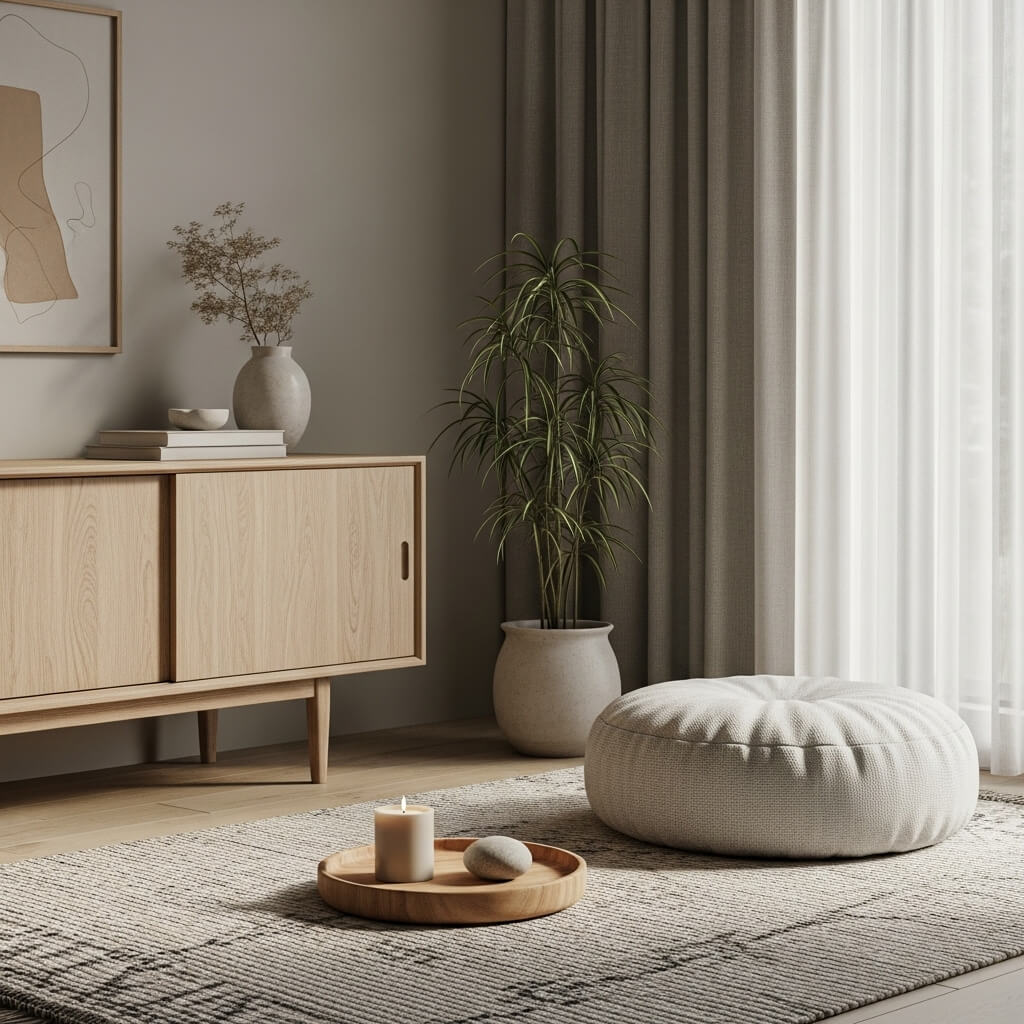
Japandi is not just a style—it’s a lifestyle:
- Declutter with intention
- Choose quality over quantity
- Embrace natural light and soft textures
- Create spaces that feel peaceful
Final Tips for a Japandi Home
- Start small—one room at a time
- Stick to neutral and natural materials
- Mix low and high furniture for depth
- Focus on functionality first, beauty second
- Keep it calm, cozy, and curated
Conclusion: Your Calm, Minimalist Sanctuary Awaits
Japandi interiors are all about finding balance, calm, and simplicity without sacrificing warmth and comfort.
By blending Japanese minimalism and Scandinavian coziness, you can create a home that’s Pinterest-perfect, functional, and incredibly inviting.
Start small, choose natural textures, and embrace neutral tones—you’ll be amazed at how your home transforms into a serene retreat.
So grab that cozy throw, place a simple plant in your living room, and let your home breathe. Your calm, minimalist haven is just a few thoughtful steps away!
FAQs About Japandi Interiors
1: Is Japandi style expensive to achieve?
Not necessarily! Focus on natural materials, simple furniture, and decluttering. You can DIY many accessories for a budget-friendly touch.
2: Can Japandi work in small apartments?
Absolutely! Its minimalist approach and use of low furniture make it perfect for small spaces.
3: How do I combine Japandi with my existing décor?
Introduce neutral tones, natural textures, and simple furniture gradually. Start with one room and expand.
4: What colors are best for Japandi interiors?
Neutral, earthy tones with occasional dark accents work best. Think beige, taupe, soft browns, muted greens, and charcoal.
5: Can I use bold patterns in Japandi décor?
Minimal patterns are okay, but avoid loud prints. Subtle textures or simple geometric designs work best.