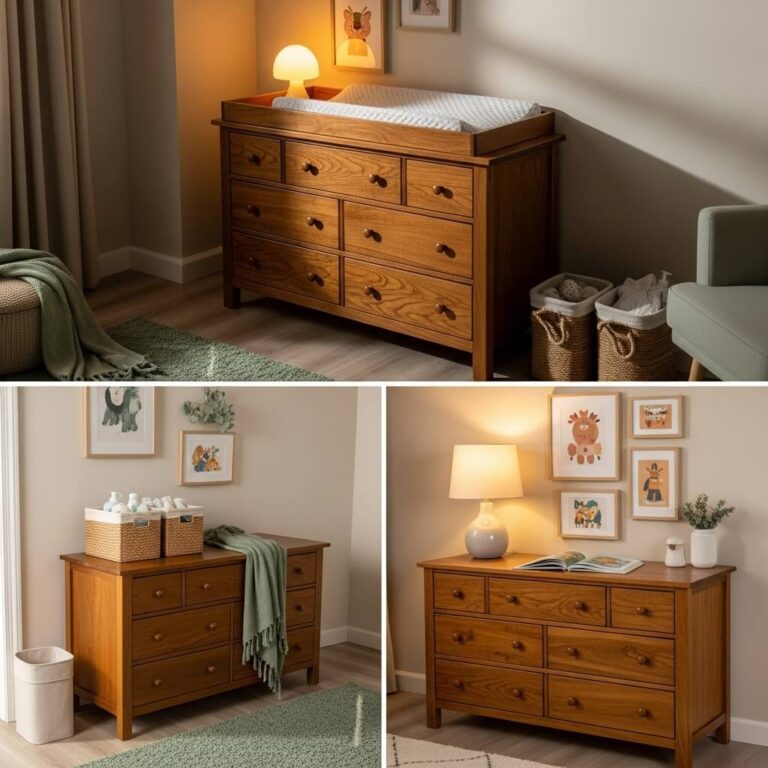
20 Small Bedroom Ideas for Kids That Maximize Every Inch
Small Bedroom Ideas for Kids can completely transform even the tiniest room into a place that’s fun, organized, and comfortable. If you’ve ever walked into your child’s bedroom and wondered where all the floor space disappeared to, you’re definitely not alone. Between toys, books, clothes, school supplies, and growing collections of treasures, a small bedroom can quickly feel crowded.
The good news? You don’t need to knock down walls or spend a fortune to create a room your child will love. With smart furniture choices, clever storage solutions, and a little creativity, you can make every square foot work harder while keeping the room stylish and inviting. Whether you’re decorating a nursery, updating a toddler’s room, or designing a bedroom for an older child, these 20 small bedroom ideas for kids will help you create a space that’s practical today and adaptable for years to come.
1. Choose a Loft Bed to Free Up Valuable Floor Space
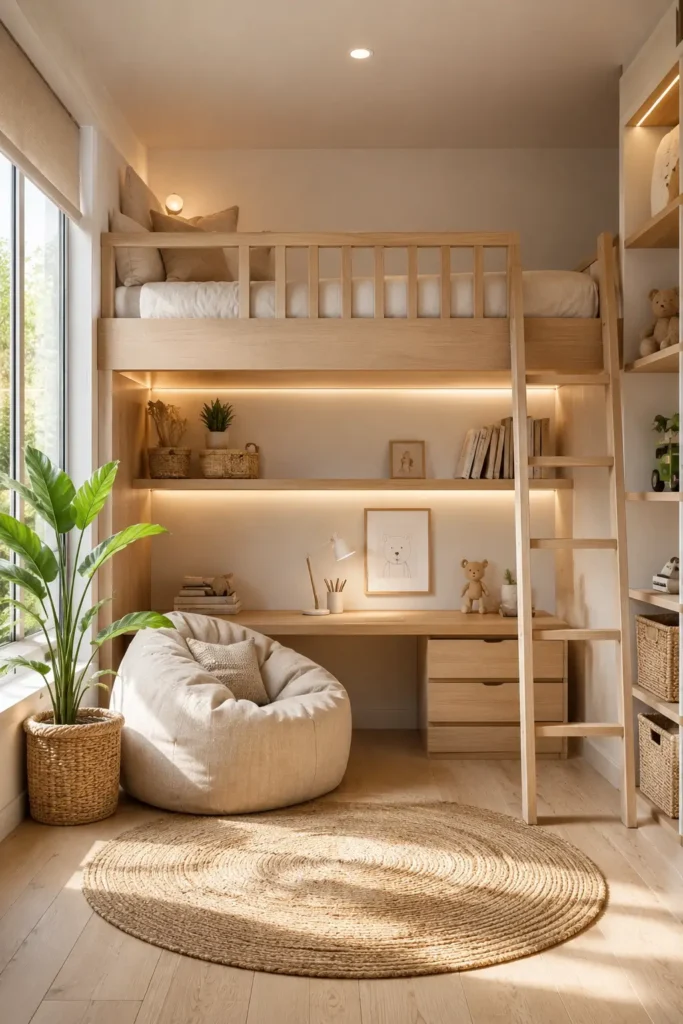
One of the smartest small bedroom ideas for kids is replacing a traditional bed with a loft bed. Instead of letting the bed occupy the entire room, raising it creates an entirely new area underneath that can be used in countless ways.
Depending on your child’s age, the lower area can become a homework station, a cozy reading nook, extra storage, or even a small play area. Older children especially enjoy having a private little corner beneath their bed, making the room feel much larger without adding extra square footage.
Choose sturdy construction with full-length safety rails and a secure ladder. Neutral wood finishes, crisp white frames, or soft pastel colors keep the room feeling bright rather than bulky.
To make the most of the setup, add:
- Floating shelves underneath
- Storage cubes
- A small desk
- Soft lighting
- A comfy bean bag
Why Parents Love It
Loft beds instantly create two functional zones within one room. Parents gain extra storage while kids get a bedroom that feels exciting and personalized.
Pro Tip: Reserve loft beds for children who are old enough to climb safely, and always follow the manufacturer’s recommended age guidelines.
2. Make Use of Every Inch with Built-In Storage
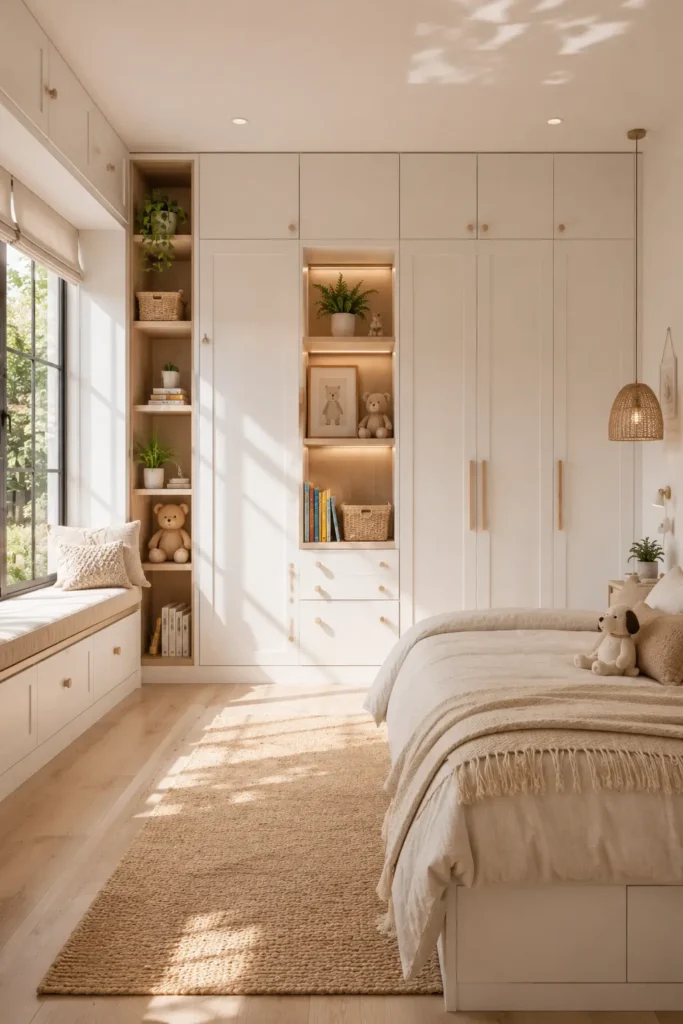
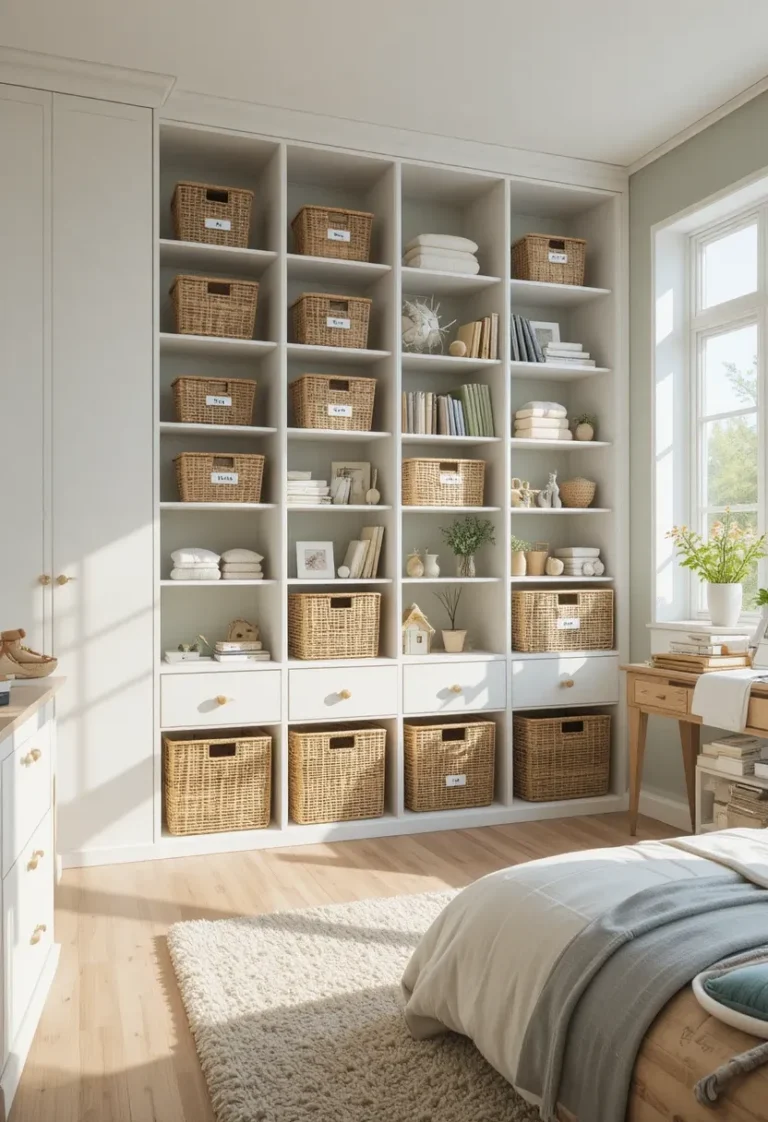
When decorating a compact room, hidden storage becomes your best friend. Built-in cabinets, under-window drawers, wall shelving, and custom wardrobes help eliminate clutter while keeping everyday essentials within easy reach.
Unlike bulky standalone furniture, built-ins maximize awkward corners and vertical wall space that often goes unused. Even shallow cabinets can store books, puzzles, art supplies, and seasonal clothing without making the room feel crowded.
White or light-colored cabinetry blends beautifully into the walls, creating a seamless appearance that makes the room seem larger.
Consider including:
- Under-bed drawers
- Window-seat storage
- Floor-to-ceiling shelving
- Built-in wardrobes
- Toy cubbies
Why Parents Love It
Everything has a designated home, making daily cleanup much easier. Less visible clutter also helps the bedroom feel calm and organized.
Pro Tip: Label storage bins with words or pictures so younger children can learn to tidy up independently.
3. Use Light Colors to Make the Room Feel Bigger
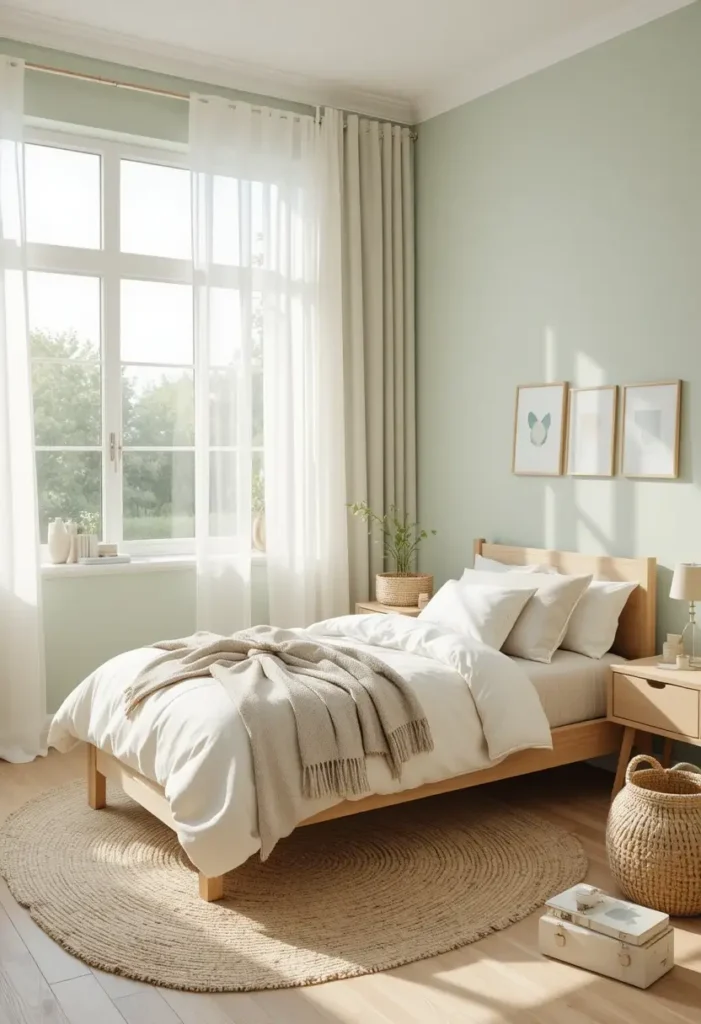
Color has an incredible effect on how spacious a room feels. Soft whites, warm creams, pale gray, light beige, muted sage, sky blue, and blush pink naturally reflect more light, making even the smallest bedroom appear brighter and more open.
While bold colors are fun, using them on every wall can sometimes make a compact room feel enclosed. Instead, keep the walls light and introduce brighter colors through bedding, artwork, rugs, cushions, or decorative accessories.
This approach allows you to update the room as your child grows without repainting everything every few years.
Great color combinations include:
- White and natural oak
- Sage green and cream
- Soft blue and white
- Warm beige with terracotta accents
- Pale lavender with light gray
Why Parents Love It
Light-colored rooms feel cleaner, brighter, and more relaxing while providing a timeless backdrop that grows with your child.
Pro Tip: Choose washable paint with a durable finish to make cleaning fingerprints and crayon marks much easier.
4. Add Floating Shelves Instead of Bulky Bookcases
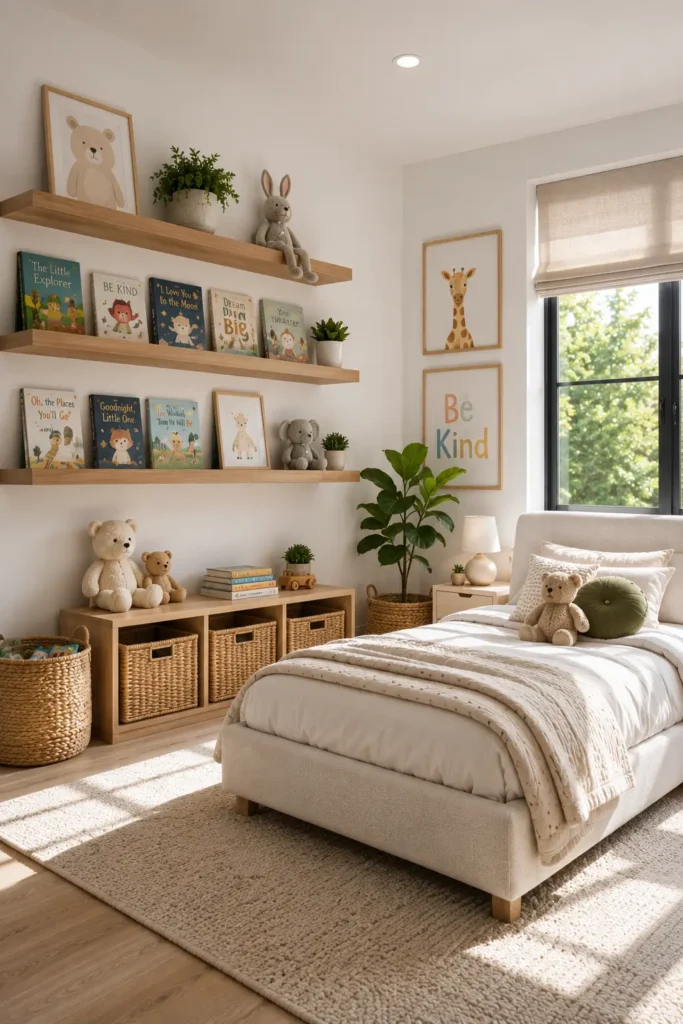
Traditional bookcases take up precious floor space. Floating shelves, on the other hand, use empty wall space while keeping the room open and airy.
Install shelves above the desk, beside the bed, or over a dresser to display favorite books, stuffed animals, framed artwork, and decorative baskets. Since the floor remains clear, the bedroom instantly feels larger.
Floating shelves also encourage children to display their favorite treasures without creating clutter everywhere else.
Mix decorative and practical storage by combining:
- Picture books
- Small plants
- Wooden toys
- Framed drawings
- Storage baskets
- Decorative letters
- Nightlights
Keep heavier items on lower shelves for added safety, especially in bedrooms designed for younger children.
Why Parents Love It
Floating shelves provide extra storage without sacrificing valuable play space, making them one of the easiest upgrades for small bedrooms.
Pro Tip: Install shelves securely into wall studs or use heavy-duty anchors designed for your wall type.
5. Invest in Multifunctional Furniture That Grows with Your Child
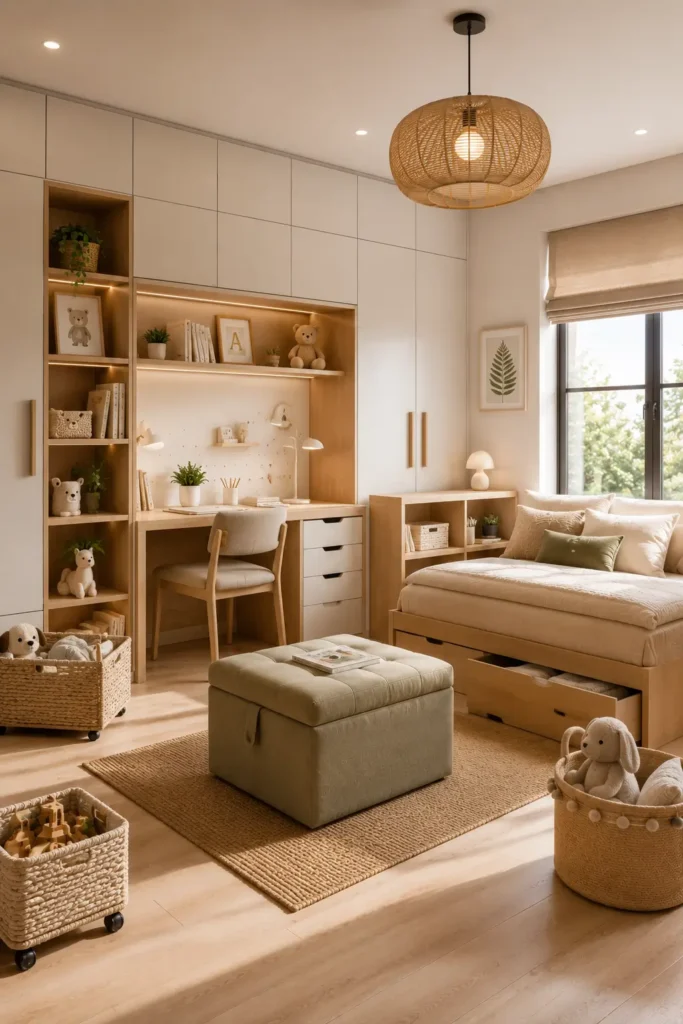
If there’s one investment worth making, it’s multifunctional furniture. Pieces that serve more than one purpose help small bedrooms stay organized while reducing the need for additional furniture.
For example, a storage bed eliminates the need for a separate dresser. An ottoman can provide seating while hiding toys inside. A desk with built-in shelving keeps school supplies neatly organized. Some beds even include pull-out desks or trundle beds for sleepovers.
Choosing adaptable furniture also means you won’t have to replace everything as your child gets older.
Look for furniture that includes:
- Hidden storage compartments
- Fold-away desks
- Rolling storage bins
- Expandable wardrobes
- Convertible beds
- Lift-up mattress storage
- Storage benches
Why Parents Love It
Every piece works harder, helping families maximize limited square footage while saving money over time.
Pro Tip: Whenever possible, buy furniture with timeless finishes like white, natural wood, or light oak. These styles remain attractive as your child’s tastes change, making future room updates much easier.
6. Take Advantage of Vertical Space with Wall Storage
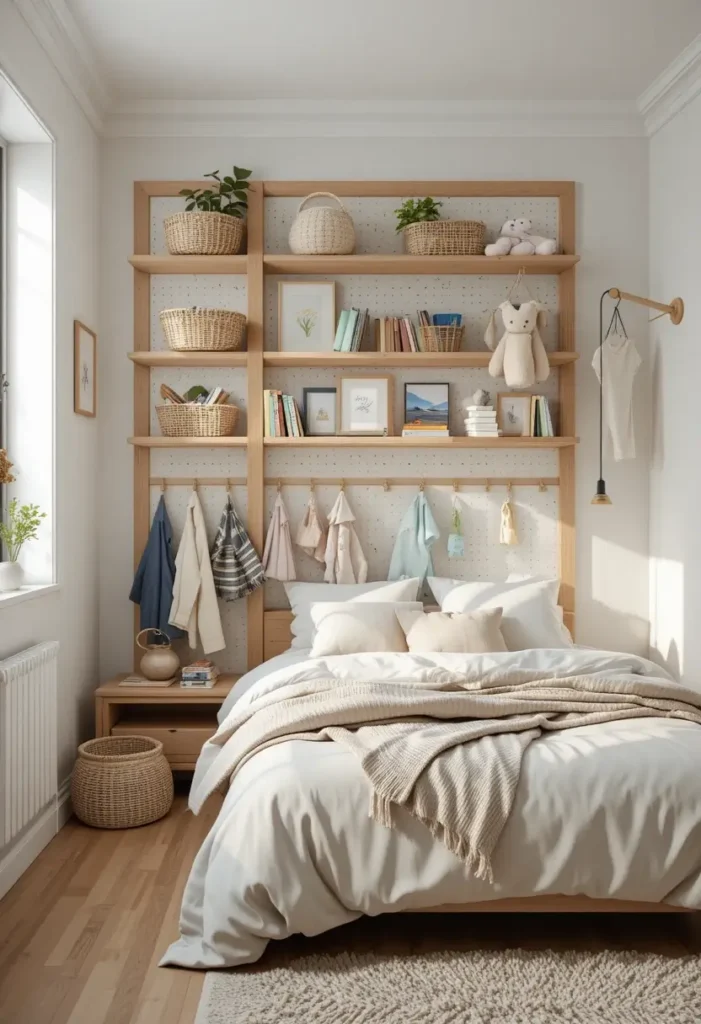
When floor space is limited, look up! One of the most effective small bedroom ideas for kids is using vertical wall space for storage and décor. Empty walls offer valuable real estate that can hold everything from books and toys to backpacks and craft supplies.
Install wall-mounted organizers, pegboards, hanging baskets, or narrow shelves to keep everyday essentials within easy reach without cluttering the floor. Pegboards are especially versatile because you can rearrange hooks, baskets, and shelves as your child’s needs change.
For younger children, keep frequently used items on lower shelves while placing keepsakes and seasonal décor higher up. This creates an organized room that’s both functional and visually appealing.
Ideas for vertical storage include:
- Pegboards with hooks
- Hanging fabric organizers
- Wall baskets
- Floating bookshelves
- Mounted cubbies
- Coat hooks
- Display ledges for artwork
Why Parents Love It
Using wall space keeps the floor clear for playtime while making it easier to organize toys, school supplies, and accessories.
Pro Tip: Stick to matching baskets or bins for a cleaner, more cohesive look that instantly makes the room feel less cluttered.
7. Maximize Space with a Bunk Bed for Shared Bedrooms
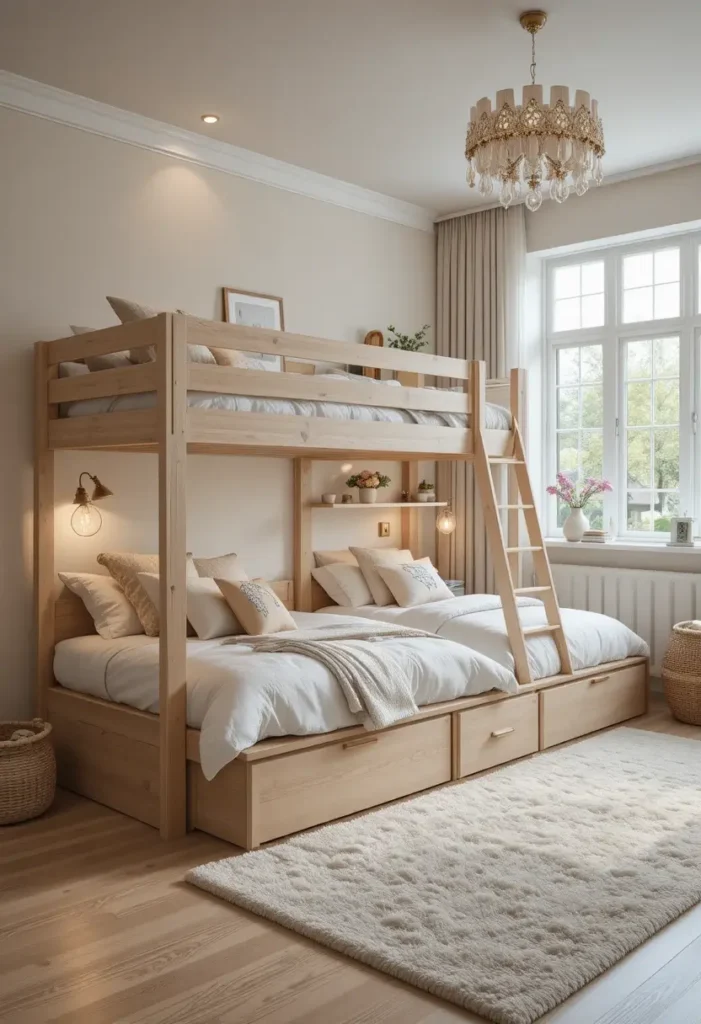
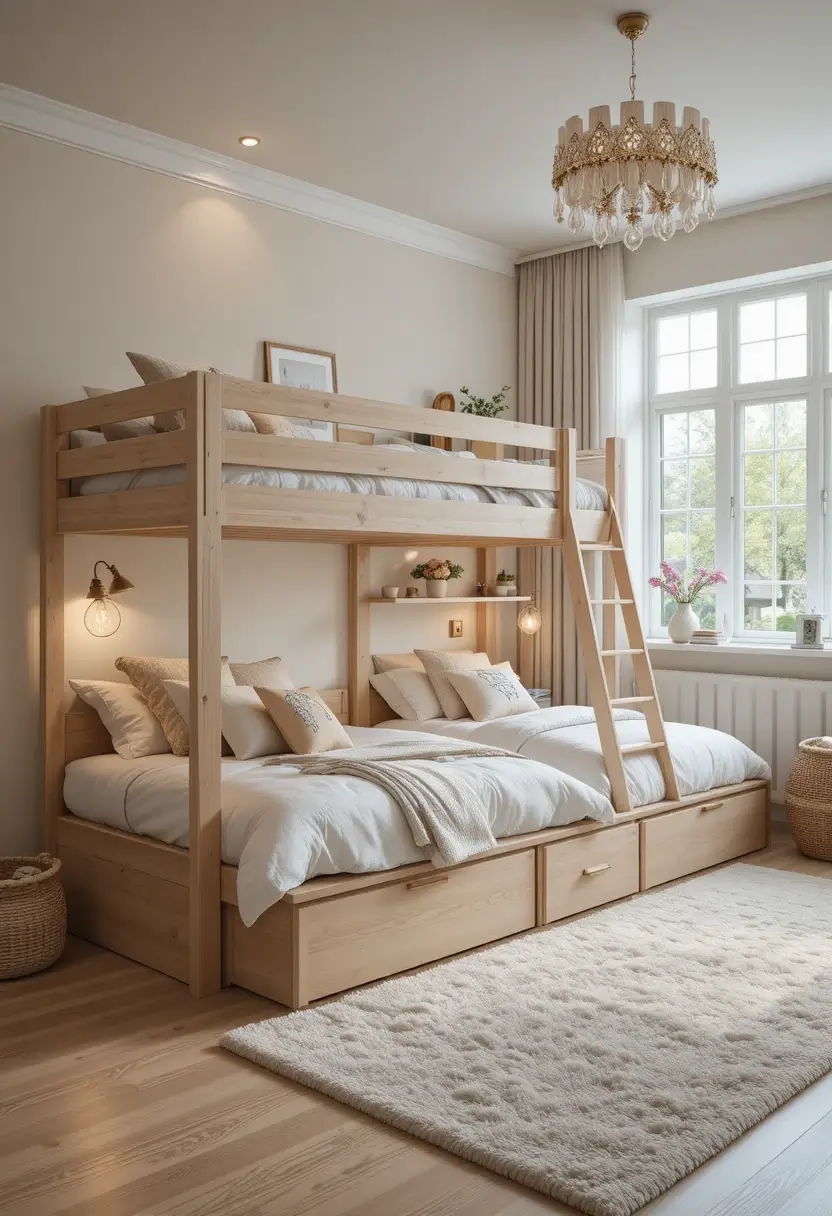
If siblings share a room, bunk beds are among the best small bedroom ideas for kids. By stacking two sleeping areas vertically, you instantly free up valuable floor space for play, studying, or additional storage.
Modern bunk beds come in a variety of styles, including models with built-in drawers, shelves, desks, and even wardrobes. These all-in-one designs are ideal for making the most of compact bedrooms.
Choose a design with sturdy guardrails and a secure ladder, and leave enough headroom on both bunks for comfortable sitting. Bright bedding in coordinating colors can help each child express their personality while maintaining a cohesive design.
Why Parents Love It
Bunk beds maximize sleeping space without making the room feel overcrowded, giving each child more room to play and grow.
Pro Tip: Give each child their own reading light, small shelf, or wall hook to create a sense of personal space in a shared bedroom.
8. Create a Cozy Reading Nook in an Unused Corner
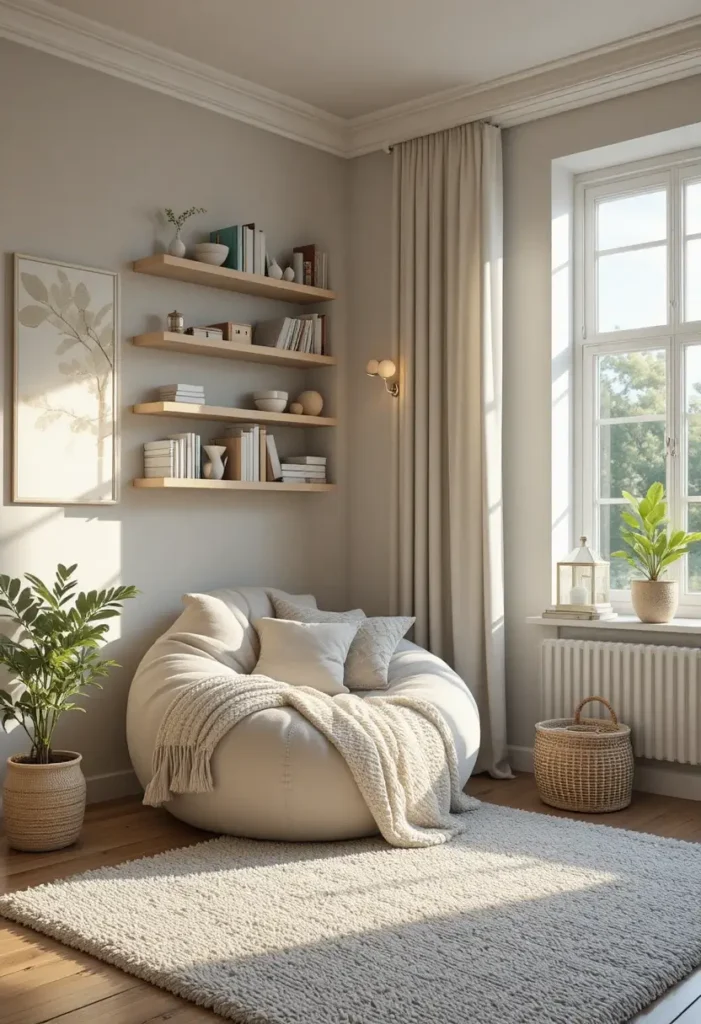
Even the smallest bedroom often has an overlooked corner that can become a magical retreat. Turning that space into a reading nook encourages quiet time while adding charm to the room.
A soft bean bag, floor cushion, or small armchair paired with a bookshelf and cozy lighting is all you need. Add a fluffy rug, a few throw pillows, and your child’s favorite books to create an inviting spot they’ll naturally gravitate toward.
This idea works particularly well beside a window where natural light makes reading even more enjoyable.
Complete the nook with:
- Soft blankets
- Decorative cushions
- Wall-mounted bookshelves
- String lights (for older kids)
- Personalized artwork
Why Parents Love It
A reading corner promotes healthy reading habits while making excellent use of an otherwise unused area.
Pro Tip: Rotate books every few weeks to keep your child excited about discovering something new.
9. Keep Toys Under Control with Stylish Storage Bins
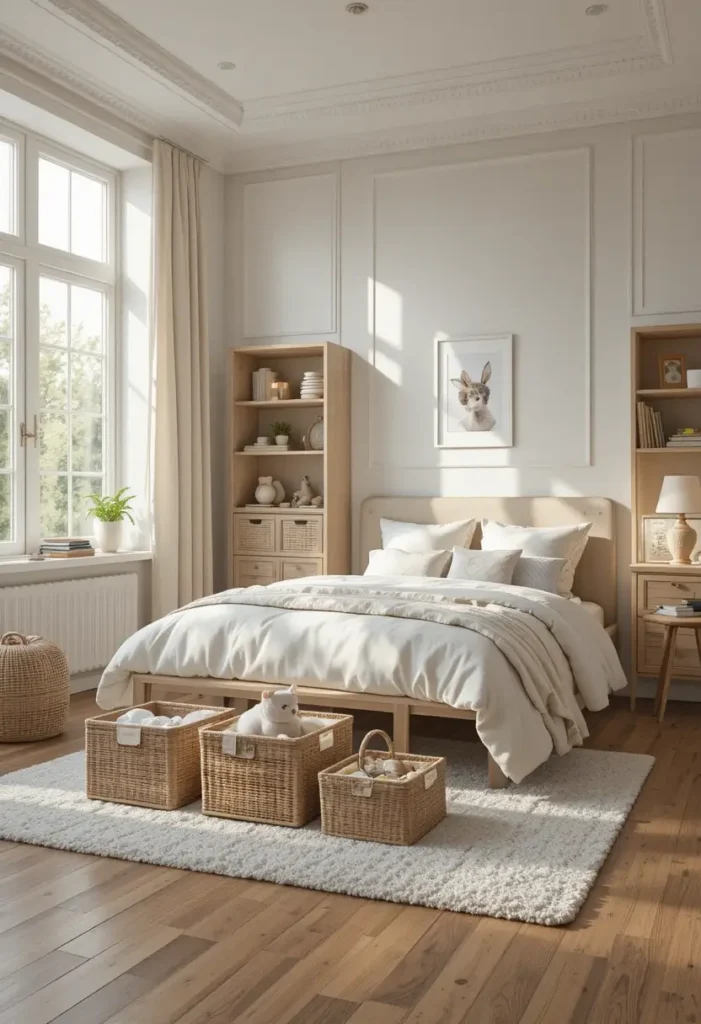
Toy clutter is one of the biggest challenges in any child’s bedroom. Fortunately, attractive storage bins make cleanup quick while helping the room stay neat every day.
Instead of leaving toys scattered across the floor, group similar items together in labeled baskets, fabric bins, or wooden crates. Place frequently used toys within easy reach and store less-used items on higher shelves.
Choosing bins in matching colors creates a polished look while still allowing your child’s personality to shine through with colorful labels or fun patterns.
Popular storage categories include:
- Building blocks
- Dolls
- Cars
- Art supplies
- Stuffed animals
- Dress-up clothes
- Board games
Why Parents Love It
Organized toys mean faster cleanup, fewer lost pieces, and a bedroom that’s always ready for play or bedtime.
Pro Tip: Follow the “one in, one out” rule by donating older toys whenever new ones are added to help keep clutter under control.
10. Use Mirrors to Make a Small Bedroom Feel Larger
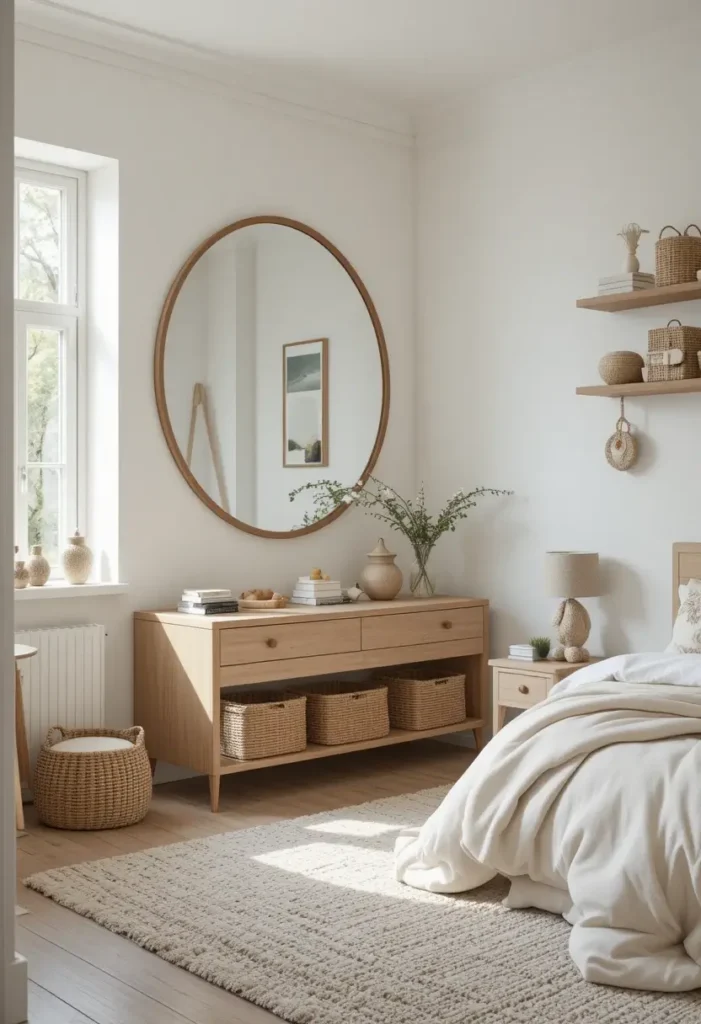
Mirrors are one of the oldest designer tricks for making compact spaces appear bigger, and they work just as well in children’s bedrooms.
A well-placed mirror reflects both natural and artificial light, creating the illusion of extra depth and brightness. Position a mirror opposite a window whenever possible to maximize daylight throughout the room.
Choose child-friendly mirrors with rounded corners or acrylic safety mirrors designed specifically for kids’ spaces. Decorative mirror frames can also become part of the room’s overall design, adding personality without taking up additional space.
Mirrors pair beautifully with:
- Light-colored walls
- Minimal window treatments
- Soft rugs
- Floating shelves
- Neutral furniture
Why Parents Love It
Mirrors instantly make a small room feel more open while brightening dark corners without requiring expensive renovations.
Pro Tip: Avoid placing mirrors where they reflect clutter. Instead, position them to reflect windows, artwork, or neatly styled areas for the biggest visual impact.
11. Make Every Inch Count with Under-Bed Storage
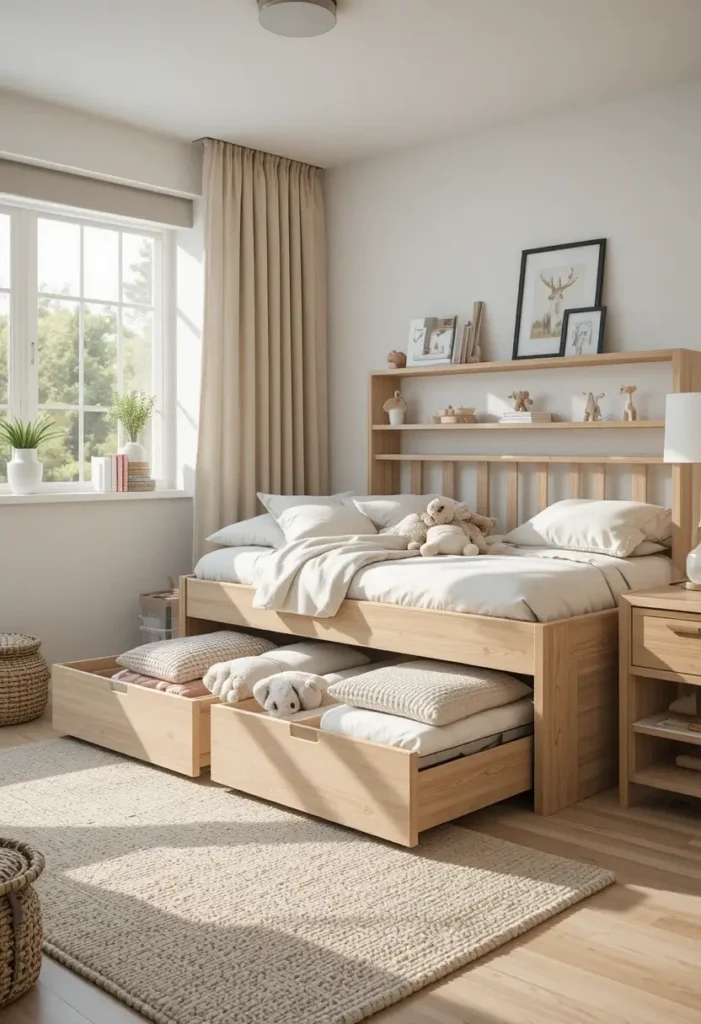
When you’re looking for small bedroom ideas for kids, don’t overlook the space under the bed. It’s one of the largest storage areas in the room, yet it’s often left unused or becomes a hiding place for forgotten toys.
Whether your child has a standard bed, a captain’s bed, or a bunk bed, adding storage underneath helps keep everyday clutter out of sight. Rolling storage bins, pull-out drawers, or vacuum storage bags are excellent options for organizing everything from extra bedding to seasonal clothing and toys.
Clear containers make it easy for children to see what’s inside, while labeled fabric bins create a tidier, more coordinated look.
Great items to store under the bed include:
- Extra blankets
- Seasonal clothes
- Shoes
- Board games
- LEGO collections
- Art supplies
- Holiday decorations
Why Parents Love It
Using under-bed storage frees up closet and dresser space without adding another piece of furniture to an already small room.
Pro Tip: Choose storage containers with wheels so kids can easily slide them in and out without scratching the floor.
12. Install a Fold-Down Desk for Homework and Crafts
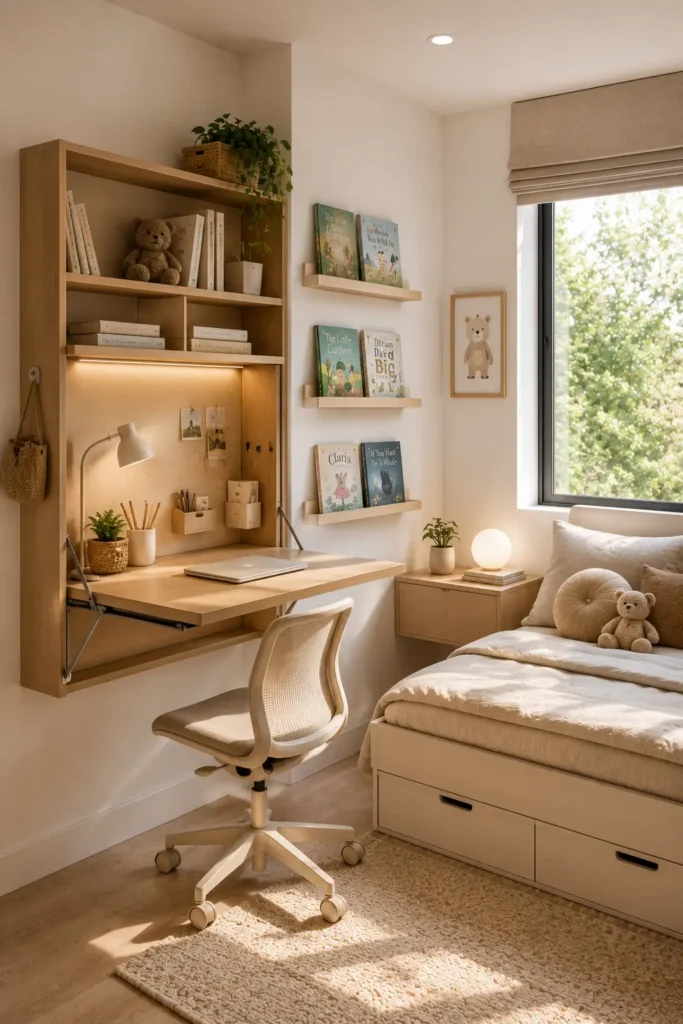
As children grow, they need a dedicated place for homework, drawing, and creative projects. In a small bedroom, however, a traditional desk can take up valuable floor space.
A fold-down wall desk offers the perfect solution. It stays neatly tucked against the wall when not in use and folds out only when needed. Some designs even include built-in shelves or compartments for school supplies, making organization even easier.
Pair the desk with a lightweight chair that can slide underneath or fold away when homework is finished.
To create a productive study area, add:
- A small desk lamp
- Wall organizers
- Floating shelves
- Pencil holders
- A calendar or planner
- Corkboard for artwork and reminders
Why Parents Love It
Children have a dedicated learning space without permanently sacrificing precious floor area.
Pro Tip: Position the desk near a window whenever possible to take advantage of natural daylight during homework time.
13. Hang Curtains Higher to Make the Room Feel Taller
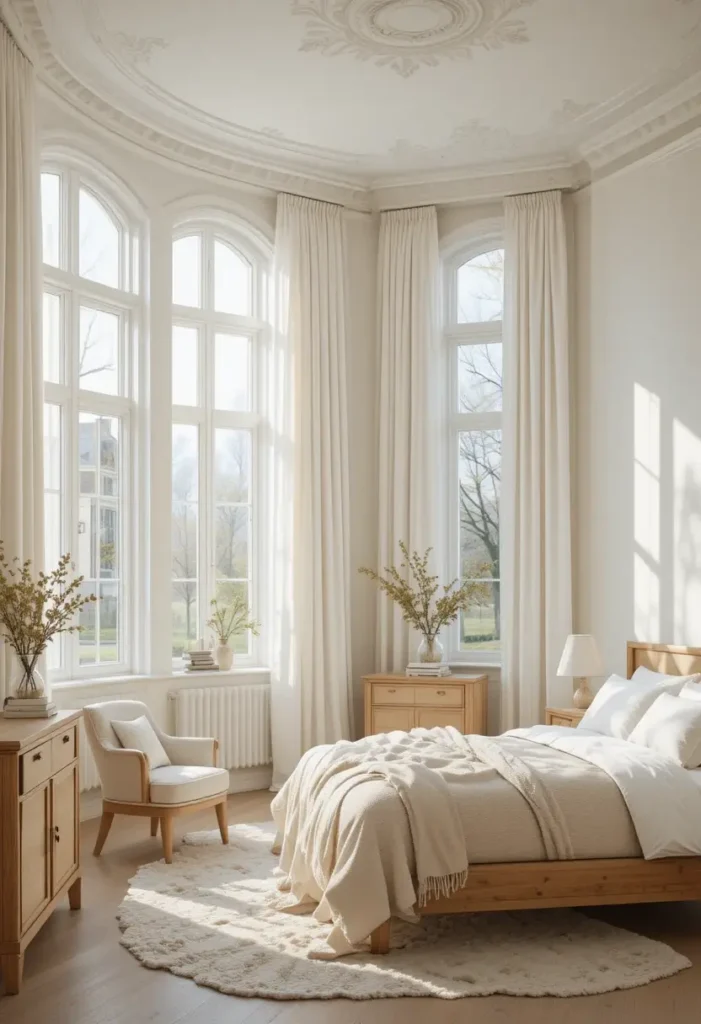
Here’s a decorating trick that professional interior designers use all the time: hang curtains higher than the top of the window. This simple change draws the eye upward and creates the illusion of higher ceilings.
Choose curtains that extend almost to the floor for an elegant, elongated appearance. Light fabrics such as linen or cotton allow natural light to flow through while maintaining privacy.
Avoid heavy, dark drapes that can make a compact bedroom feel smaller. Instead, opt for soft neutral shades or subtle patterns that complement the rest of the décor.
Excellent curtain colors include:
- White
- Ivory
- Soft gray
- Light beige
- Pale blue
- Sage green
- Blush pink
Why Parents Love It
It’s an affordable update that dramatically changes how spacious the room feels without any remodeling.
Pro Tip: Install the curtain rod 6–12 inches above the window frame for the best visual effect.
14. Organize the Closet with Smart Storage Systems
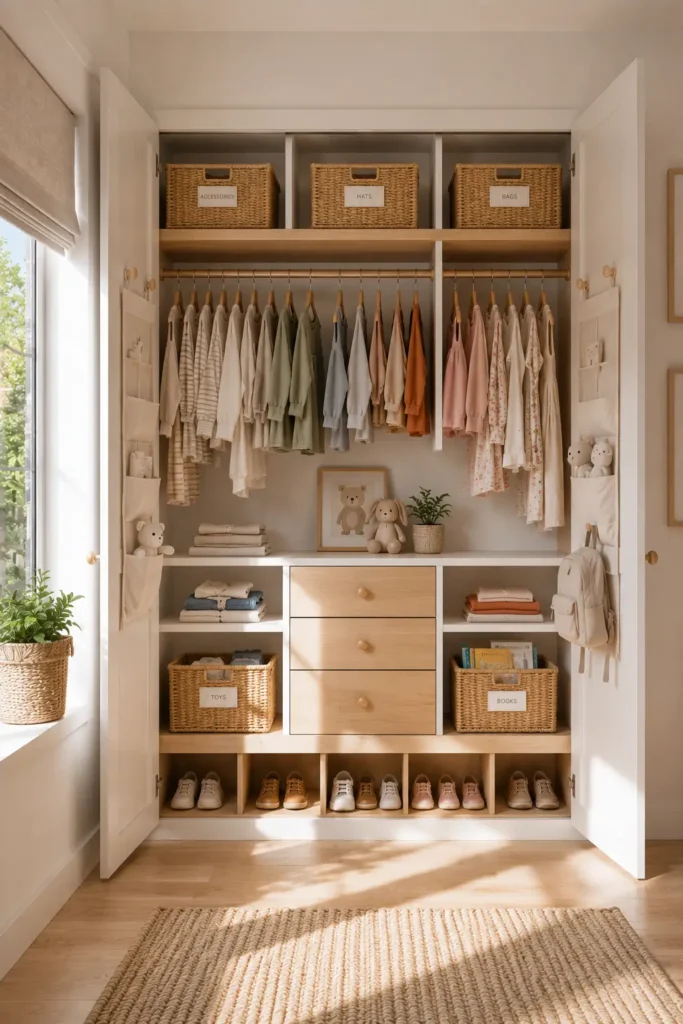
A messy closet can quickly spill over into the rest of the bedroom. One of the easiest small bedroom ideas for kids is transforming the closet into a highly organized storage zone.
Start by dividing the closet into sections for clothing, shoes, accessories, and toys. Adjustable shelving, hanging organizers, baskets, and stackable bins help maximize every inch while making it easier for children to find what they need.
If your child is younger, install a second lower clothing rod so they can reach their own clothes and begin developing independent organization skills.
Simple closet upgrades include:
- Double hanging rods
- Shelf dividers
- Clear storage bins
- Hanging shoe organizers
- Drawer inserts
- Labelled baskets
- Slim velvet hangers
Why Parents Love It
An organized closet reduces clutter throughout the bedroom and makes busy mornings much less stressful.
Pro Tip: Review the closet every season and donate clothes, shoes, and toys your child has outgrown to keep storage manageable.
15. Add Personality with Wall Decals Instead of Bulky Décor
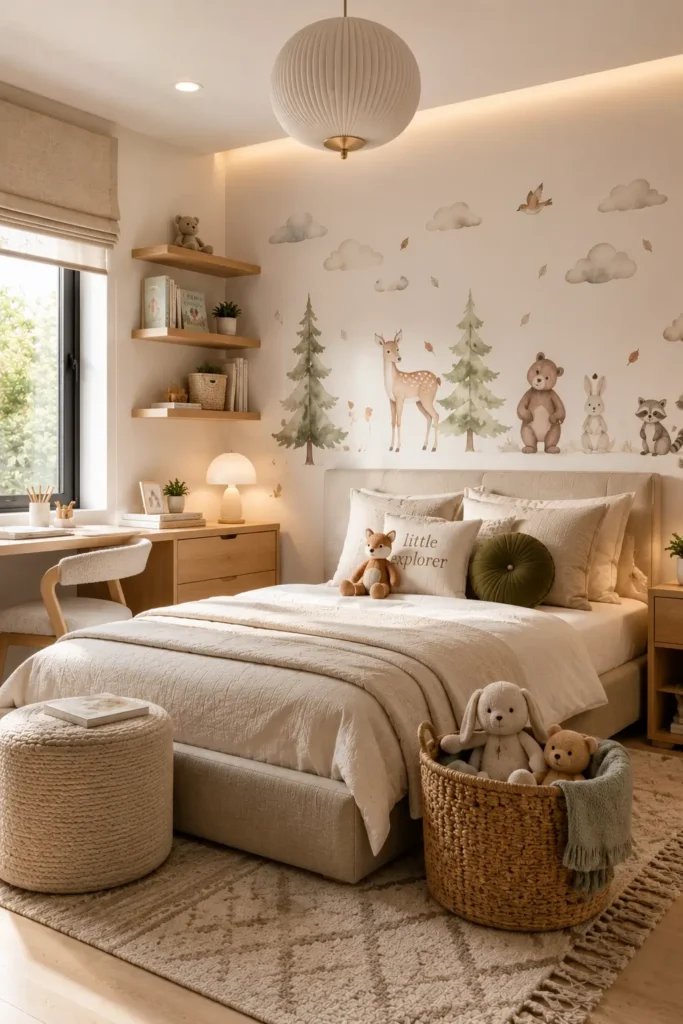
Decorating a small bedroom doesn’t require oversized artwork or furniture. Wall decals are an affordable and space-saving way to give the room character without taking up valuable floor space.
Available in countless designs—from woodland animals and outer space to rainbows, flowers, sports, and dinosaurs—wall decals can easily be updated as your child’s interests change.
Unlike wallpaper, many removable decals peel off cleanly, making them perfect for growing families or renters.
You can also combine decals with framed artwork, floating shelves, or personalized name signs to create a unique feature wall without overwhelming the room.
Popular decal themes include:
- Stars and moons
- Jungle animals
- Construction vehicles
- Fairytale castles
- Ocean creatures
- Mountains
- Clouds
- Balloons
- Sports equipment
Why Parents Love It
Wall decals add fun, color, and personality while leaving valuable floor space free for furniture and play.
Pro Tip: Stick to one feature wall instead of decorating every wall. This keeps the bedroom feeling open and prevents the design from becoming visually overwhelming.
16. Add a Storage Bench That Doubles as Seating
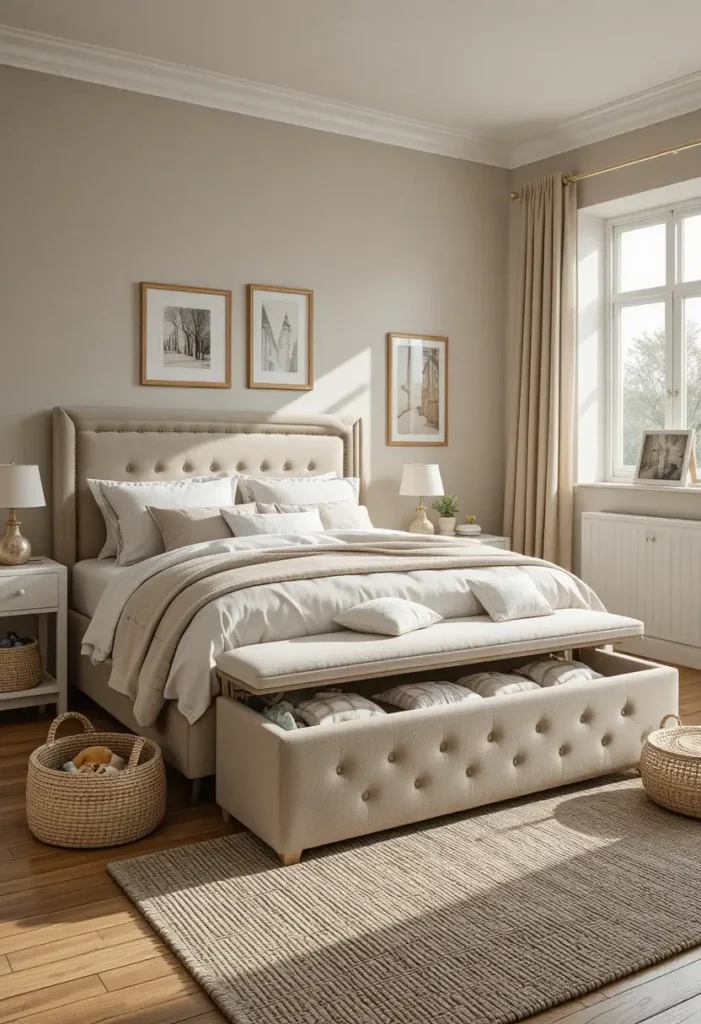
A storage bench is one of those pieces of furniture that quietly does it all. It provides a comfortable place to sit while getting dressed, putting on shoes, or reading a favorite book, and it also offers hidden storage for items you don’t want scattered around the room.
Place a storage bench at the foot of the bed, beneath a window, or along an empty wall. Fill it with stuffed animals, blankets, board games, or seasonal clothing to instantly reduce clutter.
Choose a design with a soft, upholstered top or add colorful cushions to make it even more inviting. Neutral colors like white, beige, or light gray blend seamlessly into almost any bedroom style.
Why Parents Love It
A storage bench combines seating and storage in one compact piece, helping every square foot of the room work harder.
Pro Tip: Select a bench with soft-close hinges to help protect little fingers from getting pinched.
17. Use Over-the-Door Organizers for Extra Storage
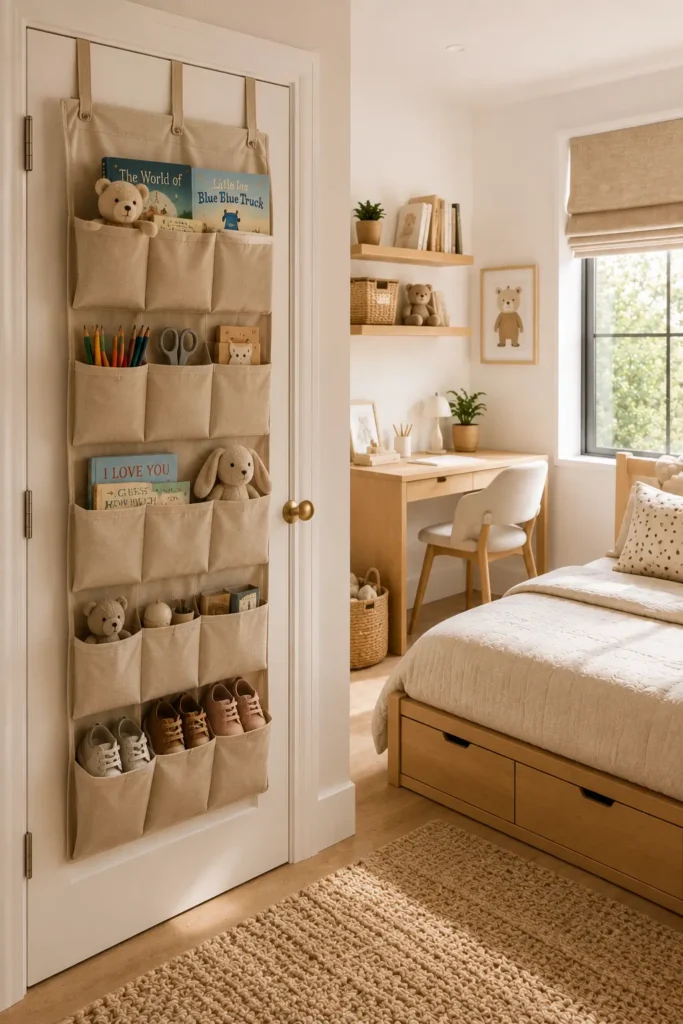
Doors are often overlooked when planning a child’s bedroom, but they offer valuable storage opportunities. Over-the-door organizers are inexpensive, easy to install, and surprisingly versatile.
Instead of using floor space for small items, hang organizers behind the bedroom or closet door to store shoes, books, dolls, hair accessories, art supplies, or even rolled-up blankets.
Fabric organizers with clear pockets make it easy for children to find what they need while encouraging them to put everything back in its proper place.
Other great uses include storing:
- Water bottles
- Coloring books
- Small toys
- Socks
- Hats
- Gloves
- Pajamas
Why Parents Love It
This simple solution adds storage without requiring any permanent changes or additional furniture.
Pro Tip: Avoid overloading the organizer. Keeping it lightweight helps protect the door and makes it easier for children to use independently.
18. Choose Furniture That Fits the Room’s Scale
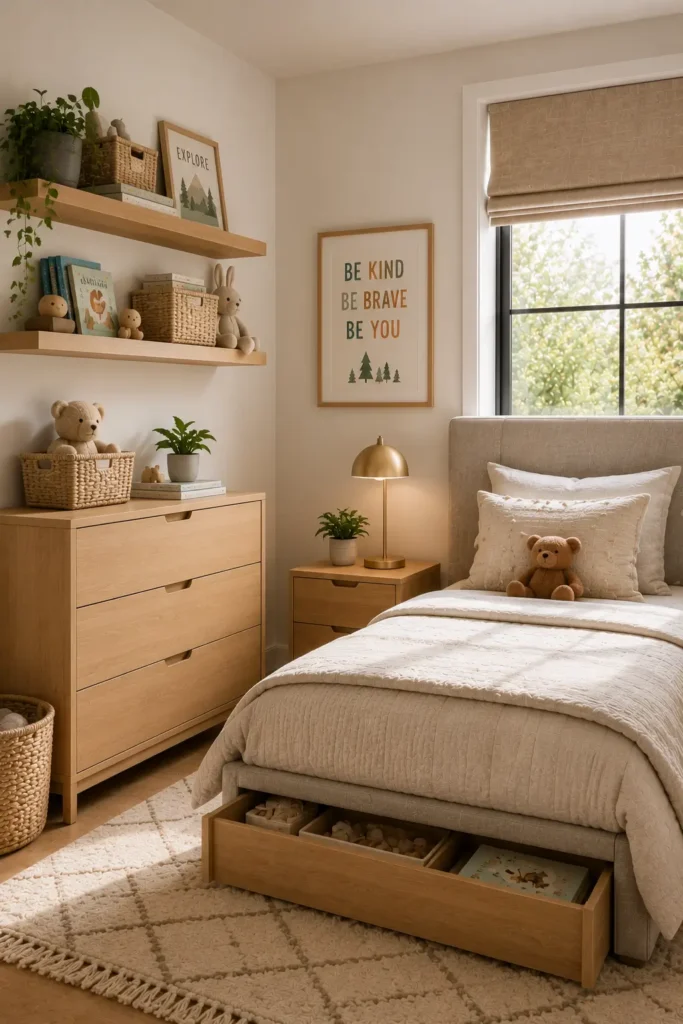
One of the biggest mistakes people make when decorating small bedrooms is choosing furniture that’s too large. Oversized beds, bulky dressers, and massive nightstands can quickly overwhelm a compact room.
Instead, select furniture designed for children’s bedrooms or pieces with slimmer profiles. A narrow dresser, compact bedside table, or small bookshelf often provides plenty of storage while leaving enough room to move around comfortably.
Whenever possible, choose furniture with clean lines and raised legs. These styles allow more of the floor to remain visible, creating the illusion of a larger room.
Why Parents Love It
Properly scaled furniture makes the bedroom feel open, balanced, and easier to organize without sacrificing functionality.
Pro Tip: Before buying new furniture, measure the room carefully and use painter’s tape to outline each piece on the floor. This helps you visualize how everything will fit before making a purchase.
19. Create Zones for Sleeping, Playing, and Studying
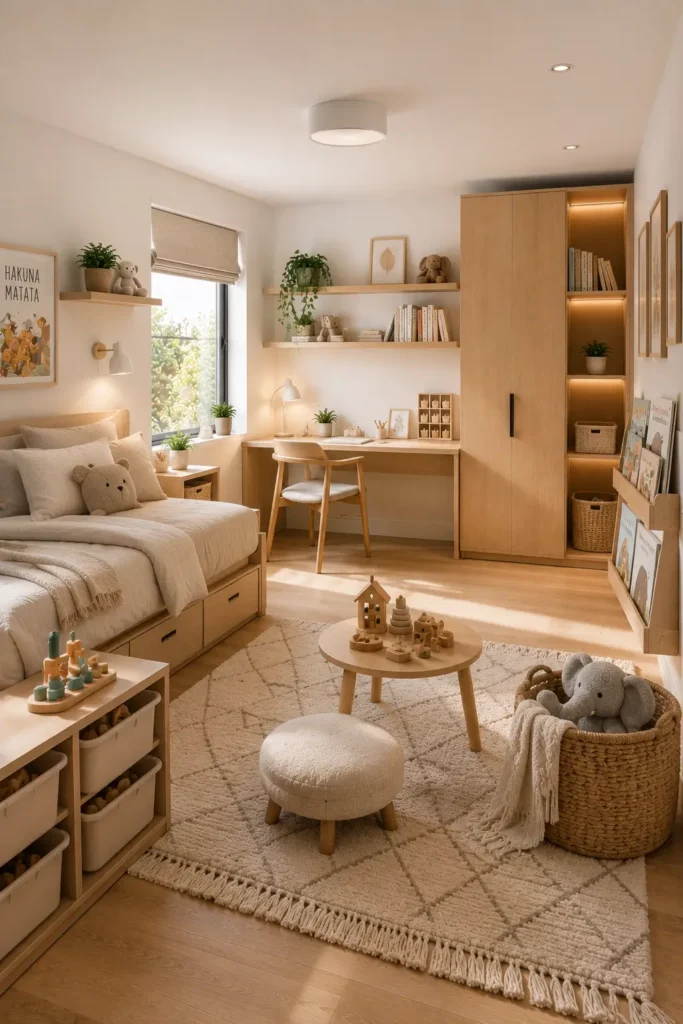
Even a tiny bedroom can feel organized when each area has a clear purpose. Dividing the room into simple zones helps children understand where different activities belong and makes daily routines easier.
For example:
- Sleeping Zone: Bed, nightstand, and reading light.
- Study Zone: Small desk, chair, and school supplies.
- Play Zone: Soft rug, toy baskets, and favorite games.
You don’t need walls to define these areas. Rugs, furniture placement, and lighting can naturally separate each section while maintaining an open layout.
This approach also encourages children to tidy up because every item has a designated place.
Why Parents Love It
Creating zones reduces visual clutter and helps children transition smoothly between playtime, homework, and bedtime.
Pro Tip: Keep the play area closest to storage bins so cleanup becomes quick and effortless.
20. Keep the Décor Simple and Let the Room Breathe
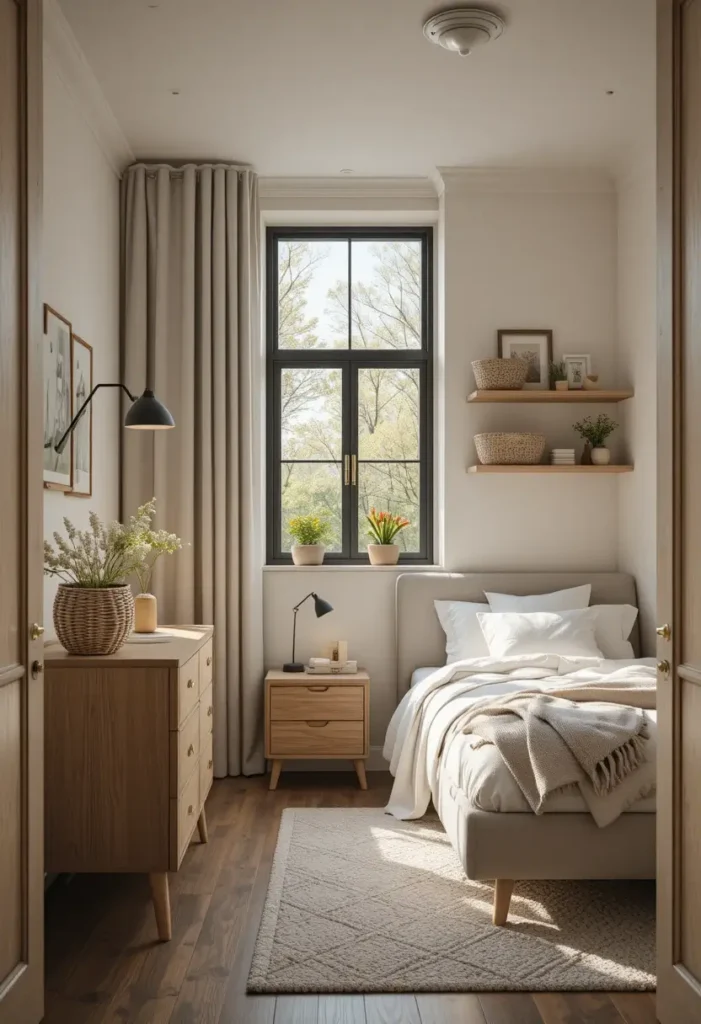
One of the most effective small bedroom ideas for kids is knowing when to stop decorating. It’s tempting to fill every wall, shelf, and corner, but too many decorations can make a small room feel busy and cramped.
Instead, choose a few meaningful pieces that reflect your child’s personality. A favorite framed print, a cozy rug, colorful bedding, and a handful of decorative accessories are often all you need to create a cheerful, welcoming bedroom.
Leave some open wall space and avoid overcrowding shelves. A clean, uncluttered design not only looks more spacious but also makes it easier to clean and reorganize as your child grows.
Focus on quality rather than quantity, and remember that children’s interests evolve over time. A simple foundation makes future updates quick and affordable.
Why Parents Love It
A thoughtfully decorated room feels calm, organized, and timeless while giving children plenty of room to play, learn, and relax.
Pro Tip: Every few months, remove items your child no longer uses or loves. Regular decluttering keeps even the smallest bedroom feeling fresh and functional.
Small Bedroom Design Tips That Make a Big Difference
Beyond furniture and storage, a few thoughtful design choices can completely change how a compact bedroom looks and functions. Keep these ideas in mind as you plan your child’s room:
- Choose furniture with exposed legs to create the illusion of more floor space.
- Limit oversized décor and focus on a few meaningful accessories instead.
- Keep the floor as clear as possible by mounting shelves, hooks, and organizers on the walls.
- Use matching storage bins to create a clean, cohesive look.
- Layer lighting with ceiling fixtures, bedside lamps, and reading lights to make the room feel warm and inviting.
- Rotate toys and books every few weeks to reduce clutter while keeping playtime exciting.
- Leave open play space whenever possible, as children benefit from having room to move, build, and imagine.
A small bedroom doesn’t have to feel restrictive. With smart planning and thoughtful organization, it can become one of the most functional and enjoyable rooms in your home.
Final Thoughts
Small bedroom ideas for kids don’t have to be complicated or expensive to make a big impact. By choosing multifunctional furniture, making the most of vertical storage, embracing light colors, and keeping clutter under control, you can transform even the smallest bedroom into a space that’s practical, organized, and full of personality.
Remember, the best kids’ bedrooms are designed to grow with your child while supporting play, learning, and restful sleep. Start with one or two ideas that suit your family’s needs, then build from there. Before you know it, you’ll have a bedroom that feels bigger, works smarter, and is a joy for both you and your child.
Which of these ideas is your favorite? Share your thoughts in the comments, and don’t forget to save this guide for your next bedroom makeover!
Frequently Asked Questions
How do you make a small kids’ bedroom look bigger?
The easiest way to make a small kids’ bedroom look larger is by using light-colored walls, maximizing natural light, choosing furniture that fits the room, and incorporating mirrors to reflect light. Keeping clutter to a minimum and using vertical storage also helps create a more open and spacious feel.
What colors make a small kids’ bedroom feel larger?
Soft shades such as white, cream, light gray, pale blue, sage green, blush pink, and warm beige reflect more light and make compact bedrooms appear brighter and more spacious. You can add pops of color through bedding, artwork, and accessories.
What furniture works best in a small kids’ bedroom?
Space-saving furniture like loft beds, bunk beds, storage beds, fold-down desks, storage benches, and multifunctional dressers are excellent choices. These pieces provide extra storage while helping maximize valuable floor space.
How can I organize a tiny kids’ bedroom?
Use labeled storage bins, under-bed drawers, floating shelves, over-the-door organizers, closet systems, and wall hooks to keep everything organized. Giving every item a designated place makes cleanup easier and keeps clutter under control.
How do you decorate a shared small kids’ bedroom?
Choose bunk beds or loft beds to save space, provide each child with their own storage area, use matching furniture for a cohesive look, and personalize each sleeping area with different bedding, wall art, or reading lights to give each child their own sense of identity.
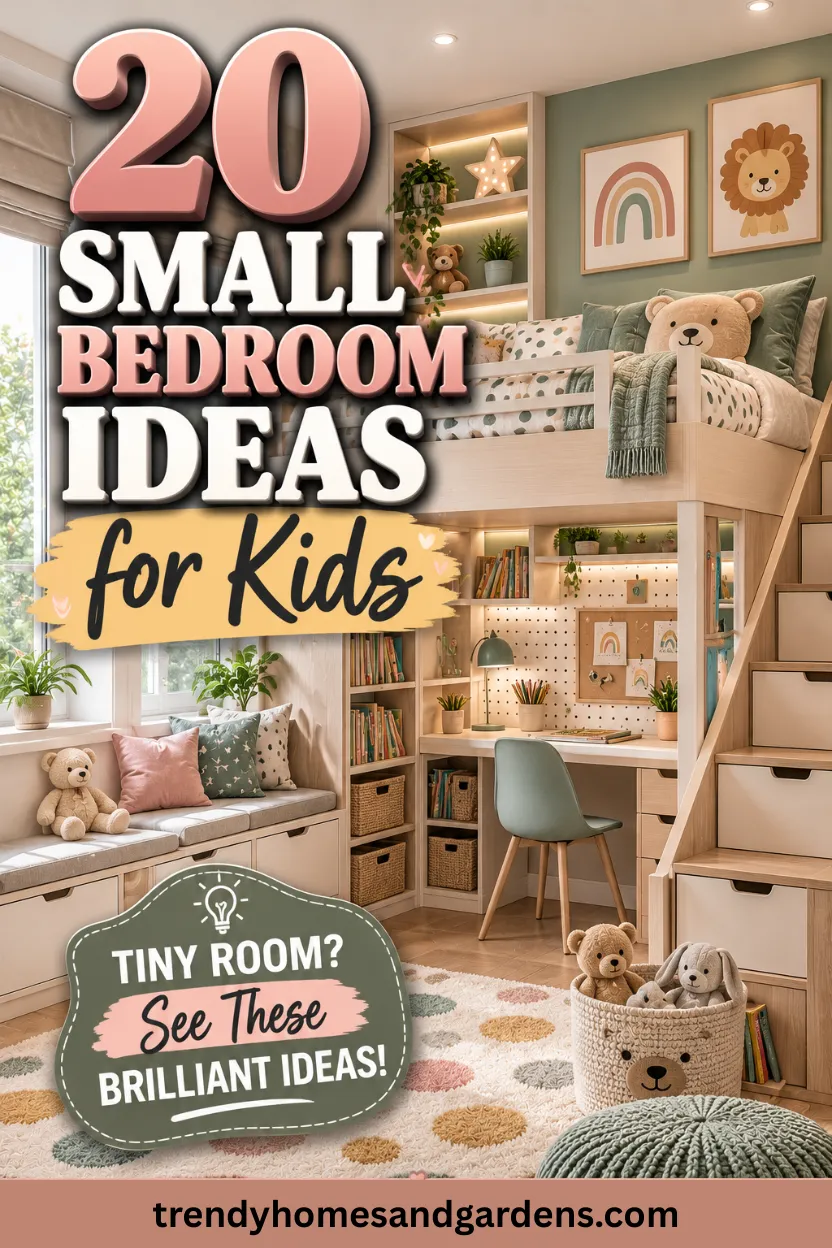
20 Small Bedroom Ideas for Kids That Maximize Every Inch
Looking for the best small bedroom ideas for kids? Discover 20 clever ways to maximize every inch with loft beds, smart storage solutions, multifunctional furniture, space-saving organization hacks, and beautiful décor ideas. Whether you're decorating a tiny bedroom for a boy, girl, or shared siblings, these practical tips will help you create a stylish, organized, and functional room your kids will love. Save this guide for your next bedroom makeover! #SmallBedroomIdeas #KidsBedroom #KidsRoomIdeas #BedroomOrganization #SmallSpaceLiving #KidsRoomDecor
Pin it on Pinterest