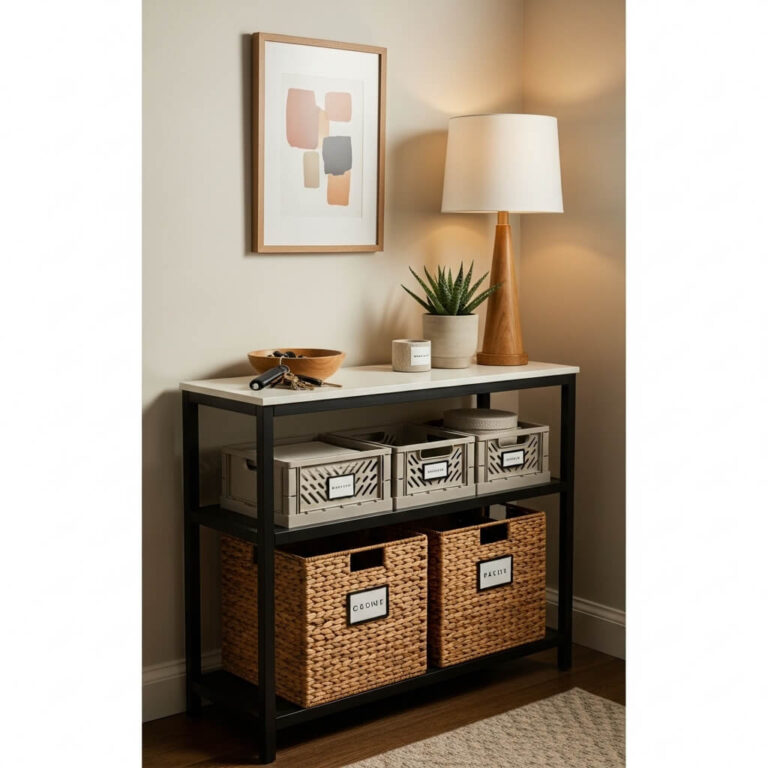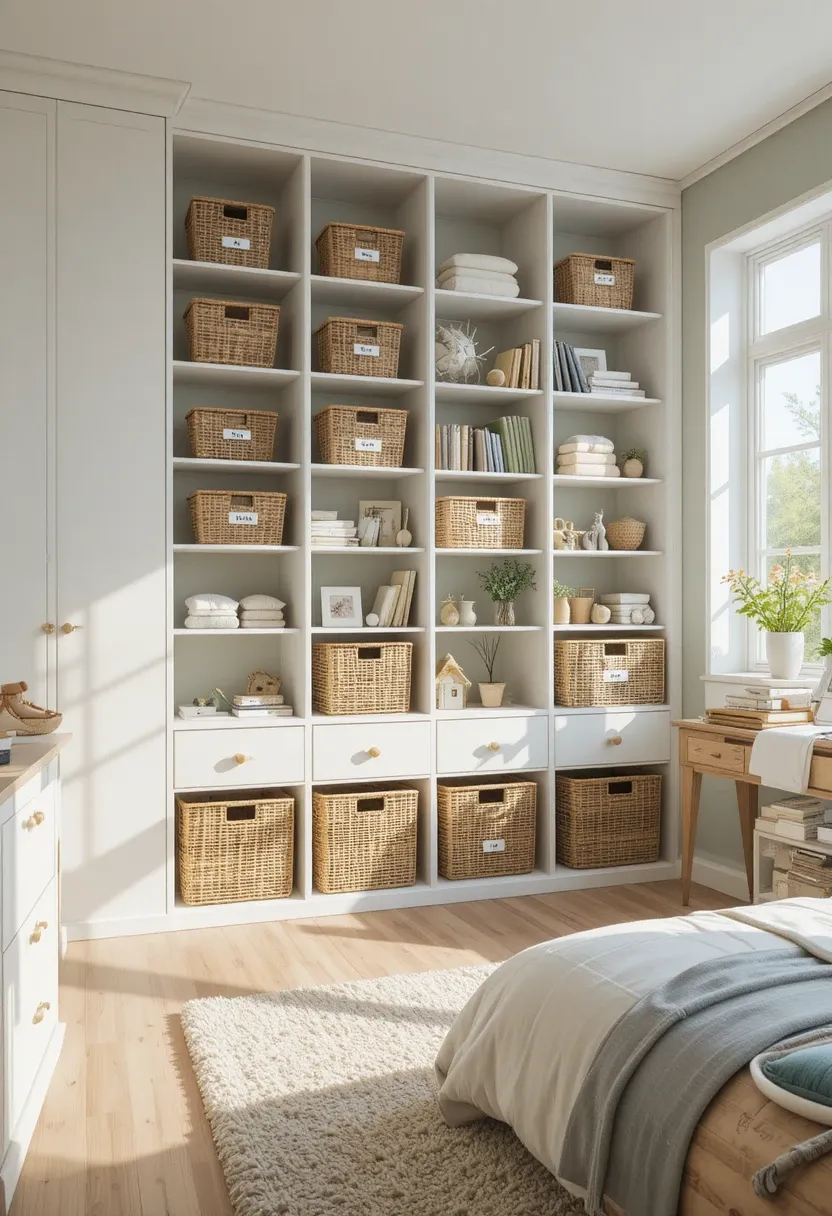
22 Kids’ Bedroom Organization Ideas: Easy Ways to Make Cleanup a Breeze
Kids’ Bedroom Organization Ideas can completely transform the way your child’s room looks and functions. If you’re tired of stepping on building blocks, searching for missing shoes, or reminding your kids to clean up every single day, you’re definitely not alone. Keeping a child’s bedroom tidy often feels like a never-ending challenge, but the right organization strategies can make cleanup faster, easier, and even enjoyable for little ones.
The secret isn’t buying more storage bins—it’s creating simple systems that children can actually use independently. From clever toy storage to multifunctional furniture and easy-to-reach organizers, there are plenty of practical ways to reduce clutter without sacrificing fun. Whether you’re organizing a tiny bedroom, a shared sibling room, or simply looking for smarter storage ideas, these Kids’ Bedroom Organization Ideas will help create a cleaner, calmer, and more functional space the whole family will appreciate.
1. Label Everything So Kids Know Where It Belongs
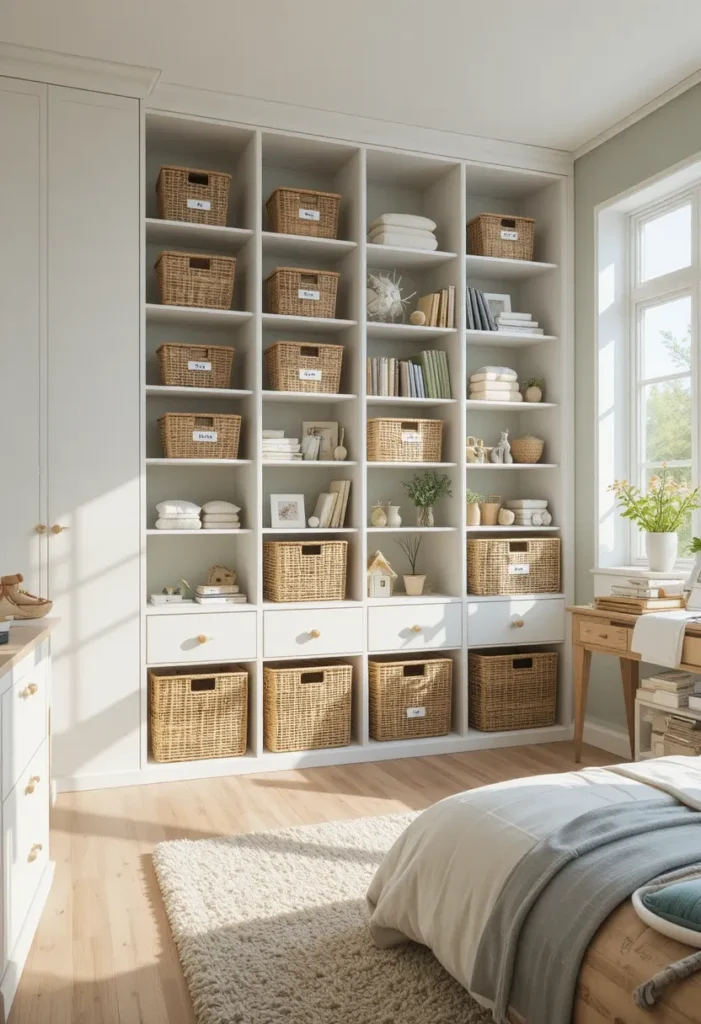
One of the simplest Kids’ Bedroom Organization Ideas is labeling every storage container, drawer, and shelf. Children are much more likely to put things away when they know exactly where each item belongs. Labels remove the guesswork and make cleanup feel like matching instead of sorting.
For younger children, pair written labels with colorful pictures. A photo of toy cars on a bin or a picture of books on a shelf makes it easy for pre-readers to recognize where their belongings belong. Older kids can benefit from clearly written labels that encourage independence.
Consider labeling:
- Toy bins
- Dressers
- Closet shelves
- Art supply drawers
- Laundry baskets
- Book baskets
Designer Tip: Use matching label holders or waterproof vinyl labels to create a neat, cohesive look that blends beautifully with the room’s décor.
2. Use Open Toy Bins for Quick and Easy Cleanup
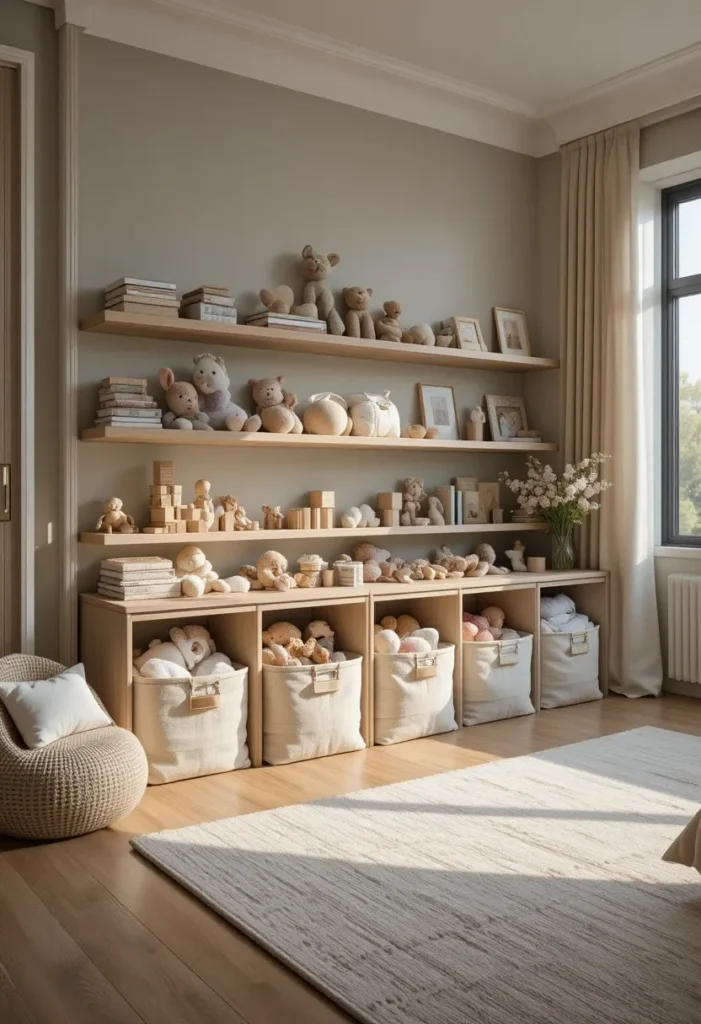
If toys disappear into deep storage boxes with heavy lids, chances are they won’t make it back after playtime. Open bins are one of the most practical Kids’ Bedroom Organization Ideas because they encourage children to toss toys back without struggling with complicated containers.
Choose sturdy bins that are lightweight enough for little hands to carry. Fabric bins work well for stuffed animals, while durable plastic bins are ideal for building blocks, action figures, and larger toys.
Grouping similar toys together also makes finding favorites much easier. Keep one bin for dolls, another for building bricks, and another for vehicles instead of mixing everything together.
Cleanup becomes much faster when kids only have to drop toys into clearly designated containers.
Designer Tip: Choose matching bins in neutral shades or soft colors to create a tidy, coordinated appearance without making the room feel busy.
3. Install Cube Storage That Grows with Your Child
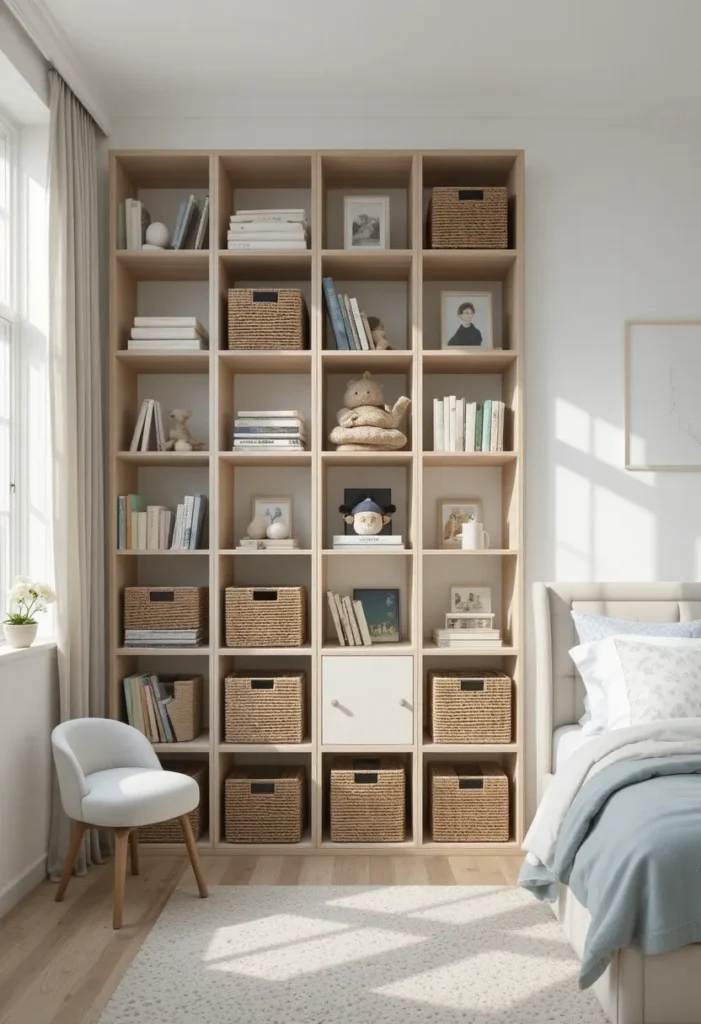
Cube organizers have become a favorite among parents—and for good reason. They offer incredible flexibility while making everyday organization effortless.
Instead of piling toys into one oversized chest, divide items into individual cubes. Each compartment can hold a specific category, helping children quickly locate and return their belongings.
Cube storage works especially well for:
- Books
- Building sets
- Dolls
- Puzzles
- Board games
- Craft supplies
- Dress-up accessories
As your child grows, the cubes can easily transition from toy storage to school supplies, sports equipment, or decorative baskets.
For added safety, always secure tall cube organizers to the wall.
Designer Tip: Alternate open cubes with fabric baskets to create visual balance while hiding everyday clutter.
4. Maximize Hidden Space with Under-Bed Storage
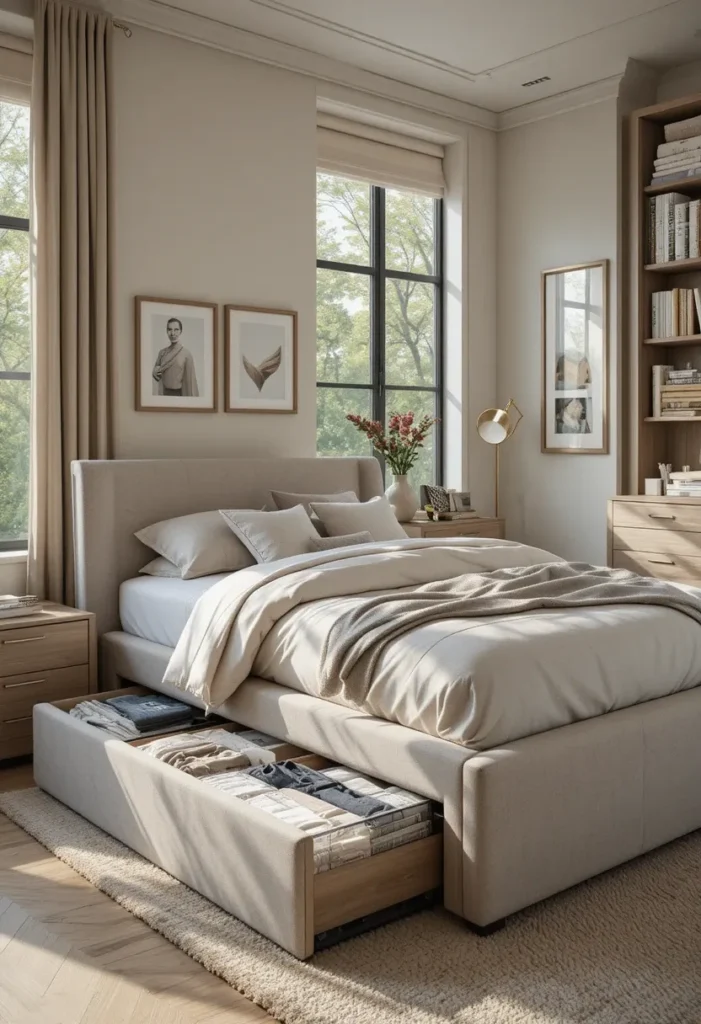
When floor space is limited, look underneath the bed. It’s one of the most overlooked Kids’ Bedroom Organization Ideas, yet it provides a surprising amount of hidden storage.
Low-profile rolling drawers or storage boxes are perfect for items that aren’t needed every day, including:
- Seasonal clothing
- Extra bedding
- Holiday decorations
- Large toys
- Shoes
- Memory keepsakes
Rolling storage makes everything easy to access without creating additional clutter around the room.
For younger children, clear containers make it easier to identify what’s inside without opening every box.
Designer Tip: Choose matching under-bed containers with wheels to keep everything organized while maintaining a clean, streamlined appearance.
5. Display Books on Floating Shelves
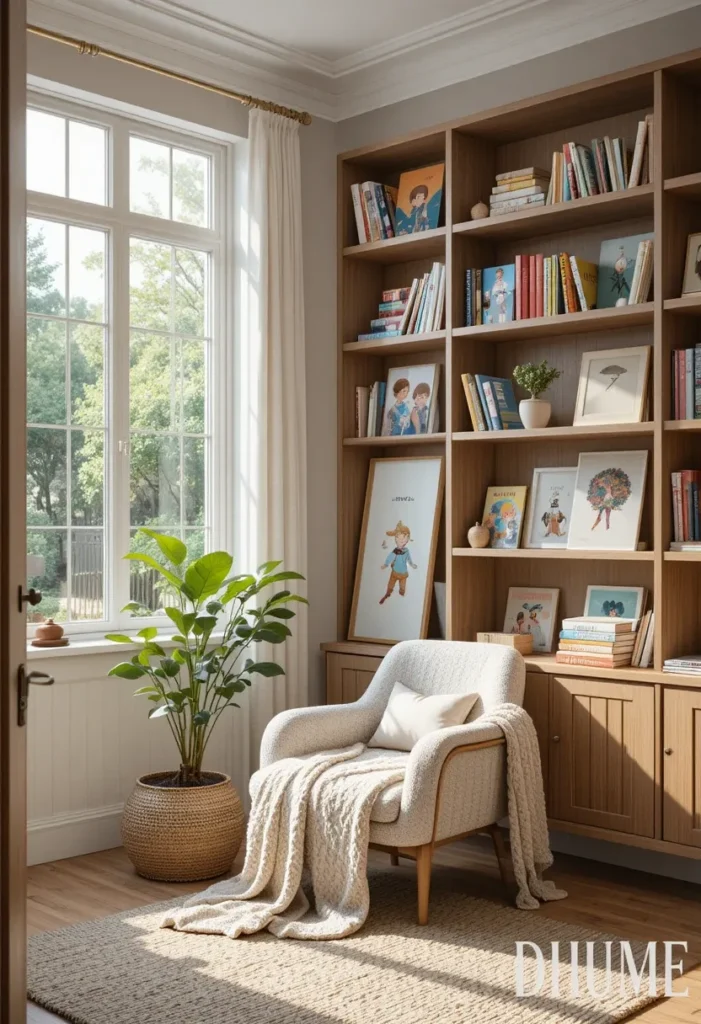
Books often end up stacked on the floor or crammed into overflowing bookcases. Floating shelves offer a stylish solution while encouraging children to read more often.
Install several low floating shelves where children can easily reach their favorite books. Displaying book covers instead of book spines makes selecting stories much more exciting, especially for younger readers.
Rotate books every few weeks to keep the display fresh and maintain your child’s interest.
Floating shelves also free up valuable floor space, making smaller bedrooms feel larger and less crowded.
Designer Tip: Combine books with small decorative items like framed artwork, wooden toys, or plants to create an inviting reading corner.
6. Keep Favorite Toys Handy with Rolling Storage Carts
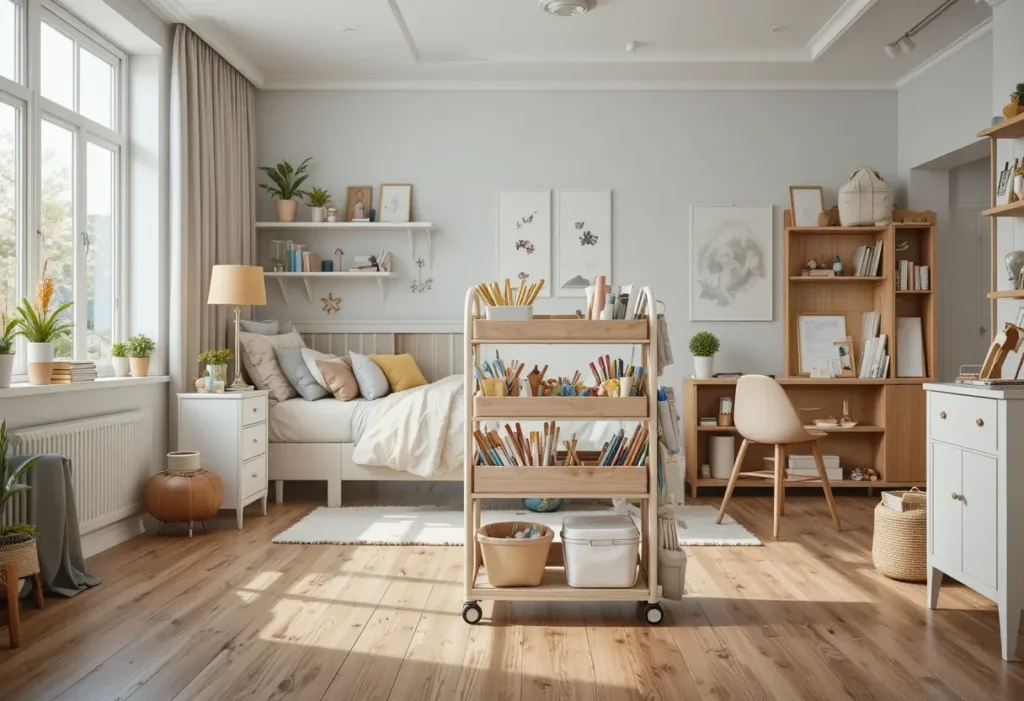
A rolling storage cart is one of those Kids’ Bedroom Organization Ideas that quickly becomes indispensable.
Because the cart moves easily from one area to another, children can bring their favorite toys, art supplies, or homework materials wherever they’re playing and simply roll everything back when they’re finished.
Use separate tiers for different activities:
- Top shelf for coloring supplies
- Middle shelf for building toys
- Bottom shelf for puzzles or games
The portability encourages independent cleanup since everything stays together in one organized location.
Designer Tip: Choose a metal or wooden cart that complements your bedroom furniture for a polished, designer-inspired look.
7. Rotate Toys Instead of Storing Everything at Once
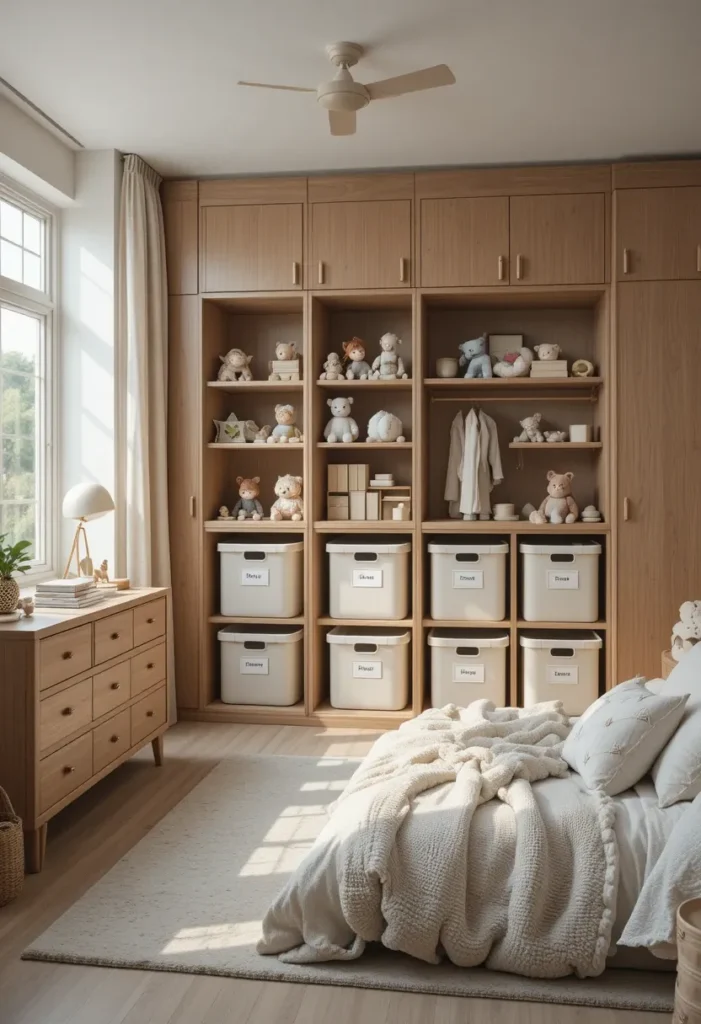
Have you noticed your child only plays with a handful of toys despite owning dozens?
Toy rotation solves this problem while dramatically reducing clutter.
Instead of keeping every toy available all the time, divide toys into several groups. Store the extras in labeled containers and swap them every few weeks.
Benefits include:
- Less visual clutter
- Easier cleanup
- Greater appreciation for “new” toys
- Better focus during playtime
- Reduced overwhelm
Many parents are surprised that children often become more engaged with toys they’ve forgotten about than with brand-new purchases.
Designer Tip: Store rotated toys in a closet or under-bed containers so they remain out of sight until it’s time for the next swap.
8. Add Bedside Storage Pockets for Everyday Essentials
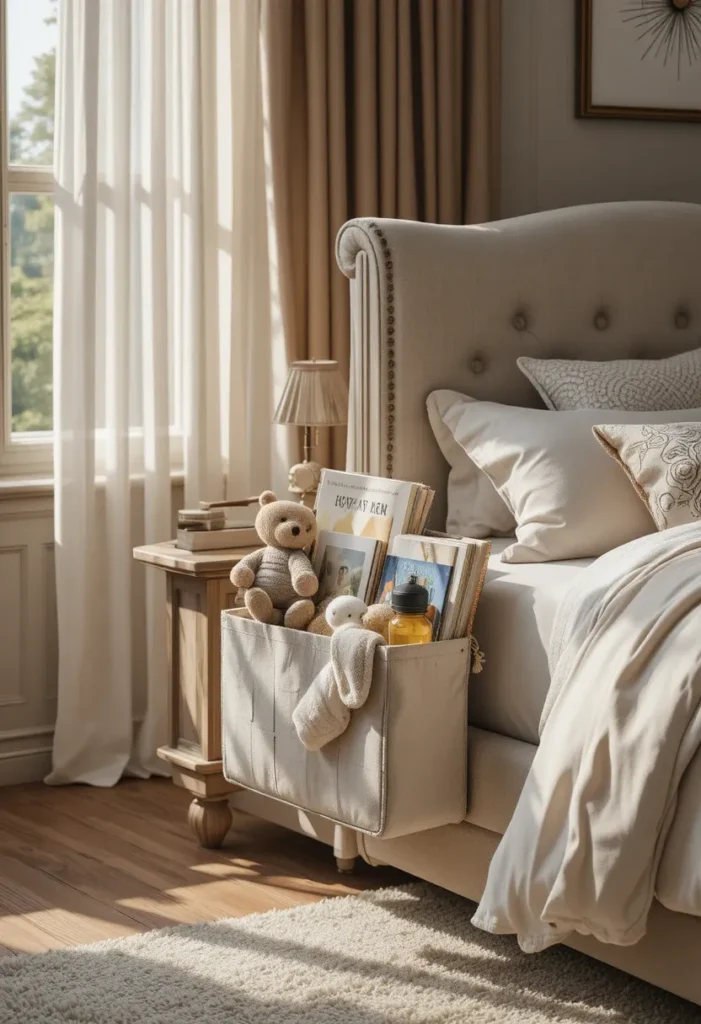
Nightstands can quickly become clutter magnets, especially in smaller bedrooms where every inch matters.
Bedside storage pockets hang directly over the bed frame or mattress and provide convenient storage for everyday items without taking up additional floor space.
They’re perfect for storing:
- Favorite bedtime books
- Flashlights
- Small notebooks
- Reading glasses
- Water bottles
- Stuffed animals
Children can easily grab what they need before bed and return everything to its pocket in the morning.
This small organizational upgrade keeps bedside surfaces neat while teaching kids to put everyday items back where they belong.
Designer Tip: Choose fabric bedside organizers that coordinate with your bedding to create a cohesive, thoughtfully designed bedroom.
9. Create an Organized Closet with Closet Dividers
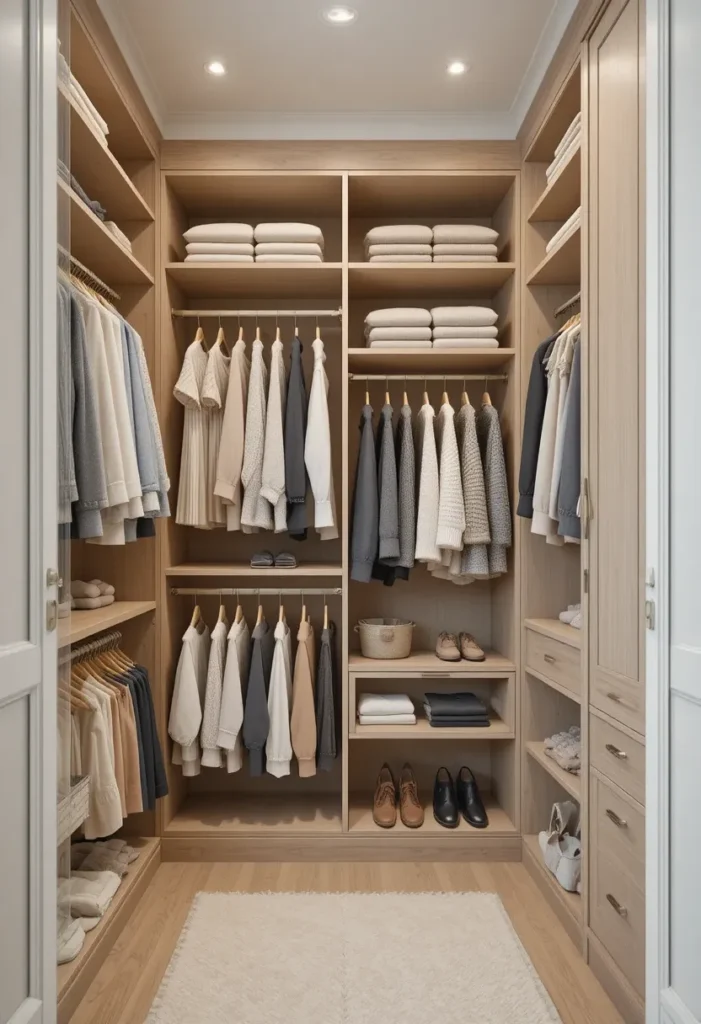
When kids can easily find their clothes, getting dressed becomes faster and less stressful. That’s why closet dividers are one of the smartest Kids’ Bedroom Organization Ideas for keeping wardrobes neat and manageable.
Instead of mixing everything together, divide the closet into simple categories such as everyday clothes, school outfits, pajamas, special occasion wear, and seasonal items. Younger children may benefit from picture labels, while older kids can easily follow written labels.
Adjust closet rods and shelves to your child’s height whenever possible. If they can reach their clothes without asking for help, they’re much more likely to put them away after laundry day.
Designer Tip: Use matching velvet or wooden hangers to instantly make the closet look more organized while preventing clothes from slipping onto the floor.
10. Color-Code Storage for Faster Cleanup
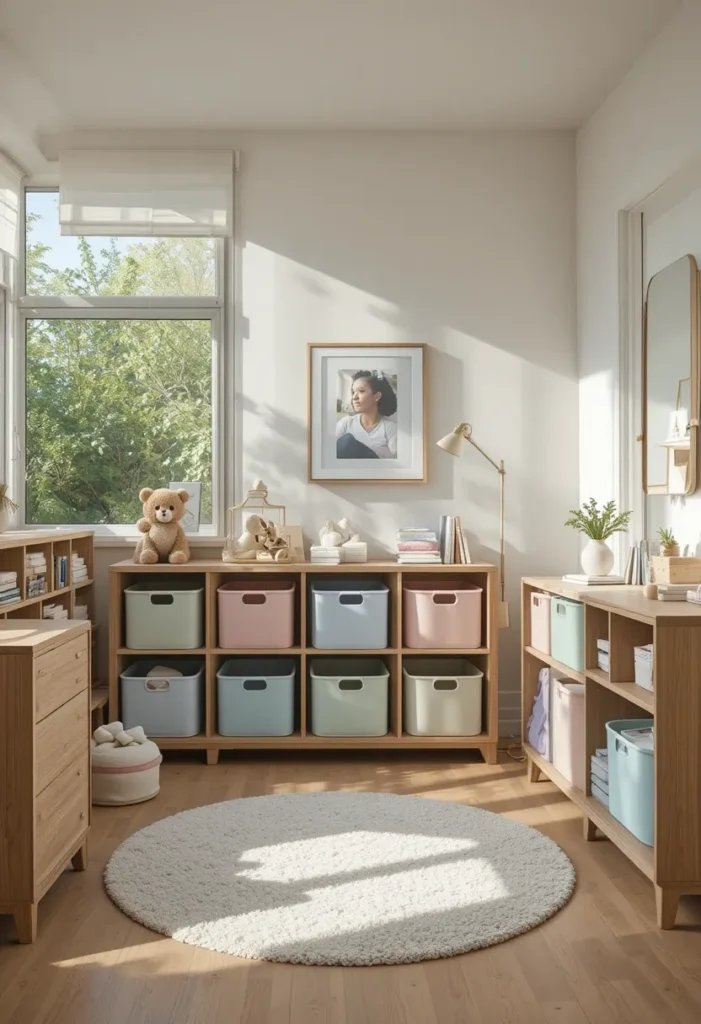
Sometimes organization is as simple as adding a splash of color. A color-coded storage system helps children quickly recognize where everything belongs without reading labels.
Assign a different color to each category of belongings. For example:
- Blue bins for building blocks
- Green baskets for stuffed animals
- Yellow containers for art supplies
- Red bins for toy cars
- Purple baskets for dolls
- White bins for books
This system works especially well for younger children who haven’t learned to read yet. Cleanup becomes more like a matching game than a chore, making it easier to build lasting habits.
Color coding is also incredibly helpful in shared bedrooms because each child can have their own designated storage color.
Designer Tip: Stick to four or five coordinating colors that complement your bedroom décor instead of using every color of the rainbow.
11. Install Wall Hooks for Everyday Items
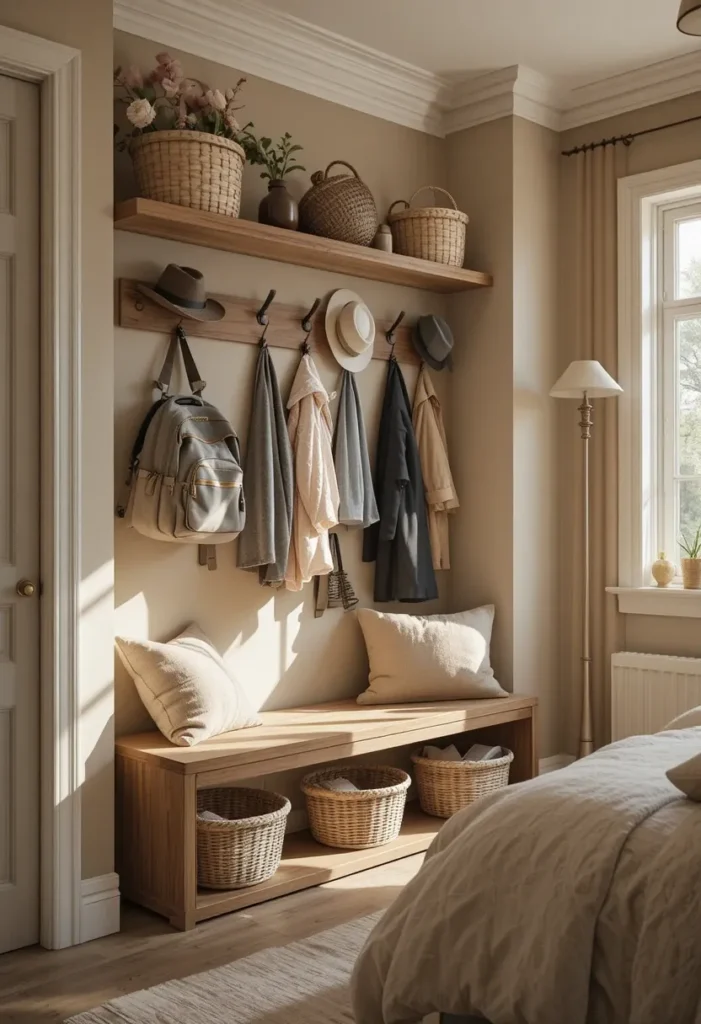
Floors often become cluttered with backpacks, jackets, hats, and dress-up costumes simply because they don’t have a designated home.
Installing wall hooks is one of the easiest Kids’ Bedroom Organization Ideas for preventing everyday clutter before it starts.
Mount sturdy hooks at your child’s height so they can independently hang up:
- School backpacks
- Hoodies
- Jackets
- Hats
- Costumes
- Tote bags
- Dance bags
Hooks also work well behind bedroom doors where they make use of otherwise wasted space.
Encouraging children to hang items immediately after coming home creates a simple routine that keeps bedrooms looking tidy throughout the week.
Designer Tip: Choose decorative wooden, animal-shaped, or colorful hooks that blend functionality with playful style.
12. Use a Pegboard for Flexible Organization
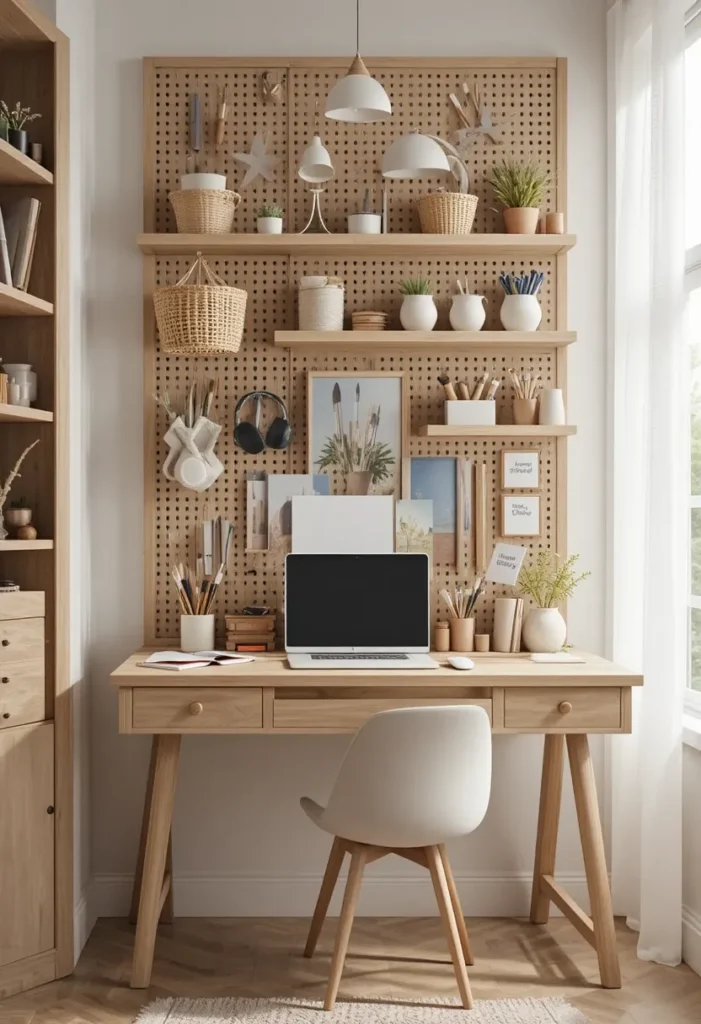
Pegboards aren’t just for workshops anymore—they’ve become a stylish storage solution for modern kids’ bedrooms.
One of the biggest advantages of pegboards is their flexibility. As your child’s interests change, you can easily rearrange shelves, baskets, and hooks without drilling new holes.
Pegboards are perfect for organizing:
- Craft supplies
- Headphones
- Small toys
- Hair accessories
- Jewelry
- Drawing tools
- Mini shelves
- Display items
Everything stays visible, easy to reach, and neatly organized.
This solution works particularly well in smaller bedrooms where wall storage helps free up valuable floor space.
Designer Tip: Paint the pegboard the same color as the wall for a seamless built-in look or choose a contrasting color to create a fun focal point.
13. Design a Reading Nook with Built-In Storage
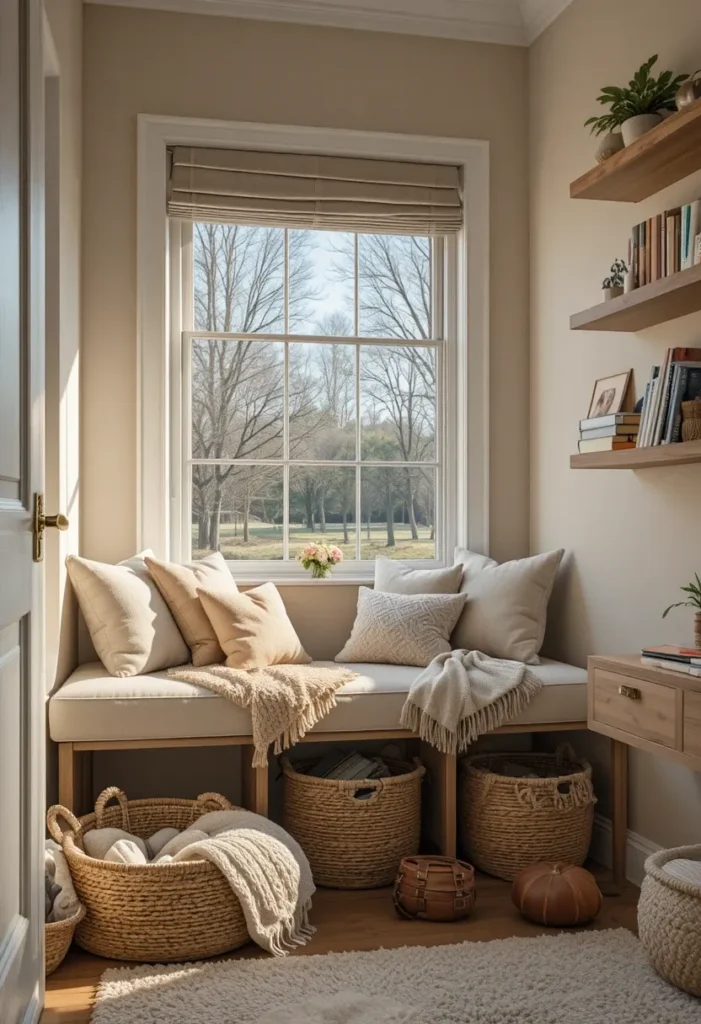
A cozy reading corner becomes even more inviting when it doubles as smart storage.
Instead of placing a chair in an empty corner, choose a storage bench or cushioned cube organizer that provides hidden space underneath the seat.
Store items like:
- Favorite books
- Blankets
- Reading pillows
- Small toys
- Educational games
Keeping everything together encourages children to return books after reading instead of leaving them scattered across the room.
Adding a soft rug, warm lighting, and a few decorative pillows transforms the nook into a favorite quiet retreat while maintaining an organized bedroom.
Designer Tip: Use woven baskets beneath the bench for a warm, natural texture that complements almost any decorating style.
14. Keep Stuffed Animals Under Control
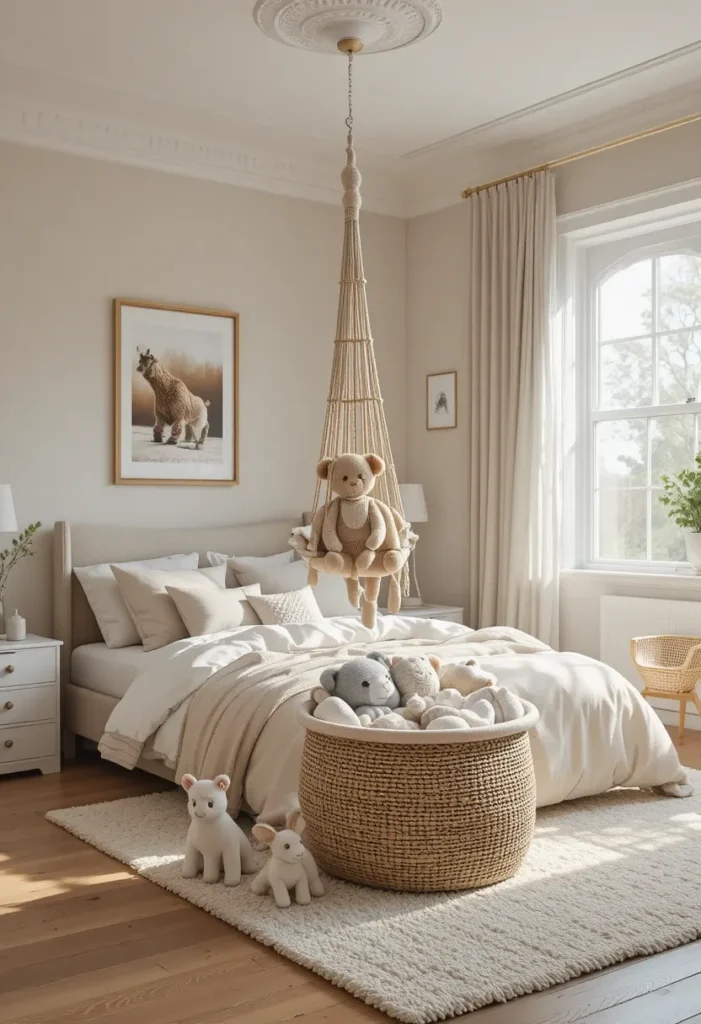
If stuffed animals seem to multiply overnight, you’re definitely not alone. Rather than piling them onto the bed, give them a dedicated storage solution.
Popular options include:
- Hanging hammocks
- Wall-mounted baskets
- Large woven baskets
- Storage bean bags
- Corner shelves
These solutions display favorite plush toys while keeping floors clear and making cleanup much easier.
Encourage your child to choose a few bedtime favorites while storing the rest neatly in their designated spot.
This keeps the bed comfortable and reduces visual clutter throughout the room.
Designer Tip: A fabric storage bean bag filled with stuffed animals serves as both seating and storage—a win-win for smaller bedrooms.
15. Choose Clear Storage Containers for Easy Visibility
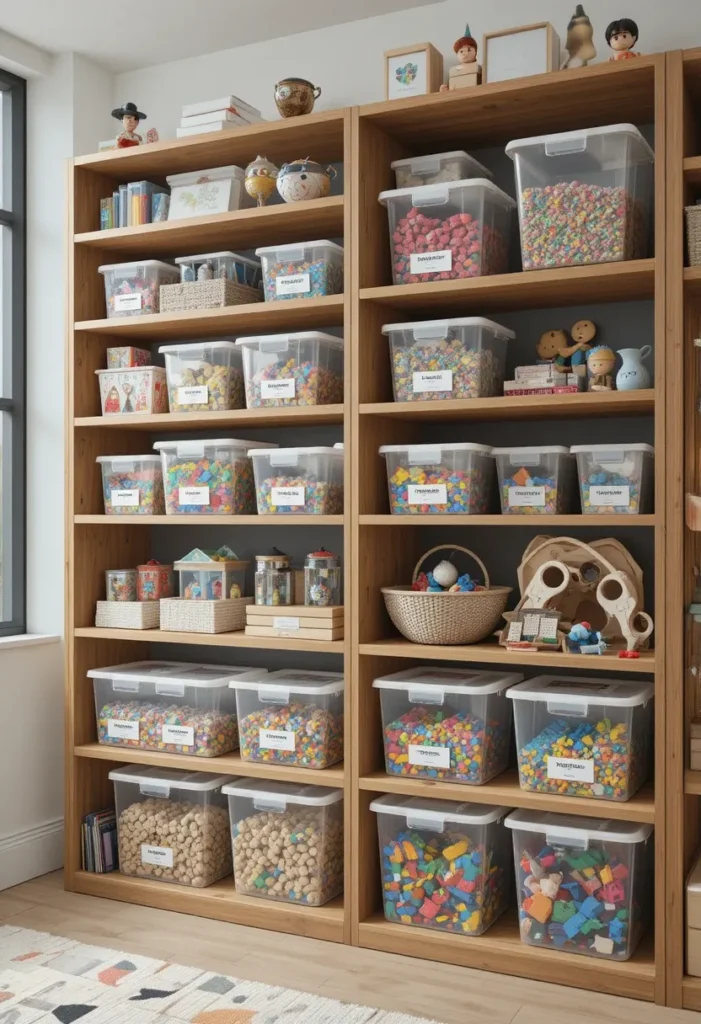
Children are much more likely to use storage when they can instantly see what’s inside.
Clear containers eliminate the need to open multiple bins searching for one missing puzzle piece or favorite action figure.
They’re ideal for organizing:
- LEGO® bricks
- Craft materials
- Doll accessories
- Board game pieces
- Building blocks
- Small collectibles
- School supplies
Pair each container with a simple label for an even more organized system.
Stackable clear bins also maximize vertical storage while keeping shelves neat and easy to maintain.
Designer Tip: Choose containers with secure but easy-to-open lids that little hands can manage independently.
16. Invest in Multi-Functional Furniture
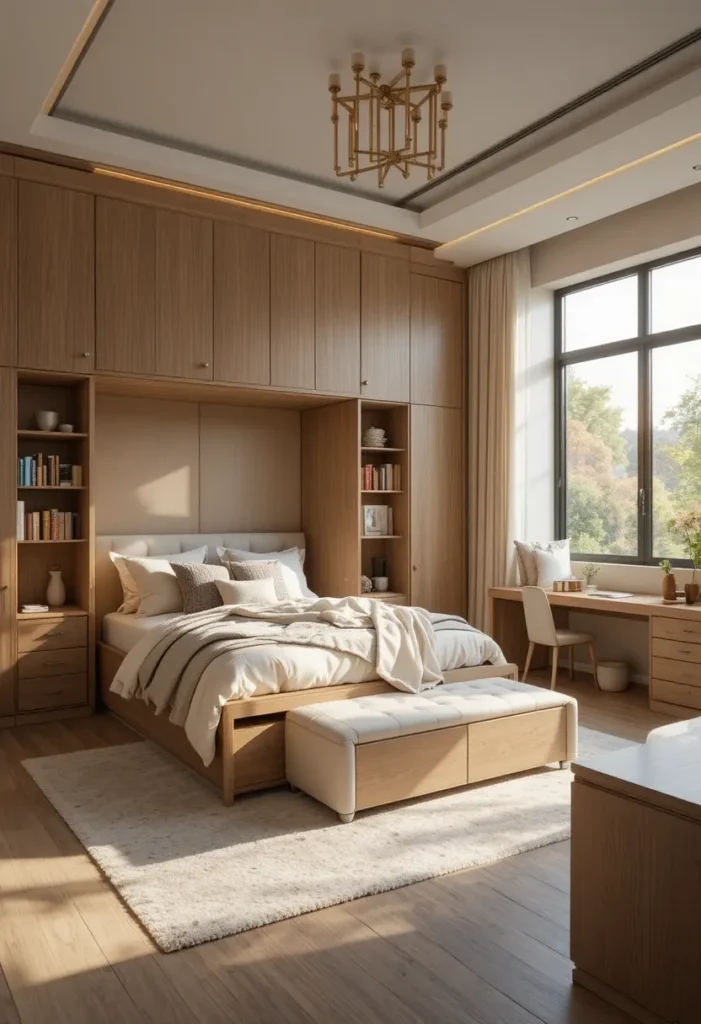
Furniture that serves more than one purpose is one of the best long-term Kids’ Bedroom Organization Ideas, especially if you’re working with limited square footage.
Instead of filling the room with separate storage units, look for furniture that combines function and organization.
Excellent options include:
- Beds with built-in drawers
- Storage ottomans
- Lift-top benches
- Desks with shelving
- Nightstands with baskets
- Window seats with hidden storage
These pieces help reduce clutter while making the room feel more spacious and organized.
Although multi-functional furniture may cost more initially, it often replaces several standalone storage pieces, making it a worthwhile investment.
Designer Tip: Choose timeless furniture in natural wood or neutral finishes so it continues to suit your child’s room as they grow.
17. Add a Built-In Storage Bench for Seating and Storage
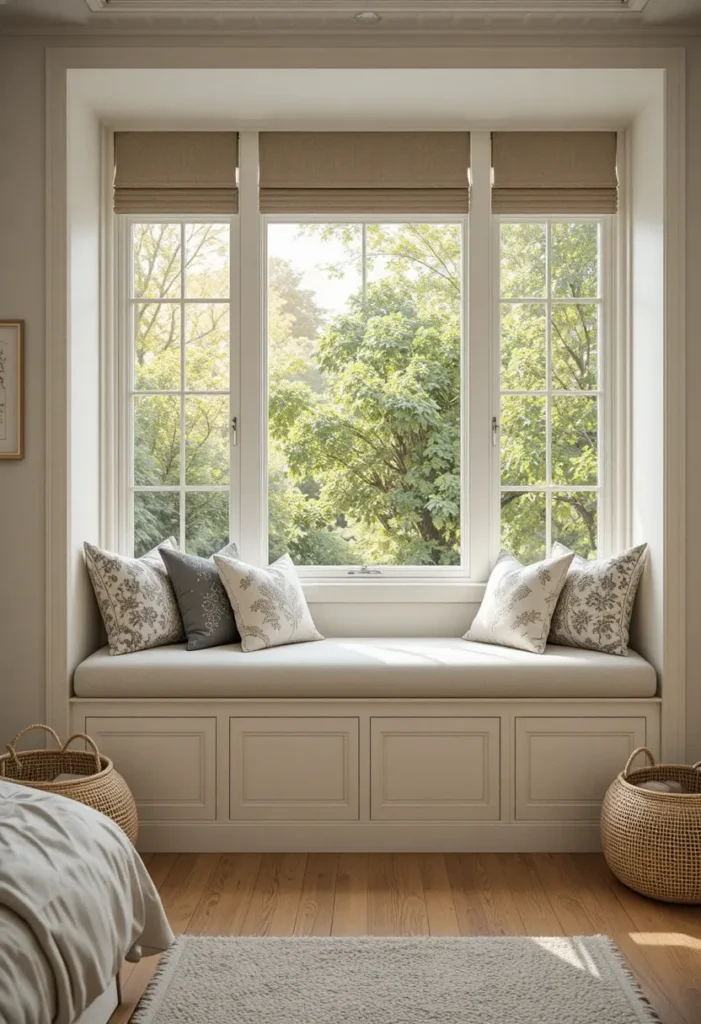
A built-in storage bench is one of those Kids’ Bedroom Organization Ideas that looks custom while working incredibly hard behind the scenes. Whether it’s placed under a window, at the foot of the bed, or tucked into a cozy corner, it provides valuable hidden storage without taking up extra room.
Use the space inside the bench to store:
- Extra blankets
- Seasonal clothing
- Board games
- Larger toys
- Sports equipment
- Keepsake boxes
The top of the bench can double as a reading seat with a few comfy cushions, making it both practical and inviting. Because everything has a designated place, cleanup becomes much quicker, and the room stays clutter-free.
Designer Tip: Choose a bench with soft-close hinges to protect little fingers and pair it with washable cushions for easy maintenance.
18. Make Laundry Simple with a Dedicated Basket System
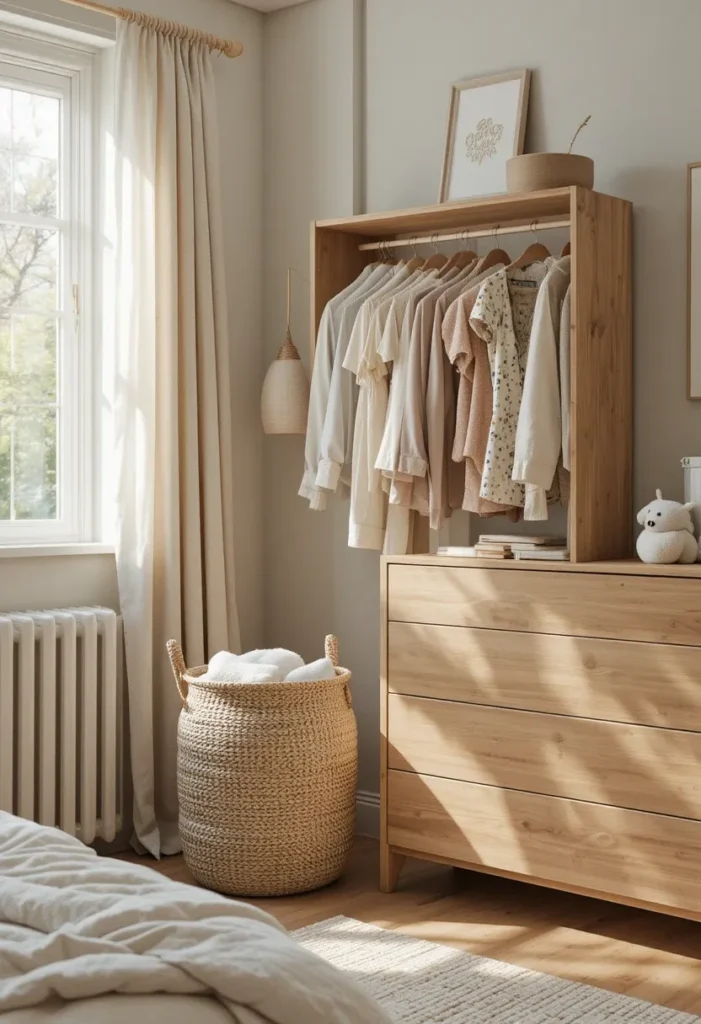
Dirty clothes have a way of ending up everywhere except the laundry room. Creating a simple laundry system can solve that problem almost overnight.
Place a lightweight laundry basket in an easy-to-reach corner of the bedroom. If your child is older, consider using two baskets—one for light-colored clothes and one for dark-colored clothes—to encourage good habits from an early age.
If siblings share a room, give each child their own labeled hamper to avoid mixing clothes.
A clearly defined laundry routine teaches responsibility while reducing the amount of clothing left on the floor.
Designer Tip: Choose a woven, canvas, or fabric hamper that complements the room’s décor while being sturdy enough for daily use.
19. Create an Organized Art Supply Station

Creative kids often have markers, crayons, paints, stickers, and paper scattered across every available surface. Instead of storing these supplies in different places, dedicate one organized station to all things creative.
Use drawer organizers, small bins, or clear containers to separate materials by category. Keep frequently used items on lower shelves so children can access them independently.
An art station might include:
- Colored pencils
- Crayons
- Washable markers
- Paintbrushes
- Construction paper
- Glue sticks
- Scissors
- Craft kits
Having everything together makes creative time more enjoyable and cleanup much easier once the masterpiece is finished.
Designer Tip: Add a pegboard or wall organizer above the art station to store scissors, rulers, and paintbrushes while freeing up desk space.
20. Keep a Daily Cleanup Basket Within Reach
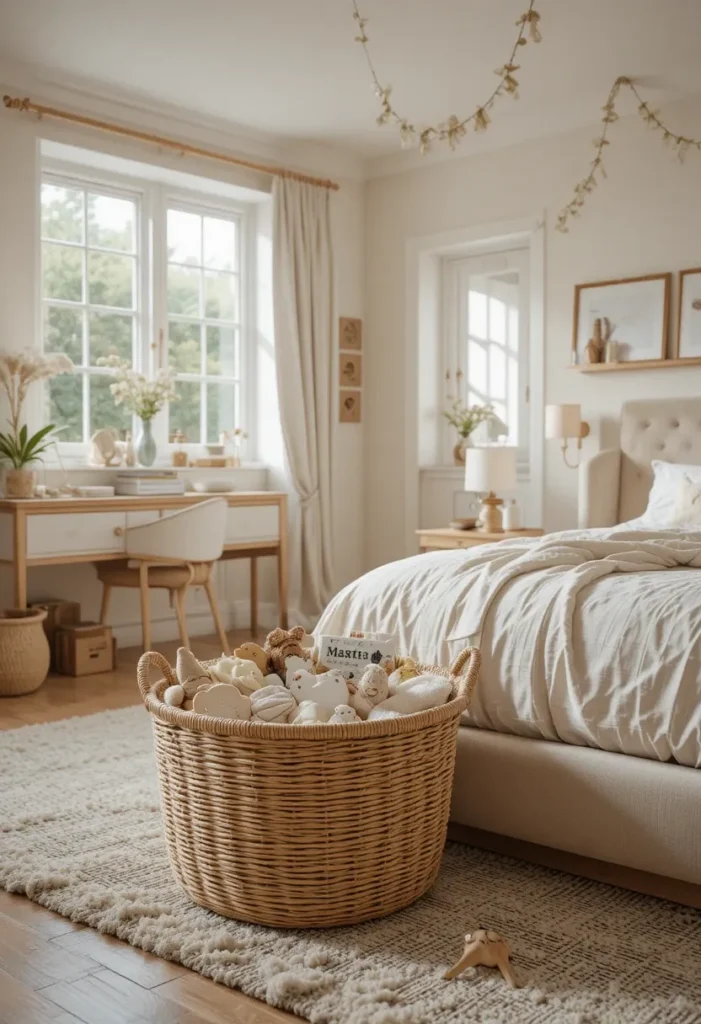
Not every item needs to be put away immediately. That’s where a daily cleanup basket comes in.
This simple idea acts as a temporary holding spot for items that are out of place during the day. Before bedtime, spend five to ten minutes with your child returning everything in the basket to its proper home.
Use the basket for:
- Toys left in the wrong room
- Books
- Hair accessories
- Socks
- Small electronics
- Random odds and ends
Turning this into a nightly routine prevents clutter from building up and makes deep cleaning much less overwhelming.
Designer Tip: Choose a decorative woven basket that blends seamlessly with the room while remaining easy for children to carry.
21. Design a Homework Organization Zone
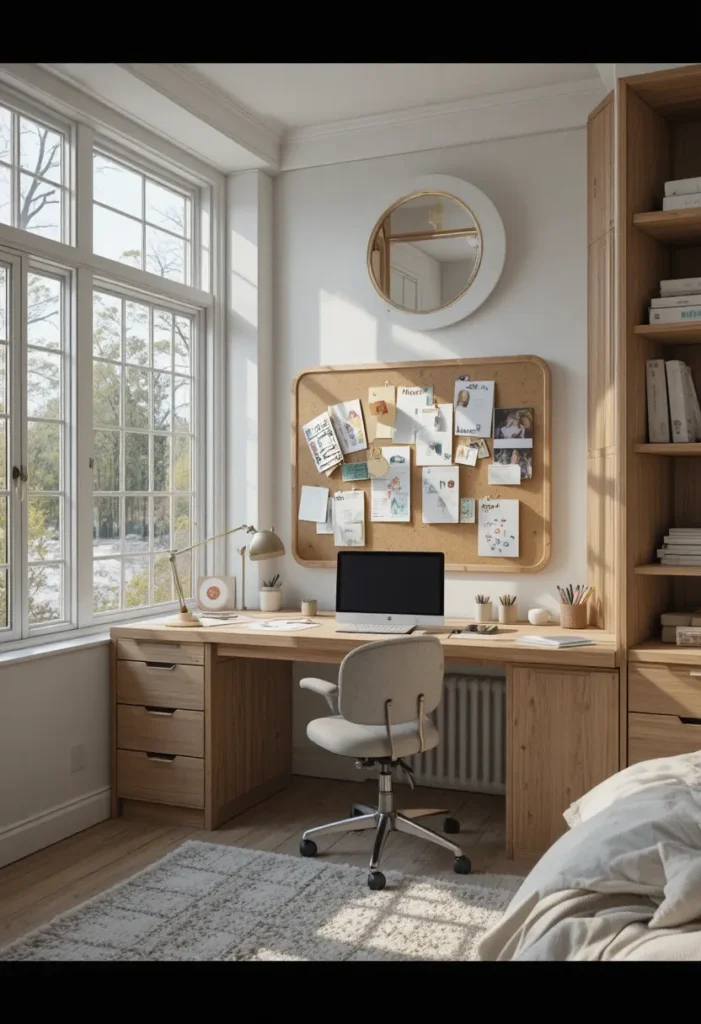
As children grow, school supplies often replace toys as the biggest source of clutter. A dedicated homework area helps keep everything organized while encouraging better study habits.
Even in a small bedroom, a compact desk with built-in storage can make a huge difference.
Keep essentials nearby, including:
- Notebooks
- Pencils
- Chargers
- Scissors
- Calculators
- Sticky notes
- Reading materials
Use drawer dividers, desktop organizers, and cable clips to prevent supplies from spreading across the room.
A well-organized study area also helps children focus because they’re not constantly searching for missing materials.
Designer Tip: Add a corkboard or magnetic board above the desk for calendars, reminders, and artwork without cluttering the workspace.
22. Store Seasonal Toys Separately
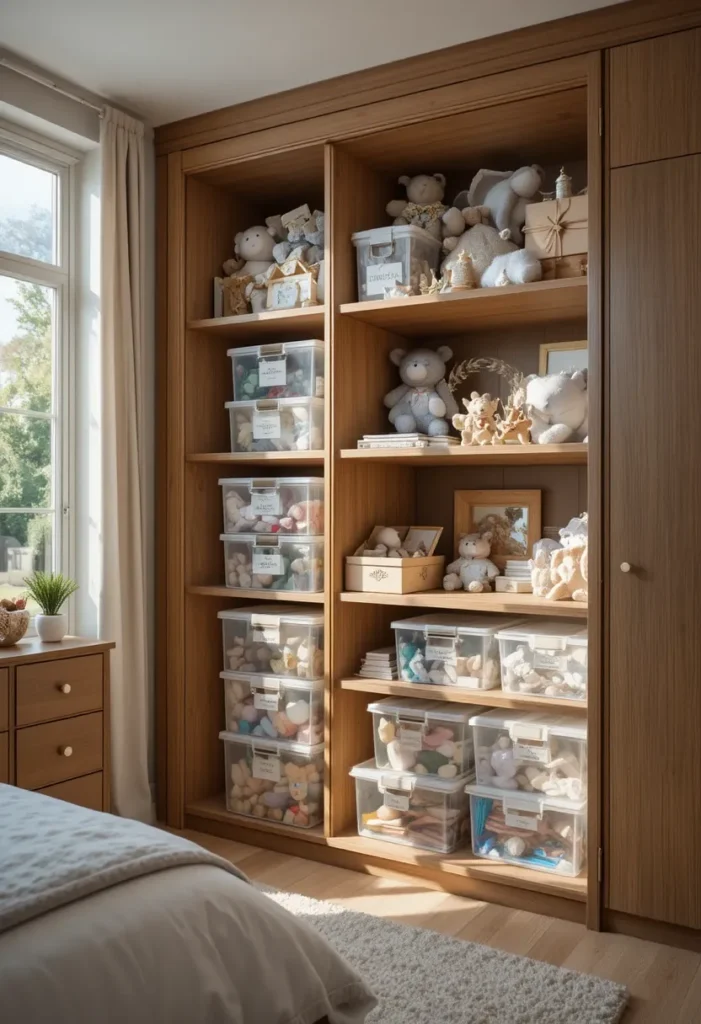
One of the easiest ways to reduce everyday clutter is to remove items that aren’t currently being used.
Holiday decorations, outdoor toys, oversized games, and seasonal clothing don’t need to occupy valuable bedroom storage all year long.
Pack these items into labeled storage containers and store them in a closet, under the bed, or another designated storage area until they’re needed again.
Rotating seasonal belongings keeps shelves from overflowing while making everyday items easier to access.
Review stored items every few months and donate toys your child has outgrown to keep clutter from creeping back into the room.
Designer Tip: Use stackable clear storage bins with labels so you can quickly identify seasonal items without opening every container.
Final Thoughts
Kids’ Bedroom Organization Ideas don’t have to involve expensive renovations or elaborate storage systems. In fact, the most successful organization strategies are often the simplest ones—clear labels, accessible storage, multifunctional furniture, and routines that children can follow on their own.
Start with just one or two ideas that fit your family’s needs, then gradually build an organization system that grows with your child. Small changes, like adding wall hooks or rotating toys, can make a remarkable difference in how quickly cleanup happens each day.
Remember, the goal isn’t a picture-perfect bedroom every minute of the day. It’s creating a functional, welcoming space where your child can play, learn, relax, and confidently tidy up after themselves. With these Kids’ Bedroom Organization Ideas, you’ll spend less time reminding everyone to clean up and more time enjoying a calm, organized home.
Frequently Asked Questions
How can I encourage my child to keep their bedroom organized?
Make storage easy to reach, label containers clearly, and create a short daily cleanup routine. Praise consistency rather than perfection, and involve your child when setting up the organization system so they feel ownership over their space.
What is the best storage solution for a small kids’ bedroom?
Multi-functional furniture, under-bed storage drawers, wall shelves, hanging organizers, and cube storage units are excellent choices for maximizing space without making the room feel crowded.
How often should I declutter my child’s bedroom?
A quick decluttering session every three to four months works well for most families. This is a great opportunity to donate outgrown toys, reorganize storage, and rotate seasonal items.
Are open bins or closed containers better?
Open bins are ideal for frequently used toys because they’re easier for children to access and put away. Closed containers are better for seasonal items, keepsakes, and supplies that aren’t used daily.
How do I organize a shared kids’ bedroom?
Assign each child their own color-coded storage bins, shelves, and drawers. Clearly defined personal storage helps reduce confusion and makes it easier for siblings to stay organized together.
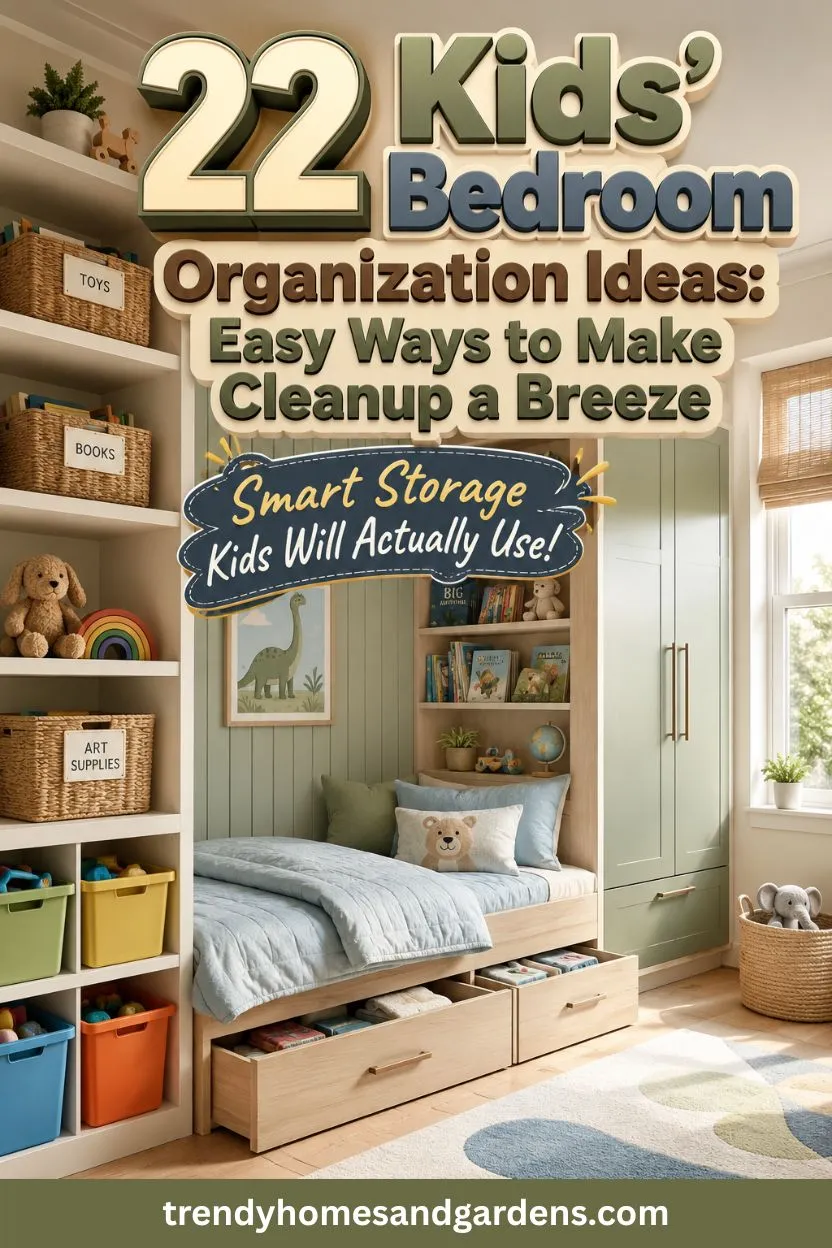
22 Kids' Bedroom Organization Ideas: Easy Ways to Make Cleanup a Breeze
Make kids' bedroom organization easier with these 22 smart and stylish ideas for keeping toys, clothes, books, and everyday essentials neatly arranged. Explore kids room storage ideas, toy organization, bedroom decluttering, closet organization, space-saving furniture, and practical cleanup solutions for a tidy, functional children's bedroom. #KidsBedroomIdeas #KidsRoomOrganization #BedroomStorage #ToyOrganization #KidsRoomDecor
Pin it on Pinterest