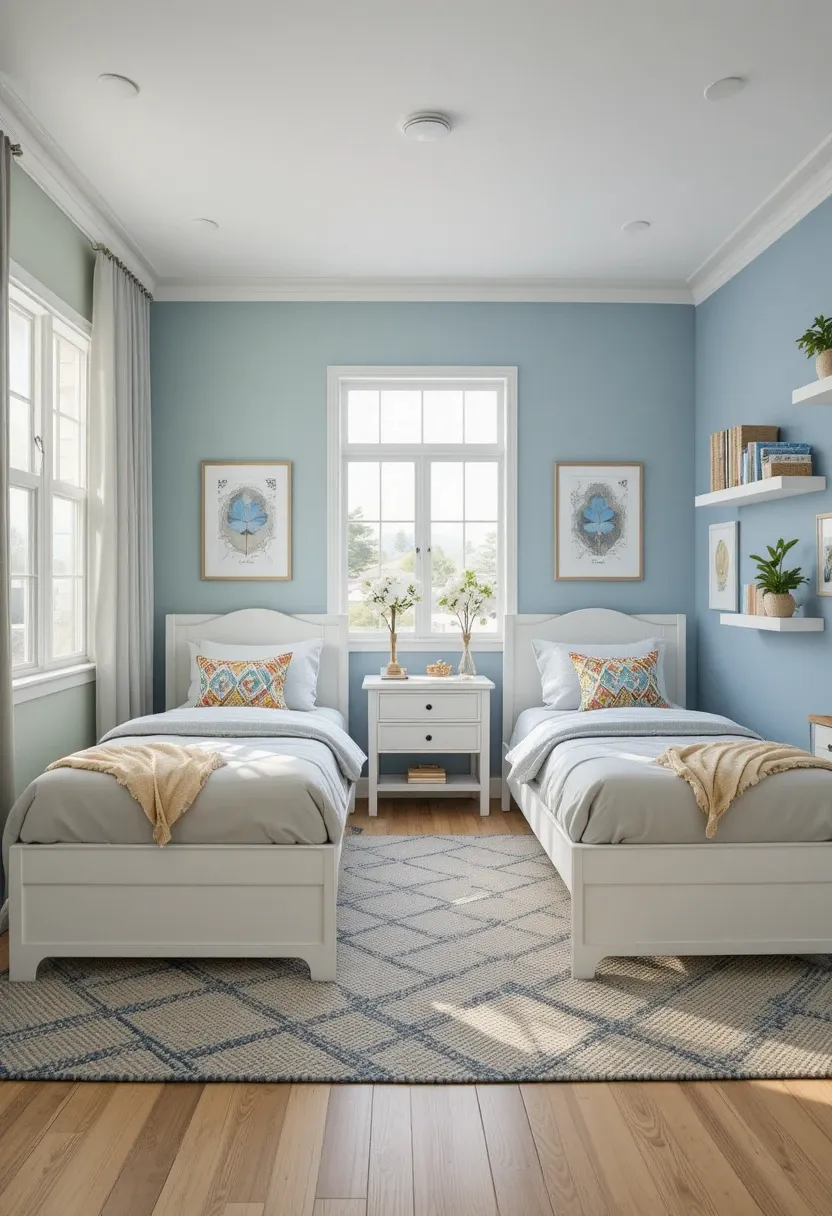
22 Shared Kids’ Bedroom Ideas for Brothers and Sisters
Shared Kids’ Bedroom Ideas can turn even the smallest bedroom into a place where brothers and sisters can sleep, play, learn, and make lasting memories together. While sharing a room comes with its fair share of challenges—from keeping the peace to finding enough storage—it also creates opportunities for creativity, teamwork, and thoughtful design.
The secret is creating a room that feels balanced instead of crowded. With clever layouts, personalized touches, and multifunctional furniture, siblings can enjoy a bedroom that reflects both of their personalities without sacrificing comfort or style. Whether you’re decorating for a toddler and a preschooler or older children with different interests, these shared kids’ bedroom ideas will help you design a space everyone loves coming home to.
1. Create Balance with Matching Twin Beds
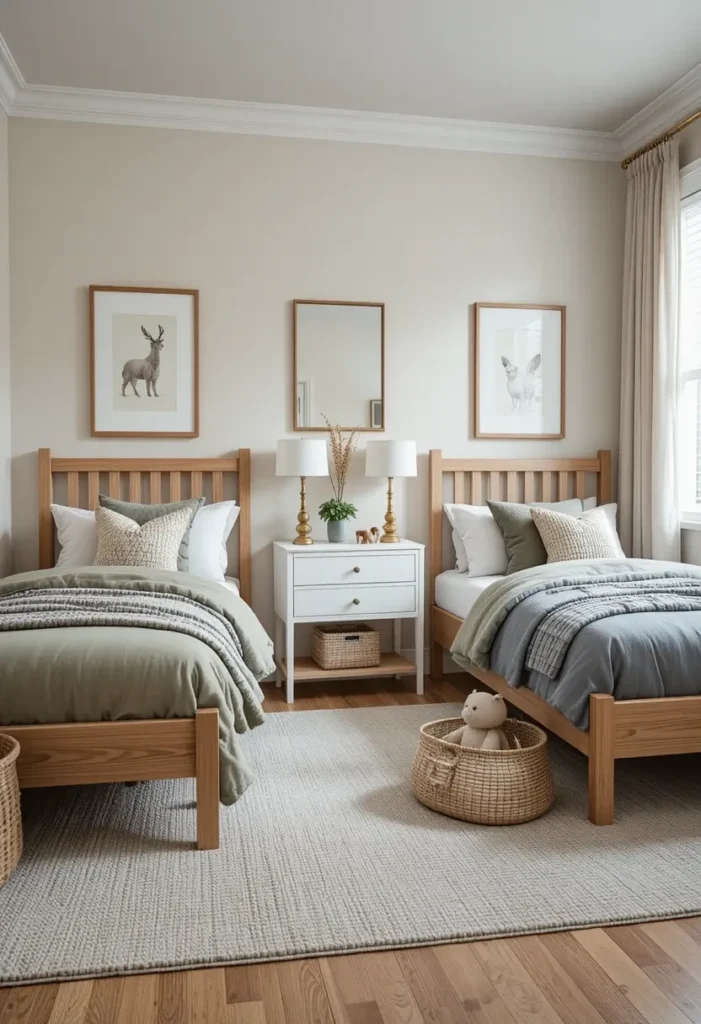
One of the easiest shared kids’ bedroom ideas is placing two matching twin beds on opposite sides of the room. This classic layout instantly creates symmetry, making the bedroom feel calm, organized, and visually spacious.
Choose identical bed frames in timeless materials like natural oak, painted wood, or matte white so the room feels cohesive. Then let each child express their personality through different bedding, pillows, artwork, or favorite stuffed animals. This approach keeps the design unified while allowing each sibling to feel like they have a space that’s truly theirs.
Complete the look with a shared nightstand between the beds, matching lamps, and a large area rug that ties the room together.
Designer Tip: Stick with neutral furniture so it’s easy to update bedding and décor as your children grow.
2. Maximize Floor Space with Stylish Bunk Beds
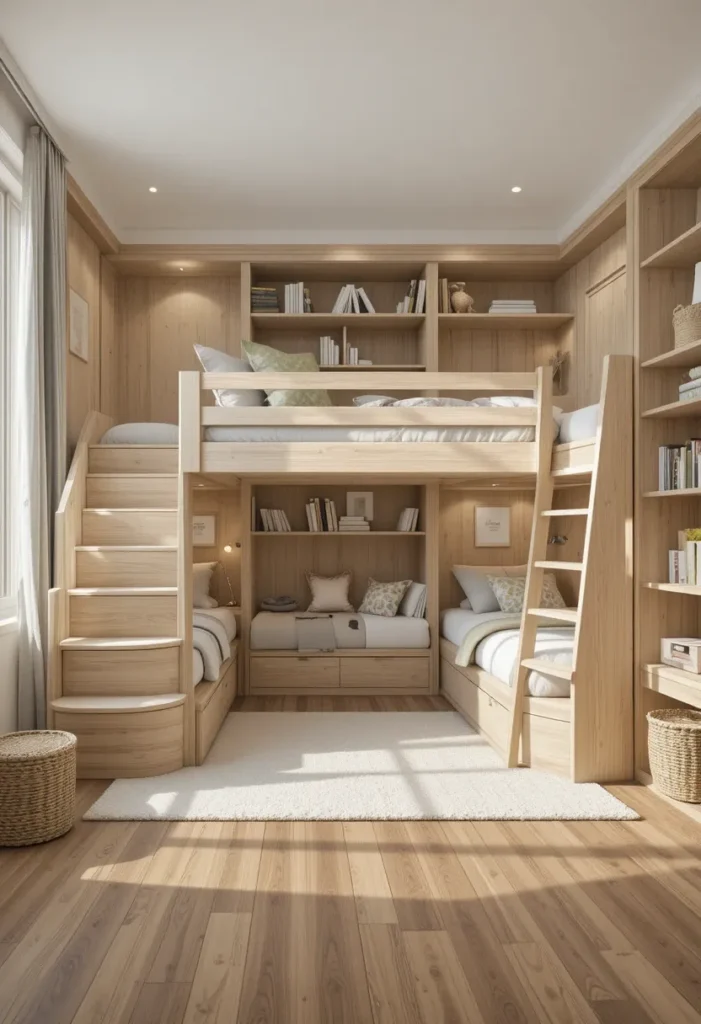
Bunk beds remain one of the smartest shared kids’ bedroom ideas, especially when floor space is limited. By stacking the sleeping area vertically, you instantly create room for play, homework, or extra storage.
Modern bunk beds have come a long way from simple wooden frames. Look for designs with built-in drawers, bookshelves, stair storage, or even integrated desks underneath. These multifunctional options reduce clutter while making the room feel custom-designed.
To make the room feel open, pair light-colored furniture with soft neutral walls and natural wood accents. Add cozy reading lights for each bunk so both children have their own comfortable bedtime routine.
Best For: Small bedrooms where maximizing every square foot is essential.
3. Use Color to Define Each Child’s Personal Space
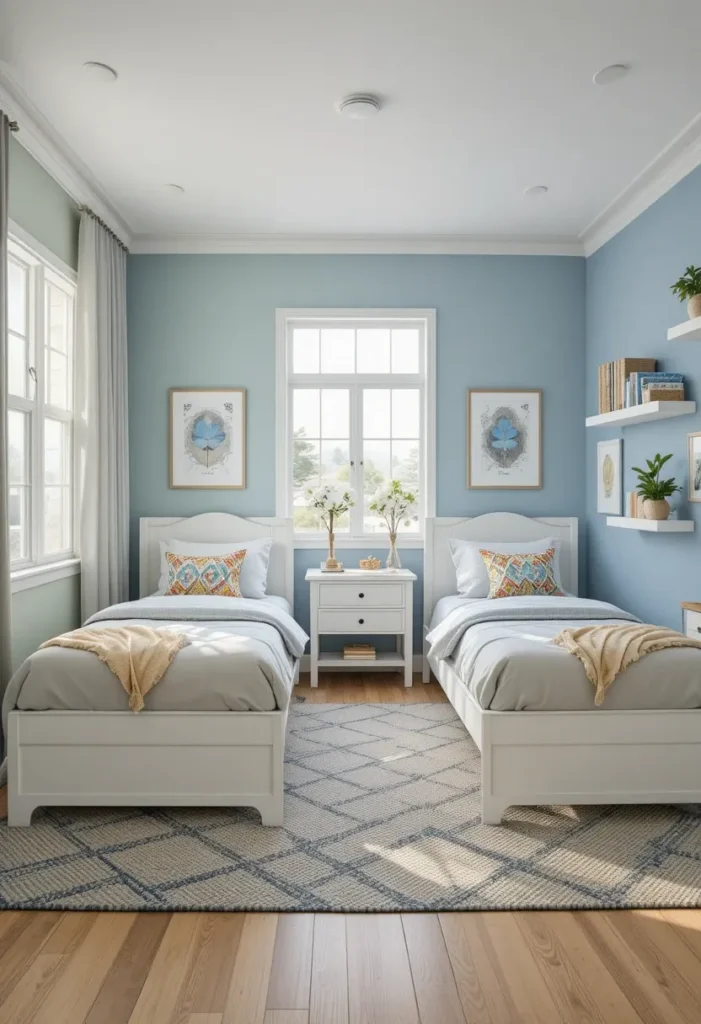
Sharing a bedroom doesn’t mean every corner has to look identical. One of the most creative shared kids’ bedroom ideas is using color to gently divide the room into two distinct zones.
Keep the larger design consistent with white walls and coordinating furniture, then introduce each child’s favorite color through bedding, wall art, cushions, storage baskets, and rugs. Soft sage green paired with dusty blue, blush pink with warm terracotta, or mustard with forest green all create beautiful combinations without overwhelming the room.
This subtle zoning helps children feel ownership over their side while maintaining a harmonious overall design.
Color Palette: Warm white, sage green, soft blue, natural oak, and matte black accents.
4. Choose a Gender-Neutral Theme That Grows with Your Children
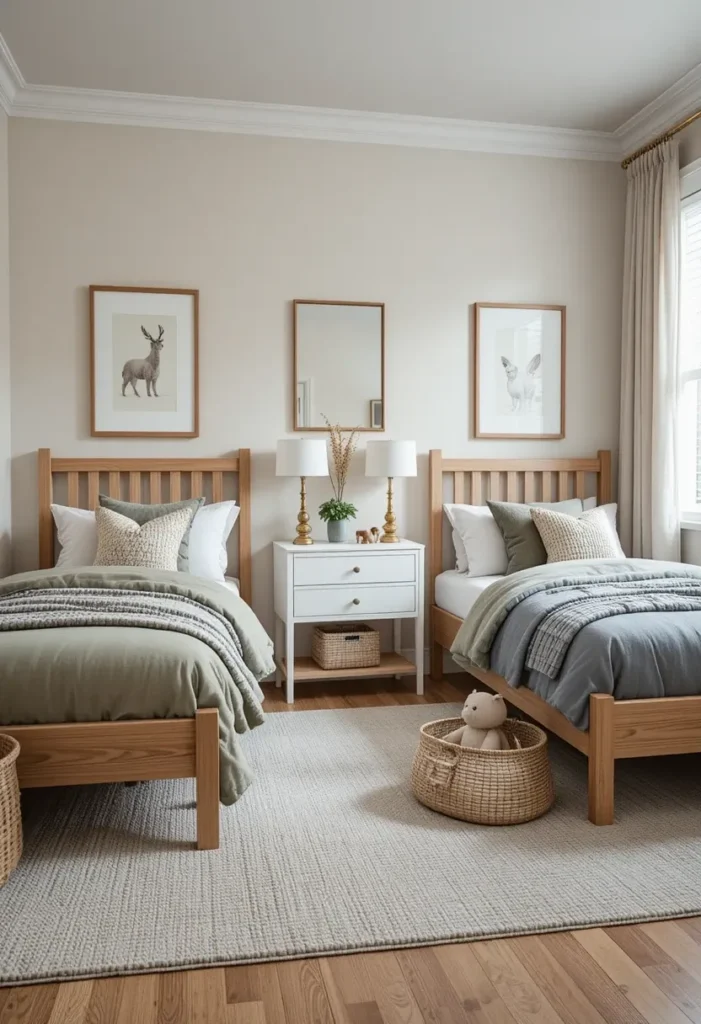
If brothers and sisters share a bedroom, avoiding overly themed décor often creates a room that stays stylish for years. Instead of decorating around cartoon characters that children quickly outgrow, focus on timeless design.
Nature-inspired artwork, woodland animals, mountains, stars, rainbows, or modern geometric patterns work beautifully for siblings of different ages and interests. Layer these themes with natural wood furniture, woven baskets, linen curtains, and textured rugs to create a cozy atmosphere.
This approach makes future updates incredibly simple since you only need to swap accessories rather than redesign the entire room.
Designer Tip: Invest in quality furniture first and let accessories provide personality.
5. Add Under-Bed Storage to Keep Clutter Under Control
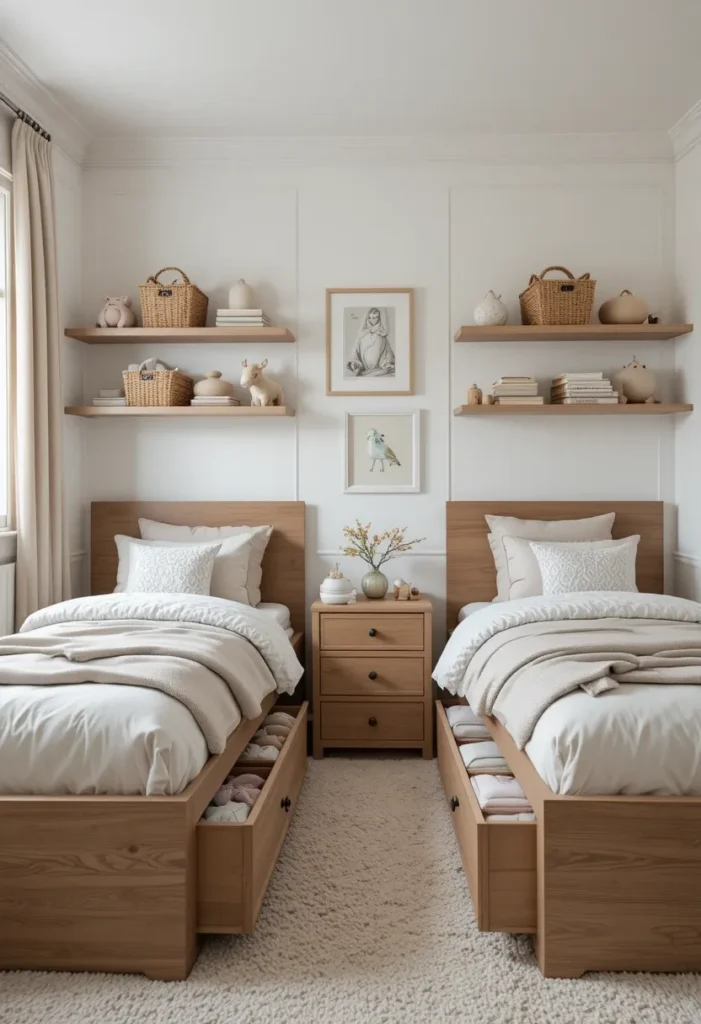
Every shared bedroom needs plenty of hidden storage, and the area beneath the beds is one of the most overlooked opportunities. Smart under-bed storage keeps seasonal clothes, extra bedding, toys, books, and games neatly tucked away while freeing up valuable closet space.
Choose rolling storage drawers that children can easily access on their own. Clear bins with labels are another practical option, helping everyone know exactly where things belong.
Pair under-bed storage with matching baskets and wall shelves to create a bedroom that stays tidy without constant effort.
An organized room feels larger, calmer, and much easier for siblings to share peacefully.
6. Design a Shared Reading Corner Everyone Loves
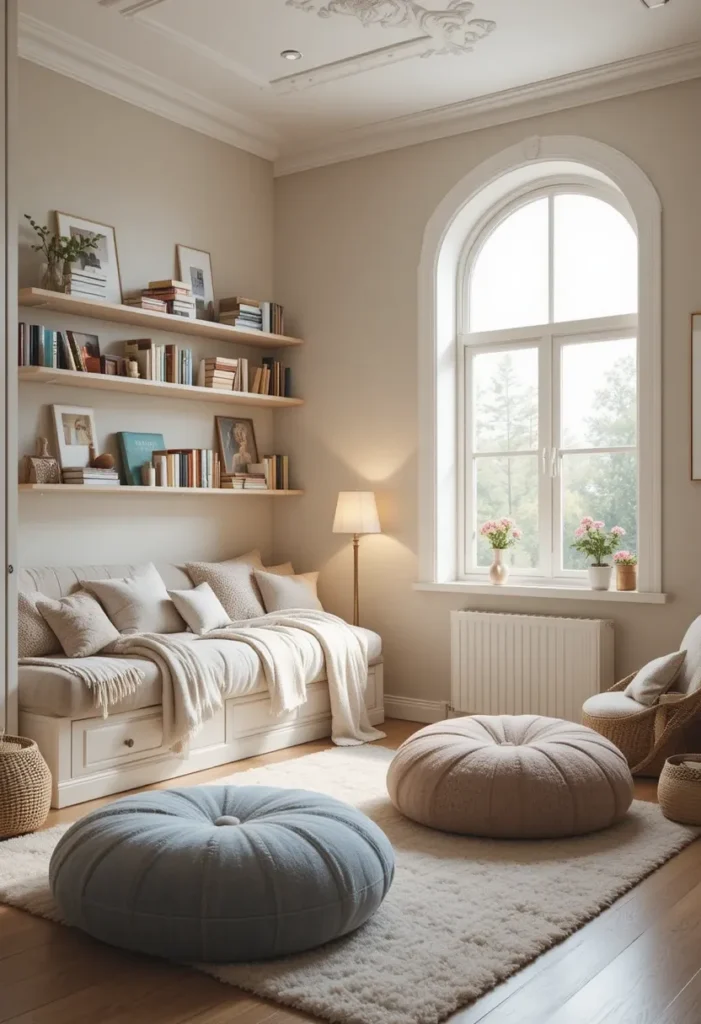
A cozy reading nook encourages quiet time while giving siblings a place to unwind together. Even a small unused corner can become one of the most inviting features in the room.
Place a comfortable upholstered bench, bean bags, or oversized floor cushions beneath a window. Add floating bookshelves, warm lighting, and a soft throw blanket to create a welcoming retreat.
Decorate with framed book quotes, plush toys, and baskets filled with favorite stories. As children grow, this same corner can transition into a homework or study area.
Adding spaces beyond just sleeping makes shared bedrooms feel much more functional.
Best For: Families wanting to encourage reading without taking up much space.
7. Install Floating Shelves for Vertical Storage
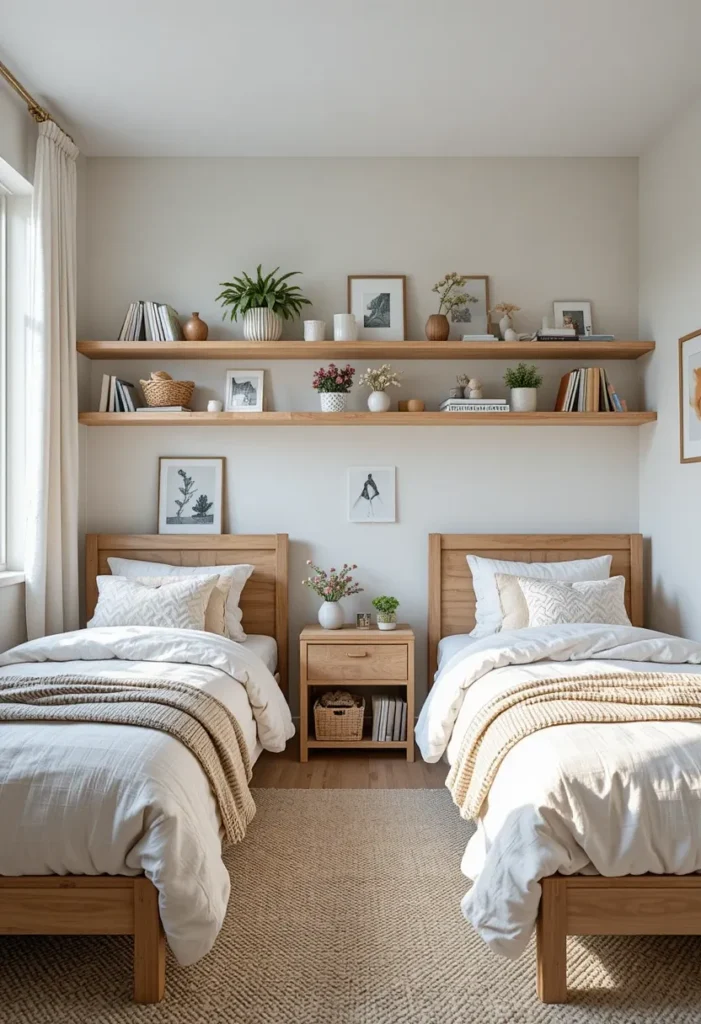
When floor space is limited, think upward. Floating shelves provide stylish storage without making the room feel crowded.
Install shelves above desks, dressers, or beds to display books, framed artwork, plants, keepsakes, and decorative baskets. Using vertical space keeps frequently used items within easy reach while reducing clutter on the floor.
Choose matching shelves in natural oak, white, or light wood finishes to complement almost any bedroom style. Keep styling simple by mixing practical storage with decorative accessories.
This is one of those shared kids’ bedroom ideas that’s affordable, easy to install, and instantly makes the room feel professionally designed.
8. Give Each Child Their Own Study Station
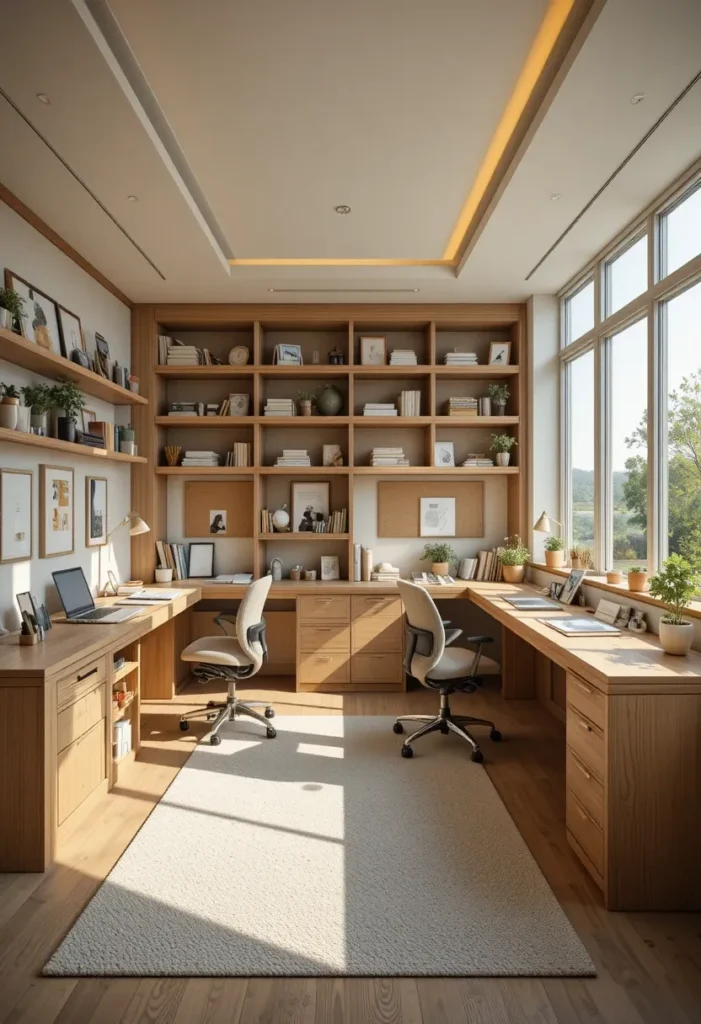
As children get older, having a dedicated place for homework becomes increasingly important. Even in smaller bedrooms, it’s possible to create individual workspaces without sacrificing style.
A long shared desk with two chairs works beautifully, allowing each sibling to have their own section while keeping the room visually uncluttered. Add individual desk lamps, organizers, corkboards, and floating shelves above each workspace to personalize their areas.
Choose ergonomic chairs and durable desktop materials that can handle years of homework, crafts, and creative projects.
Creating separate study zones helps reduce distractions while encouraging independence and good organizational habits.
9. Build a Shared Closet That Works for Everyone
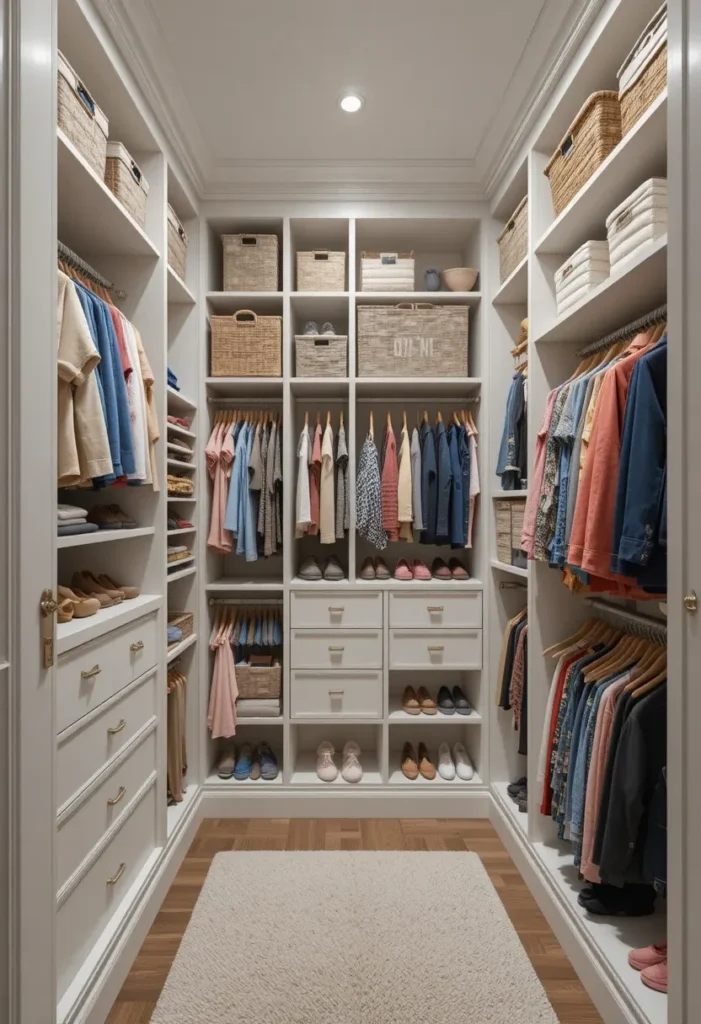
A well-organized closet can make a huge difference in a shared bedroom. Instead of letting clothes, shoes, and backpacks pile up, divide the closet into clearly defined sections so each child has their own dedicated storage.
Use matching hangers, labeled bins, and adjustable shelving to maximize every inch. Lower rods work well for younger children, making it easier for them to dress themselves and put clothes away independently. Add baskets for seasonal accessories, extra blankets, or sports gear to keep everything in its place.
The more organized the closet is, the easier it becomes to maintain a tidy bedroom. It’s one of the most practical shared kids’ bedroom ideas because it reduces daily clutter and helps siblings respect each other’s belongings.
Designer Tip: Color-coded storage bins make it easy for younger children to know where everything belongs.
10. Separate Sleeping Areas with a Bookcase Divider
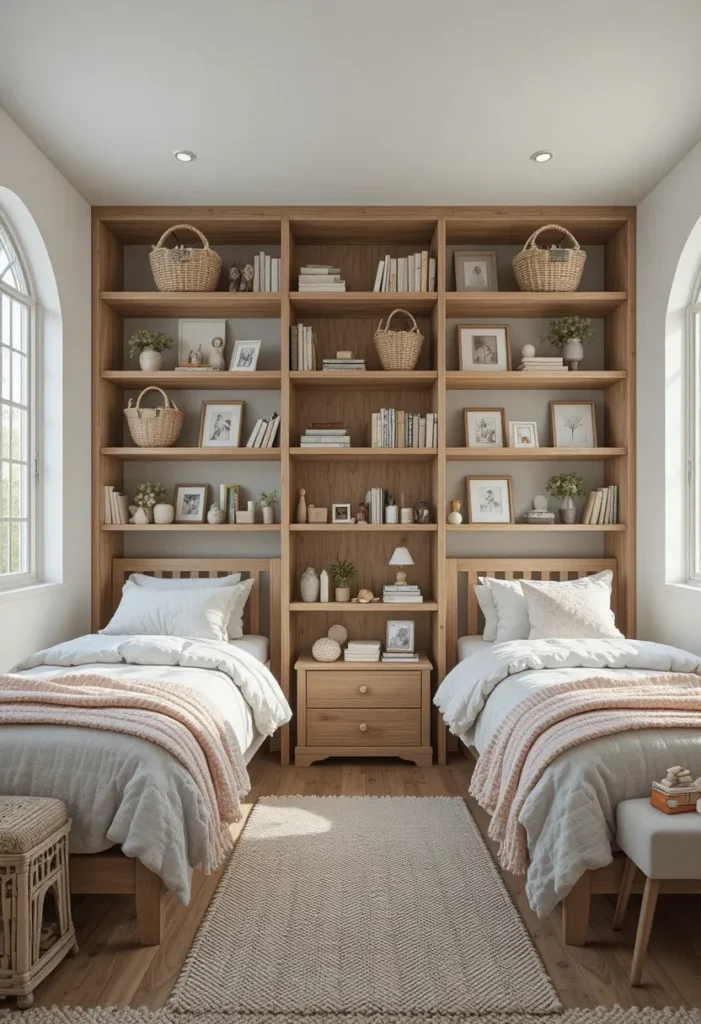
If siblings have different bedtimes, personalities, or age gaps, adding a partial divider can create a sense of privacy without making the room feel closed off.
An open bookshelf placed between the beds works beautifully because it divides the room while still allowing natural light to flow through. Better yet, it doubles as storage for books, baskets, collectibles, and decorative accents.
Keep both sides coordinated with similar furniture and color palettes while allowing each child to decorate their own shelves with favorite books, framed photos, or small keepsakes.
This clever solution helps every child feel like they have their own little retreat within the shared room.
Best For: Older brothers and sisters who appreciate a little extra personal space.
11. Add Multifunctional Furniture That Does More Than One Job
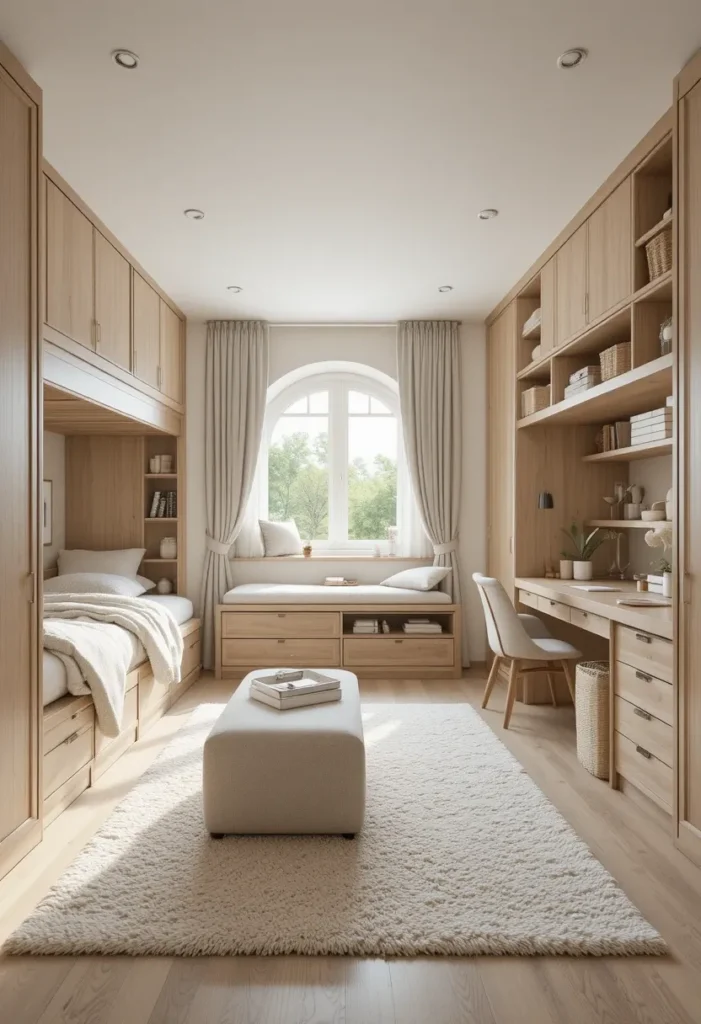
When two children share one bedroom, every piece of furniture should work as hard as possible.
Look for beds with built-in drawers, storage benches that double as seating, desks with shelves, or ottomans that hide toys inside. Furniture that serves multiple purposes reduces clutter while leaving more open floor space for everyday activities.
A window bench with hidden storage, for example, can become a cozy reading nook, toy chest, and seating area all at once.
Choosing multifunctional furniture means your shared kids’ bedroom ideas will continue working even as your children grow and their needs change.
Color Palette: White furniture, natural oak, soft gray textiles, woven baskets, and matte black hardware.
12. Create a Fun Play Zone in the Middle of the Room
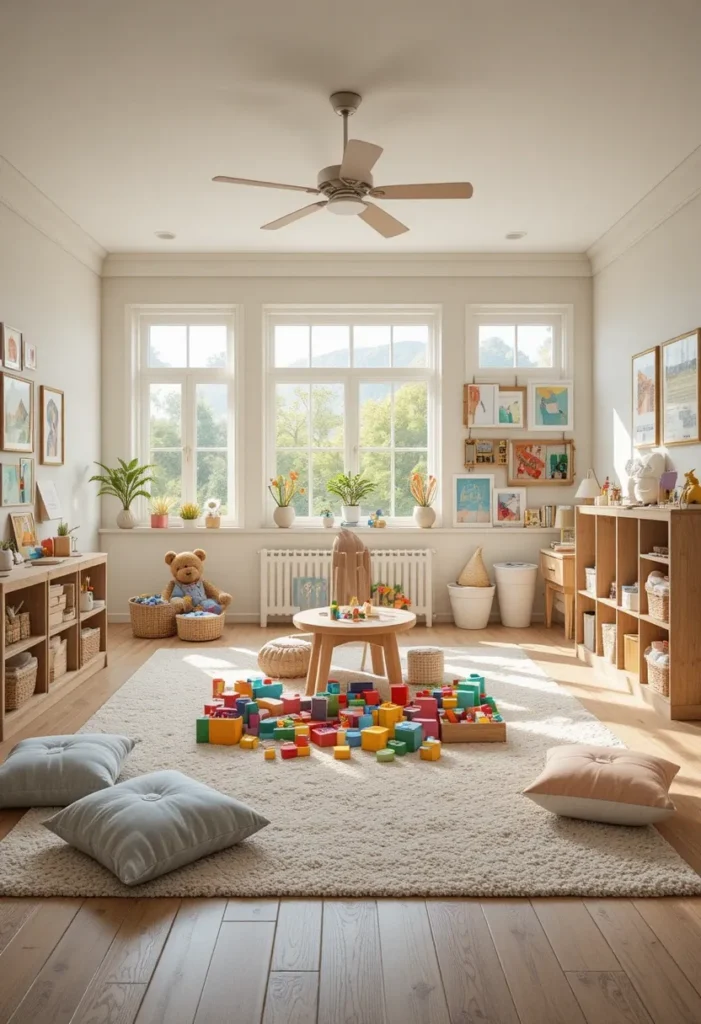
Even if siblings share a bedroom, they still need room to play, imagine, and create.
Instead of filling every corner with furniture, leave an open area in the center of the room. Add a washable play rug, floor cushions, toy baskets, and low storage units so children can easily access their favorite activities.
Rotate toys every few weeks to reduce clutter and keep playtime exciting. You can also include a small craft table or building block station if space allows.
By intentionally designing a play area, the bedroom becomes much more than just a place to sleep—it becomes a space where siblings can enjoy spending time together.
13. Personalize Each Bed with Unique Bedding and Wall Art
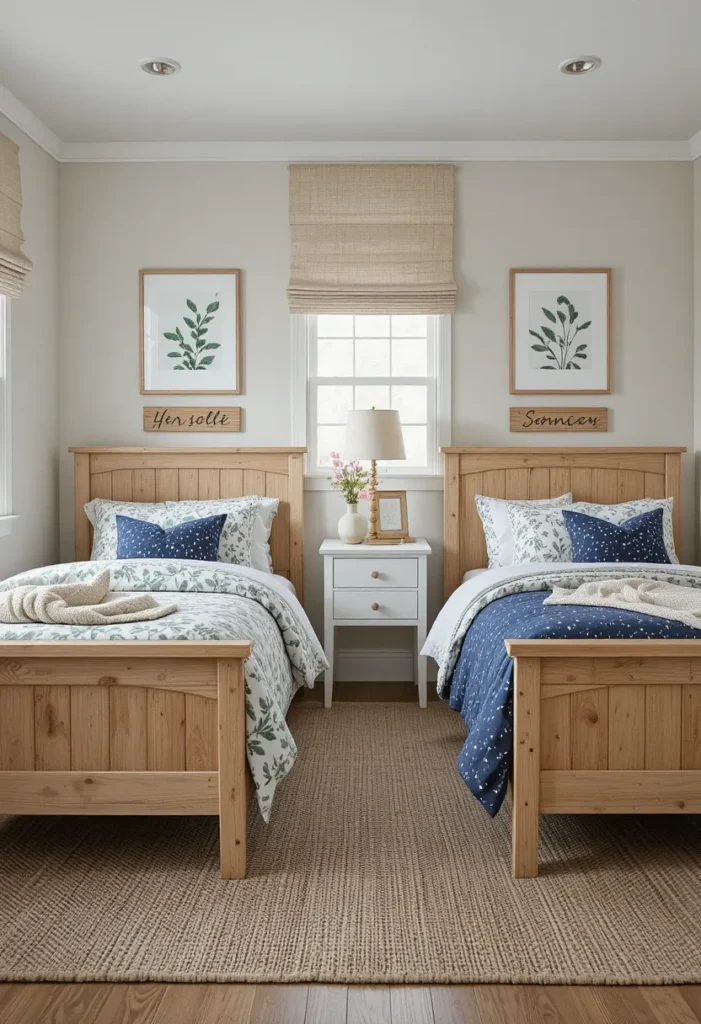
One of the easiest shared kids’ bedroom ideas is giving each child their own identity within a cohesive design.
Start with matching bed frames, then let each sibling choose bedding that reflects their personality. One child might love soft greens and nature-inspired prints, while the other prefers navy blue with stars or geometric patterns.
Hang personalized name signs or framed artwork above each bed to reinforce their individual spaces without disrupting the room’s overall style.
This small design choice helps prevent arguments over whose side is whose while making both children feel equally valued.
Designer Tip: Keep furniture matching and personalize with accessories that can easily be updated over time.
14. Design a Shared Gallery Wall Full of Personality
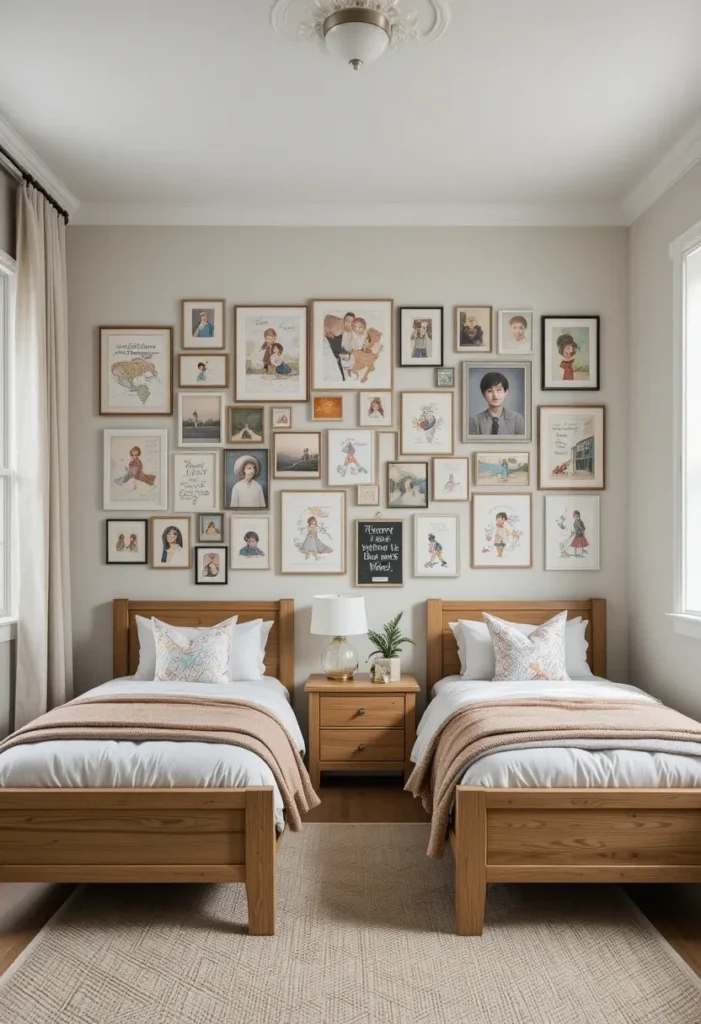
Blank walls are a missed opportunity in any children’s bedroom. A thoughtfully designed gallery wall adds warmth, color, and personality while celebrating both siblings equally.
Mix family photos, children’s artwork, inspirational prints, framed maps, initials, and playful illustrations in coordinating frames. Arrange everything before hanging to create a balanced display.
Using similar frame colors keeps the gallery cohesive even if the artwork varies in style.
As children grow, the display can easily evolve with new artwork, school achievements, or favorite photographs, making it one of the most meaningful features in the room.
Best For: Families who love displaying memories and encouraging creativity.
15. Use Matching Lighting to Create a Cozy Atmosphere
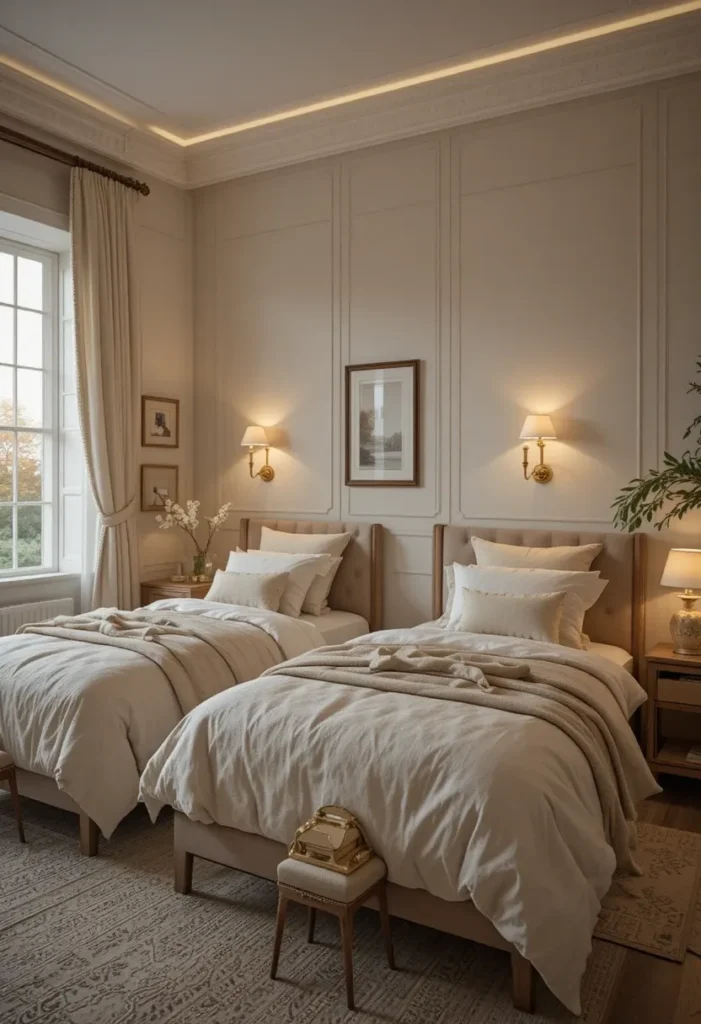
Lighting often gets overlooked, yet it plays a huge role in making a shared bedroom feel warm and welcoming.
Install matching bedside sconces, adjustable reading lamps, or pendant lights over each sleeping area to create visual balance. Warm white bulbs provide a softer glow that’s ideal for bedtime reading and relaxing.
Layer the lighting by combining ceiling fixtures with table lamps and a small nightlight for younger children. This allows each sibling to enjoy different activities without disturbing the other.
Beautiful lighting instantly makes the room feel more thoughtfully designed while improving its overall functionality.
Color Palette: Soft white, warm brass, natural wood, cream, and light beige.
16. Plan a Bedroom That Can Grow with Your Children
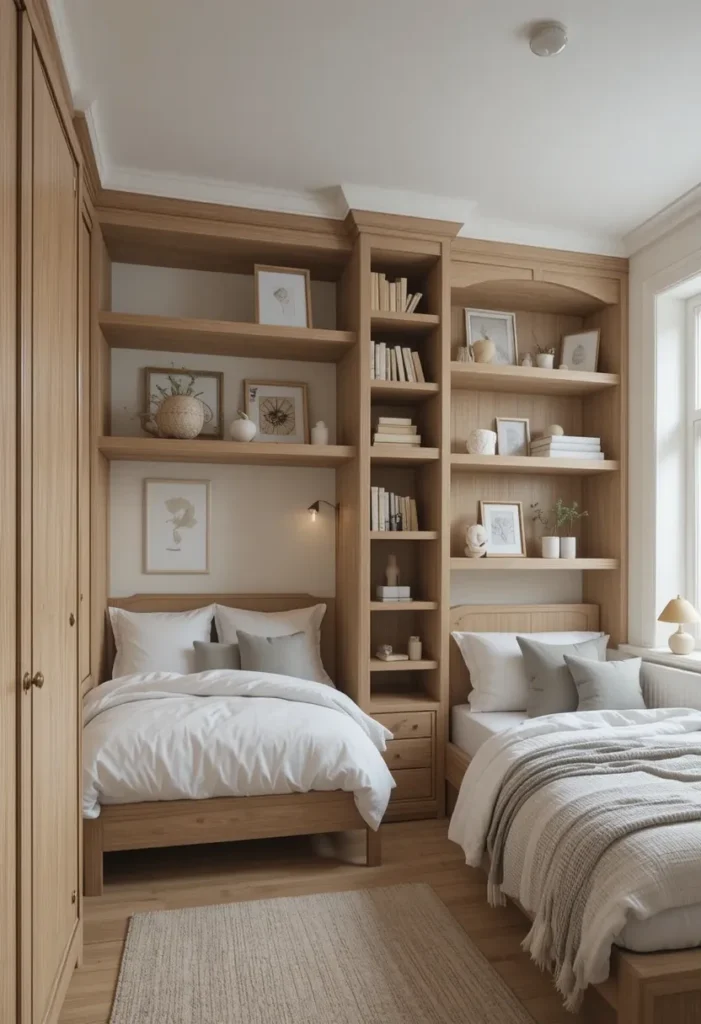
The best shared kids’ bedroom ideas aren’t just beautiful today—they continue working for years to come.
Choose timeless furniture instead of trendy pieces that children quickly outgrow. Neutral wall colors, quality wood furniture, and classic storage solutions provide a flexible foundation that adapts to changing interests.
Instead of replacing everything every few years, simply update bedding, artwork, rugs, and accessories to match your children’s evolving personalities.
Investing in adaptable furniture, adjustable shelving, and durable finishes saves money over time while ensuring the bedroom remains functional through childhood and beyond.
As your children grow, the room can effortlessly transition from a playful kids’ bedroom into a stylish shared space for older siblings, making it a smart long-term investment for your home.
17. Make the Most of Vertical Storage
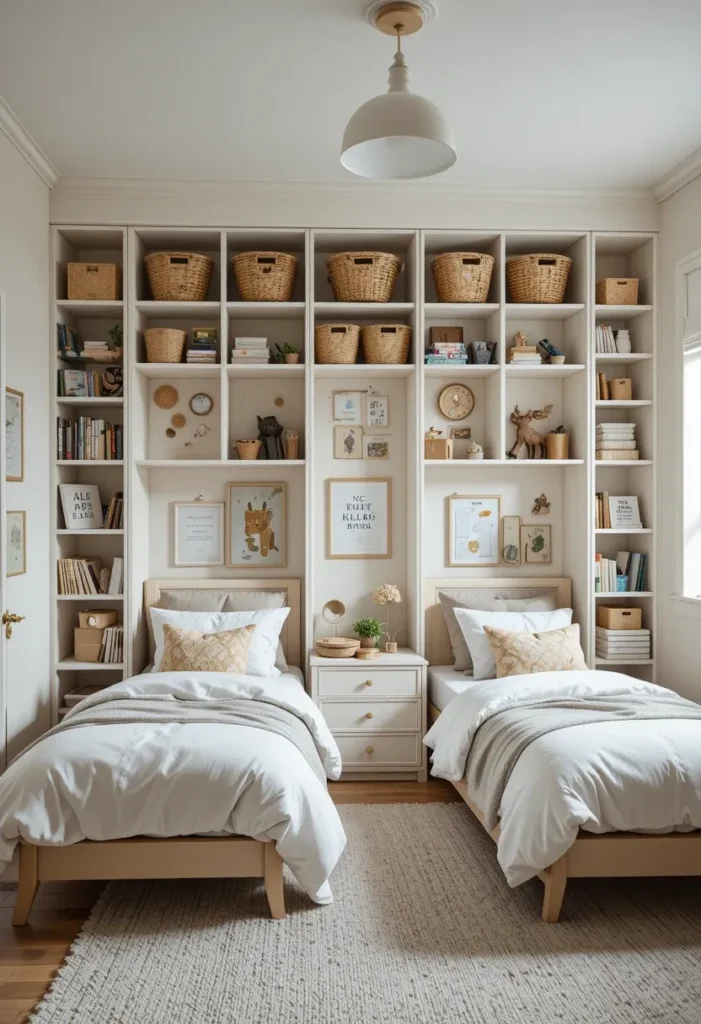
When floor space is at a premium, look up. Vertical storage is one of the smartest shared kids’ bedroom ideas because it keeps everyday essentials organized without taking up valuable play space.
Install tall bookcases, wall-mounted cubbies, pegboards, or hanging organizers to store books, toys, craft supplies, and school essentials. Place frequently used items on lower shelves so younger children can reach them independently, while reserving higher shelves for seasonal décor or keepsakes.
Keeping the floor clear makes the bedroom feel larger, safer, and easier to clean. Plus, vertical storage draws the eye upward, creating the illusion of higher ceilings.
Designer Tip: Use matching baskets on open shelves to create a neat, cohesive look while hiding smaller toys and accessories.
18. Add a Cozy Window Seat with Hidden Storage
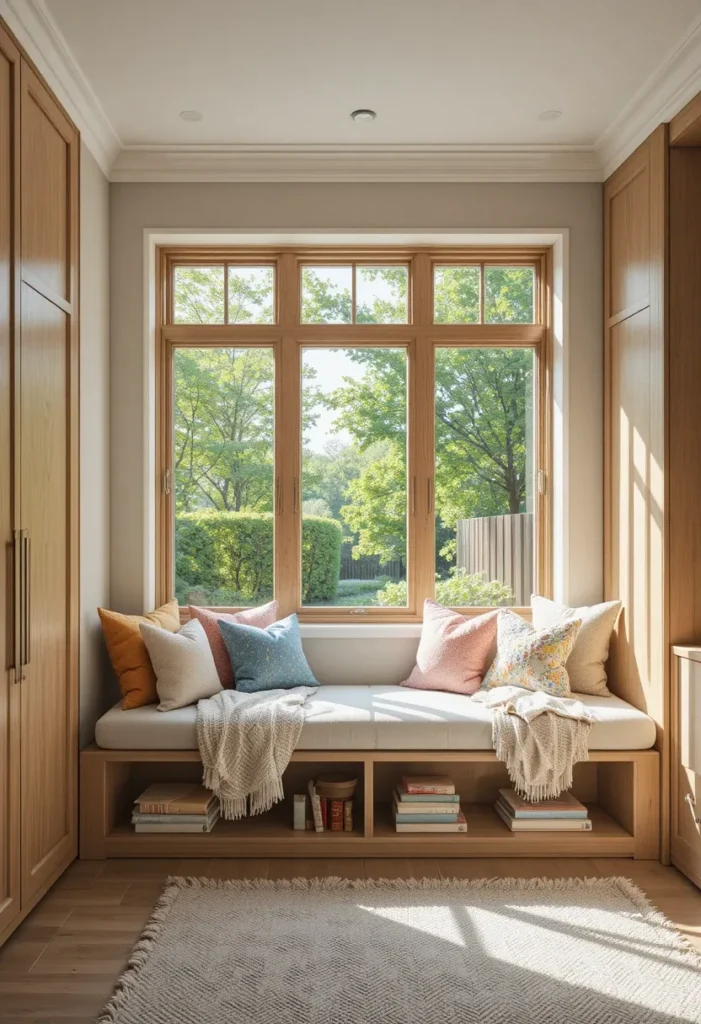
If your shared bedroom has a window, transform the area beneath it into a cozy seating nook. A built-in window bench with hidden storage provides the perfect place for reading, relaxing, or chatting before bedtime.
Top the bench with comfortable cushions and colorful throw pillows that coordinate with the room’s décor. Inside the storage compartment, keep board games, extra blankets, or stuffed animals neatly tucked away.
This simple addition creates another functional zone within the bedroom while making excellent use of space that often goes unused.
Best For: Medium to large bedrooms with natural light.
19. Choose Durable Materials That Can Handle Everyday Life
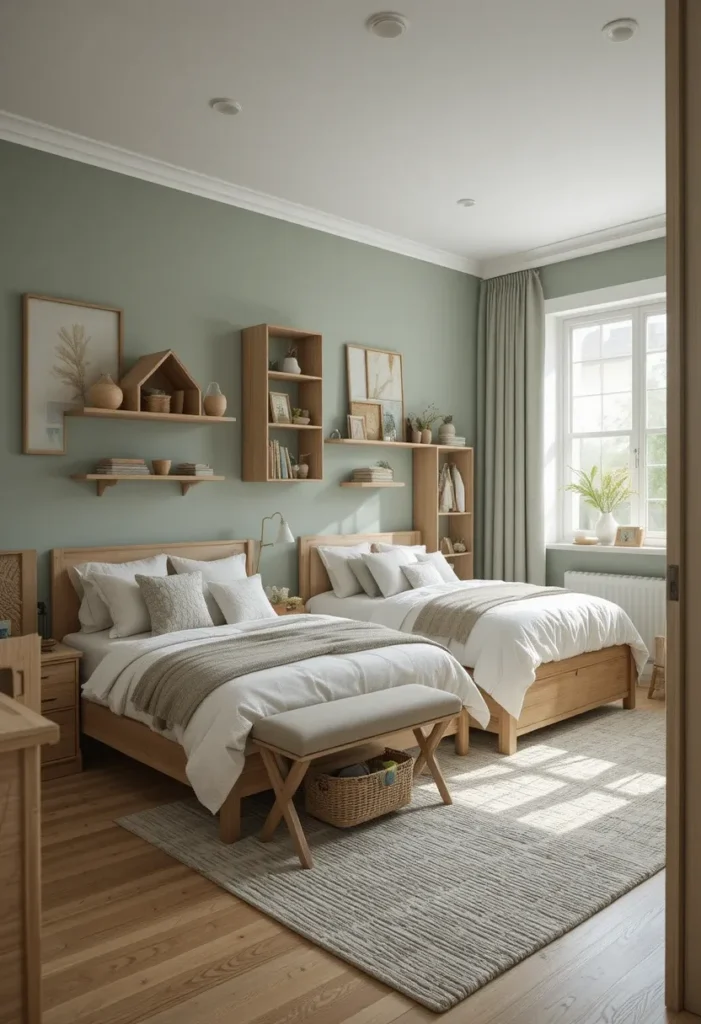
Kids’ bedrooms experience plenty of wear and tear, so durability should always be part of your design plan.
Select furniture made from solid wood or high-quality engineered wood, washable rugs, stain-resistant fabrics, and easy-to-clean paint finishes. Performance fabrics on chairs and benches are ideal for handling spills and everyday messes.
Investing in durable materials means your shared kids’ bedroom ideas will continue looking beautiful despite years of homework, crafts, pillow fights, and playtime.
A room that’s built to last saves money while reducing the need for frequent replacements.
Color Palette: Soft gray, warm white, light oak, sage green, and charcoal accents.
20. Keep Décor Coordinated but Flexible
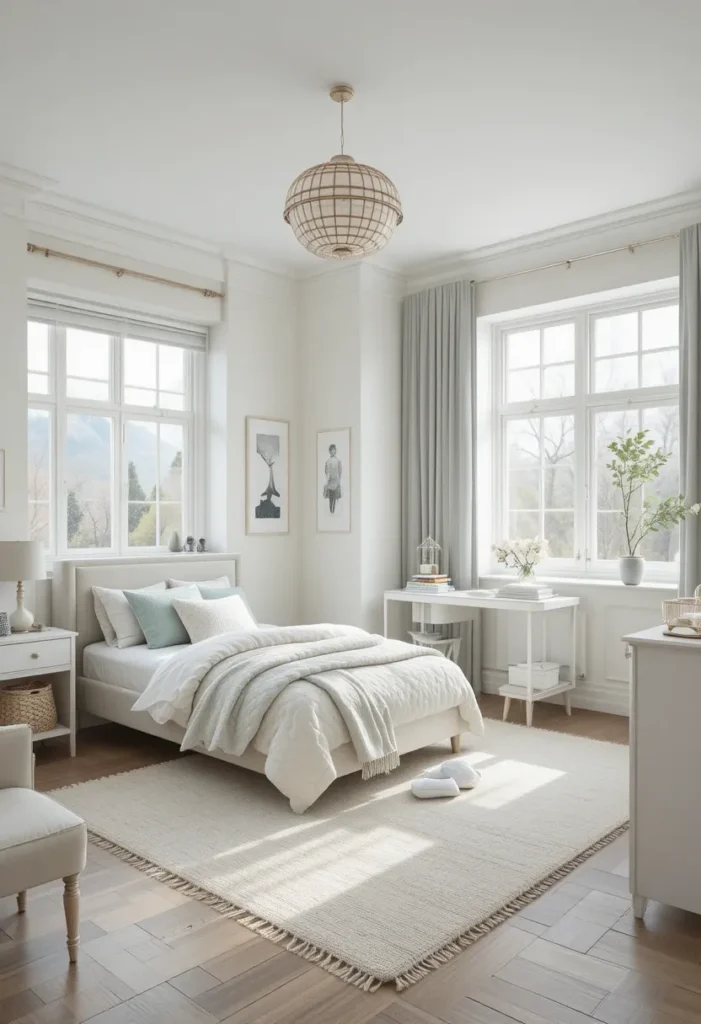
A shared bedroom looks its best when everything feels connected without being identical.
Choose one overall design style—such as Scandinavian, modern farmhouse, coastal, or contemporary—and use it throughout the room. Then allow each sibling to personalize their own area with bedding, artwork, favorite colors, or decorative accessories.
This balance creates visual harmony while still celebrating each child’s unique personality.
The beauty of flexible décor is that it’s easy to refresh. As interests change, simply swap out accessories instead of redecorating the entire room.
Designer Tip: Stick to three or four coordinating colors to maintain a calm, balanced appearance.
21. Include a Family Command Center
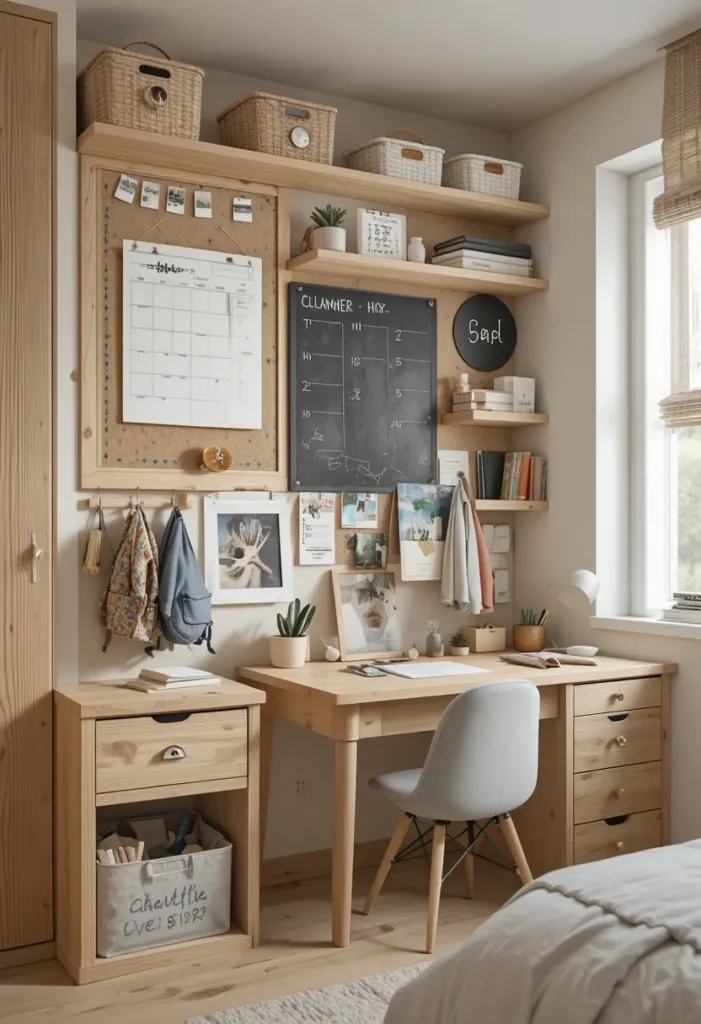
Older children often juggle homework, sports, music lessons, and activities. Creating a small family command center helps everyone stay organized.
Install a corkboard, magnetic board, or wall calendar near the study area where siblings can display weekly schedules, artwork, reminders, and important notes.
Add small hooks for backpacks and reusable bags along with labeled baskets for school papers and supplies.
This practical addition encourages responsibility while reducing the morning rush, making the bedroom work harder for busy families.
Best For: School-age children with active schedules.
22. Create a Bedroom That Celebrates Both Personalities
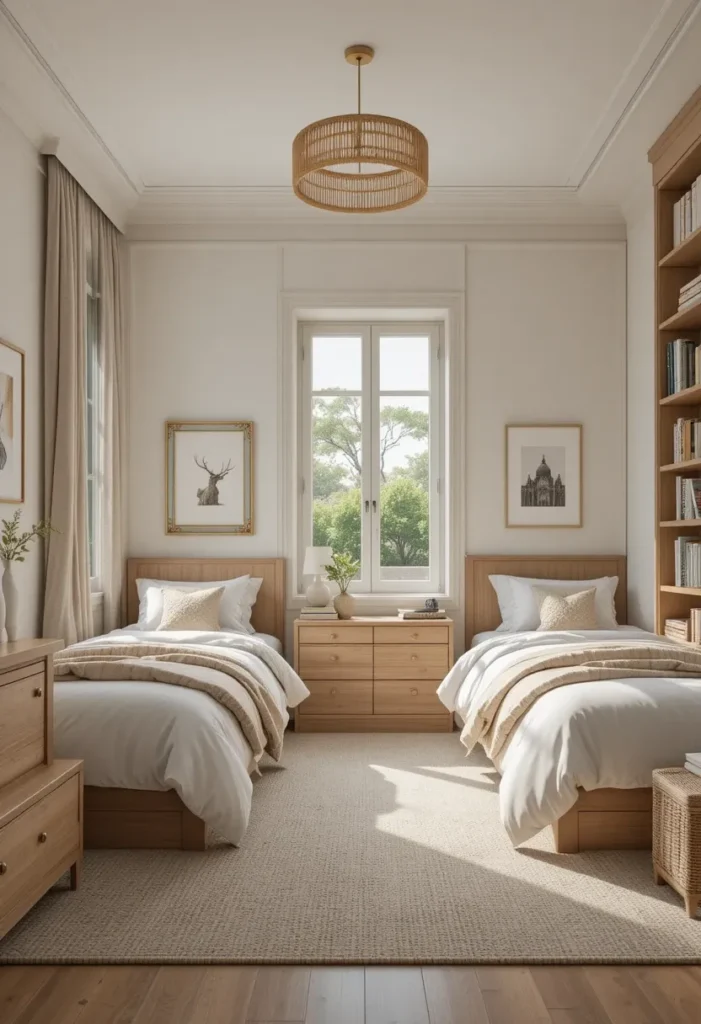
The most successful shared kids’ bedroom ideas focus on balance rather than perfection.
Instead of trying to make everything exactly the same, design a room where both siblings feel equally represented. Let each child help choose artwork, decorative accents, bedding, or a favorite color while keeping the larger design cohesive.
When children feel involved in the decorating process, they’re more likely to take pride in their room and help keep it organized.
A thoughtfully designed shared bedroom isn’t just beautiful—it’s a place where siblings create memories, learn cooperation, and enjoy growing up together.
Tips for Decorating a Shared Kids’ Bedroom
Designing a shared bedroom becomes much easier when you focus on functionality first and decoration second. Start by measuring the room carefully so you know exactly how much furniture it can comfortably hold. Leaving open floor space is just as important as adding storage.
Choose a neutral base for walls and larger furniture pieces, then introduce personality through bedding, rugs, artwork, and accessories. This approach makes future updates quick and affordable as your children’s tastes evolve.
Look for furniture that performs multiple functions, such as beds with storage drawers, desks with shelving, or benches with hidden compartments. These pieces help maximize every square foot while keeping clutter under control.
Don’t forget to create small personal zones for each child. Even something as simple as individual bedside shelves, reading lights, or personalized artwork can help siblings feel that they each have their own special place within the room.
Finally, involve your children in the decorating process. Giving them age-appropriate choices helps them feel invested in the room and encourages them to keep it clean and organized.
Common Mistakes to Avoid
One of the biggest mistakes parents make is overcrowding the bedroom with unnecessary furniture. A room filled with oversized pieces quickly feels cramped, making it harder for siblings to move around and enjoy the space.
Another common mistake is underestimating the importance of storage. Without enough drawers, baskets, shelves, and closets, toys and clothes can quickly take over the room.
Avoid choosing furniture that’s too themed or trendy. While cartoon characters and novelty beds may be exciting today, children often outgrow them within a few years. Timeless furniture offers much better long-term value.
Lighting is another area that’s often overlooked. A single ceiling light rarely provides enough illumination for reading, homework, and bedtime routines. Layering different light sources creates a much more comfortable environment.
Lastly, don’t ignore each child’s individuality. Even in a shared room, every child deserves a small area that reflects their personality and interests.
Final Thoughts
Creating a beautiful shared bedroom doesn’t require a massive budget or a large room—it simply takes thoughtful planning and smart design choices. By combining practical storage, flexible furniture, and personalized décor, you can create a room that feels comfortable, organized, and welcoming for both brothers and sisters.
Whether you prefer matching twin beds, space-saving bunk beds, cozy reading nooks, or clever storage solutions, these shared kids’ bedroom ideas prove that one room can successfully meet the needs of two growing children. Start with the ideas that best suit your family, then add personal touches that make the room truly feel like home.

22 Shared Kids' Bedroom Ideas for Brothers and Sisters
Looking for the best shared kids' bedroom ideas? Discover 22 stylish and practical ways to design a shared bedroom for brothers and sisters with smart layouts, bunk beds, creative storage, study zones, and beautiful décor that grows with your children. Save these inspiring sibling bedroom ideas for your next makeover! #SharedKidsBedroomIdeas #KidsBedroomIdeas #SharedBedroom #SiblingRoom #HomeDecor #KidsRoomDecor
Pin it on Pinterest